Showing posts with label Macedonia. Show all posts

Tuesday, November 29, 2016

2017 Foreign Oscar Predictions- EASTERN EUROPE

And here are the 21 films from Eastern Europe. While I think may of these films may do well in the rankings, I'm probably going to predict that this group gets no spots on the shortlist this year. However, I have my fingers crossed for "Eva Nova", from SLOVAKIA....Possibly the best film I've seen this year and available (legally!) for free via FestivalScope!

DISQUALIFIED
21. ARMENIA "Earthquake" 

Sadly we'll never know how Armenia's big-budget disaster film would have played with the Academy because AMPAS decided to make the Armenians (and the Afghans) the victims of its unevenly applied rules regarding nationality. The Armenians appealed the decision and I expected it to be accepted (Austria's appeal was allowed for their German film....and Armenia won an appeal many years ago with "Vodka Lemon") but AMPAS decided that this Armenian film in Armenian and Russian directed by an Armenian, set in Armenia and about one of the most important events in Armenian history was in fact not an Armenian film. 


NO CHANCE
20. KOSOVO- "Home Sweet Home"
19. SLOVENIA- "Houston! We Have A Problem!"
18. LATVIA- "Dawn"
17. LITHUANIA- "Seneca's Day"
16. UKRAINE- "Ukrainian Sheriffs"

These five films are just here to represent their countries, and have no real chance at getting an Oscar nomination. It is my hope that the Oscar competition will help get their films seen and will help put their countries on the world cinematic map. 

All five come from nations that don't produce many films each year and all suffer from a number of handicaps. Documentary "Ukrainian Sheriffs" and mockumentary "Houston, We Have a Problem!" are said to be entertaining but lightweight. SLOVENIA's "Houston" was the surprise winner of the 2016 Slovenian Film Awards but its gleeful conspiracy theory about Yugoslavia's secret contributions to the NASA space program at the height of the Cold War is said by many reviewers to be more suited to a short film rather than a feature. Documentary "Ukrainian Sheriffs" was also a surprise choice to represent UKRAINE (beating two more heavily favored fiction features in a three-film race). It follows two small-town sheriffs in a remote town in Ukraine as developments whose problems spiral from simple village problems to more serious ones as the separatist conflict in eastern Ukraine worsens over the course of filming. Reviews have been warm but the film will be unable to break out of the documentary ghetto. Ukraine's selection committee was plagued by internal problems last year, and were unable to get their act together to submit a film, so it's good to have them back in the race with a good movie. 

Newly-independent KOSOVO is also just happy to be here and recognized as an independent state (the UN is still deadlocked roughly 50-50 on that issue) and has sent "Home Sweet Home" as its third national submission. "Home Sweet Home" is about a man who returns to his family home years after being reported killed in battle during Kosovo's war of independence. It's an interesting idea, but reviews have not been entirely kind with many describing it as a missed opportunity. As for LATVIA, they've also chosen a divisive film, namely the B&W "Dawn", based on a Soviet urban myth of a patriotic Young Pioneer who "courageously" informed Soviet authorities about his own anti-Communist parents and who was lynched by the town as a result. Director Laila Pakalnina is one of Latvia's most famous directors but she has been passed over again and again by the Latvian Academy. The selection committee noted that "Dawn" is an "an intellectual, not emotionaI enjoyment" while the Hollywood Reporter's mostly positive review noted that some elements of the film "will test the patience" of viewers....Seems divisive and unlikely. 

LITHUANIA has selected Baltic co-production "Seneca's Day", which is probably the most obscure film on the list. This story follows a group of friends on the eve of Lithuania's independence from the Soviet Union in 1990 (Lithuania was the first republic to try to secede and they suffered greatly for it) and again 25 years later in the current-day. There's no buzz, no awards, no major festival appearances and no reason to think it will be selected. 

LOST IN THE SHUFFLE
15. BULGARIA- "Losers"
14. ALBANIA- "Chromium"
13. CZECH REPUBLIC- "Lost in Munich"
12. ROMANIA- "Sieranevada"

I also don't out too much hope for these four films. 


The films from Albania and Bulgaria have gotten fairly good reviews for their coming-of-age stories of post-Communist teen angst, but I don't see them coming into play here. The B&W "Losers" from BULGARIA won the Grand Prize at the 2015 Moscow International Film Festival (how many movies are in Black and White this year?!?!?) for its story of four aimless teens but it has hardly been heard of since then. ALBANIA's "Chromium" (Karlovy Vary) is said to be an improvement on Bujar Alimani's 2011 submission "Amnesty". It follows a disaffected teen living in a rural mining town, and his stormy relationship with his mute mother and the man who comes in to her life. 

The films from the more established Czechs and Romanians are also unlikely choices. The CZECH REPUBLIC selected the weird, whimsical comedy "Lost in Munich", a film-within-a-film about an elderly parrot who holds the key. There are lots of topical issues here that American audiences and filmmakers will be able to relate to- the power of the media, distortions of history, the difficulties of financing and making a film- but there are also a lot of allusions to history and the Czech national character which will cause audiences to lose interest (as I sometimes did). As usual, many Oscar predictions are including ROMANIA as a contender, but I assure you it's not. Oscar has shown that they have no interest in Romania or its New Wave (The shortlisted "Beyond the Hills" was an anomaly and didn't make the Final Five) and "Sieranevada" (Cannes)- a three-hour, slow, plodding examination of a large family preparing for a funeral- has mixed reviews and is certainly not as warmly loved as "Death of Mr. Lazarescu", "Child's Pose" or "5 Months" which all notably failed to make the shortlist. 

MIDDLE OF THE PACK
11. HUNGARY- "Kills on Wheels"
10. MONTENEGRO- "The Black Pin"
9. CROATIA- "On the Other Side"
8. POLAND- "Afterimage"

So first off, POLAND is only going to get nominated if the Academy wants to honor the late Andrzej Wajda...."Afterimage" is a cerebral biopic of an obscure artist (at least in the West) who struggled under the censorship of the Communist era. Nobody says it's a bad film, but it's creaky and old-fashioned and biopics of unknown people rarely score well here. The way the voting is done is this category, you give the Large Committee gives the film a score....so you don't vote for Wajda, you give the film a number grade. And I think the Elite Committee will want to save so many films that "Afterimage" will be an afterthought. 


Neighboring HUNGARY (Karlovy Vary) has selected another bizarre film...this time a crime thriller about a group of handicapped youths who end up as hit men. It's certainly a unique way to revamp the tired old "underdogs can do anything!" genre, and critics point out that the film has a fresh new voice. But although reviews are good, there's no indication they're good enough. 

Finally we have two more films from the former Yugoslavia, each showcasing the region's two favorite genres- a drama about the wars of the 1990s and a sardonic, black comedy of village life. "On the Other Side" from CROATIA is probably one of the region's better "post-war" efforts, about a woman who receives a phone call out-of-the-blue from the estranged ex-husband who abandoned the family during the civil wars and who stands accused of serious war crimes. It's a psychological thriller with a fantastic lead actress performance but films about Balkan politics haven't been recognized in 15 years. Tiny MONTENEGRO had only two eligible films this year, but I think "The Black Pin" is going to be an audience pleaser though probably won't do well enough to make the Final Nine. It's a clever black comedy about a grumpy Orthodox priest who pisses off his local village by refusing to sell church land, thereby ruining the community's chance at a big real estate payout. The Balkan countries do dark comedy quite well and this is the film I most want to see this year. It's definitely Montenegro's best-ever chance at a nomination....though that's not saying much. 


UNLIKELY DARK HORSES
7. ESTONIA- "Mother"
6. SERBIA- "Train Driver's Diary"
5. BOSNIA-HERZEGOVINA- "Death in Sarajevo"

It's also usually unwise to entirely count out Danis Tanovic who won this award for his debut feature "No Man's Land". Representing BOSNIA-HERZEGOVINA, "Death in Sarajevo" is a talky drama about a large number of characters working at a dysfunctional hotel preparing for an EU-sponsored event commemorating the 100th Anniversary of the start of WWI (which, as history students will remember, broke out in Sarajevo....then a provincial city of Austria-Hungary). It won two awards in Berlin, but critics have been divided and it's probably not good enough for an elite save. 

If Bosnia is modeling itself on "European arthouse" ESTONIA's "Mother" is channeling the Coen Brothers with this darkly comic mystery about a devoted mother taking full-time care of her comatose son who was shot by an unknown assailant who likely comes from her close-knit local community. Probably too small to get noticed, but one of this year's more interesting entries. Also in the "dark comedy" mold, we have "Train Driver's Diary" from SERBIA, which dwells on the fact that Serbian train drivers statistically kill 15-20 numbers of people during their careers. Comedy often loses something in translation and the Balkan's wicked sense of tragicomedy hasn't found favor with the Academy since the aforementioned "No Man's Land" fifteen years ago. Still, this clever Serbian film has enough interesting characters and good will to make it somewhat mainstream and there are clearly some fans out there....

CHALLENGERS
4. RUSSIA- "Paradise"
3. MACEDONIA- "The Liberation of Skopje"

These WWII films are a bit more Oscar's cup of tea.....Oscar loves watching children struggle with the horrors of war, so "The Liberation of Skopje" (MACEDONIA) and its 11-year old protagonist could be in with a chance. Though few have seen the film, this historical drama is supposed to be very good and fairly relatable though I worry that Balkan politics and intrigue (which was particularly complicated during WWII in Macedonia, with German and Bulgarian occupiers) will confuse some viewers. But they will understand the divided loyalties of a young boy whose father goes off to fight the Nazis while his mother becomes involved with a German officer. It could surprise. 

RUSSIA has also selected a baity World War II drama (in B&W), about a Russian noblewoman jailed in Nazi-occupied France for helping Jewish refugees. Though reviews have been mixed, it won Best Director in Venice and is said to be a technically impressive film. The film's grim story, abstract style and odd "interview-style" scenes are not popular however, reviews remind me of Hungary's "The Notebook" which was shortlisted a few years ago despite the fact that nobody liked it very much either. 

TOP TIER
2. GEORGIA- "House of Others"
1. SLOVAKIA- "Eva Nova"

I actually don't think any of the Eastern European films will make the shortlist, but if any of them do, I predict it will be one of these two well-reviewed debut features from the newly independent states. 

The ghostly "House of Others" from GEORGIA won the East of the West Award at Karlovy Vary and has gotten great reviews for its story of a Georgian family forced to flee ethnic cleansing in Abkhazia. This obscure secessionist conflict has already sparked Oscar's fancy twice (with the Oscar-nominated "Tangerines" and shortlisted "Corn Island") and the atmosphere film reminds me a bit of  "Corn Island". 

As for "Eva Nova", it only has one thing going for it- it's one of the best films of the year. However, we see year after year that "quality" does not necessarily get you a spot in the next round and "Eva Nova" has the added disadvantage of having a lead character that is a woman (a brave Oscar-worthy performance by veteran actress Emília Vásáryová. It's a fairly simple story- an aging star and recovering alcoholic tries to make amends with her estranged son- but it's a brilliant film. Based on quality alone, I'm predicting a surprise #1 ranking in the region but no shortlist spot. Alas, we'll never know!

Ultimately, these two films are probably too small to make it. 

Now the Statistics:

Number of countries from these regions who have participated in the past: 24

Number of countries participating this year:  20

Number of debuts: Zero

Number of countries opting out:  Poor ARMENIA was unfairly disqualified for their big-budget epic “Earthquake”.  Not sure why AZERBAIJAN failed to send a film, as they had quite a few to choose from. MOLDOVA probably didn’t have anything eligible (though the new comedy “Eastern Business” premiered in October 2016 and will be eligible next year); BELARUS hasn’t sent anything since 1996.

Already Seen: Only 2- The films from the Czech Republic and Slovak Republic

Film I'm most looking forward to seeing
:  Dark comedy “The Black Pin” from Montenegro! Looks great!

Feature Debuts:  Seven. Faton Bajraktari (Kosovo), Roman Bondarchuk (Ukraine), Rusudan Glurjidze (Georgia), Ivan Marinovic (Montenegro), Marko Skop (Slovakia)  and Ziga Virc (Slovenia) plus veteran actor Rade Serbedzija (now representing his newly adopted country of Macedonia).

Number of Female DirectorsTHREE. Kadri Kõusaar (Estonia), Rusudan Glurjidze (Georgia) and Laila Pakalnina (Latvia)

Oldest and Youngest Directors: It would be hard to beat 90-year old Andrzej Wajda of Poland who passed away in October (and who was probably only chosen because “Afterimage” was clearly going to be his last film). The youngest is 29-year old Slovenian director Žiga Virc.

Number of Foreign Languages Represented:   A lot of the Eastern European films are multilingual (i.e. Bosnia, Czech Republic, Macedonia, Russia and Slovenia), reflecting the area’s history and changing borders. But four films are in Serbo-Croatian, two are in Albanian, with one each mostly in Bulgarian, Czech, Estonian, Georgian, Hungarian, Latvian, Lithuanian, Macedonian, Polish, Romanian, Russian, Slovak, Slovene and Ukrainian
Number of Comedies: Czech Republic, Montenegro and Serbia have selected comedies, and some might add Estonia as well.

Number of Animated Films and Documentaries:  Ukraine has selected a documentary and so has Slovenia....or have they??  J

Number of countries with a realistic chance at making the shortlist: Hmm…Not many. Four at most and that’s pushing it. 

Highest profile film: This is a pretty low-key lot, but Romanian New Wave “Sieranevada” (Cannes) and Russia’s “Paradise” (Best Director, Venice) have gotten the most traction.

Oscar History:   Obviously the biggest contender here is the late Andrzej Wajda who represented Poland nine times, winning four Oscar nominations plus an Honorary Award in 2000 for lifetime achievement. Danis Tanovic of Bosnia is also an Oscar winner, having won for “No Man’s Land”. He is now representing his country for a record fourth time with “Death in Sarajevo”.

Bujar Alimani (“Amnesty”), Andrei Konchalovsky (“House of Fools”), Cristi Puiu (“The Death of Mr. Lazarescu”), Kristijonas Vildziunas (“Back to Your Arms”) and Petr Zelenka (“The Karamazovs”) have each represented their country once before while Croatian director Danilo Serbedzija (“72 Days”) is now representing Macedonia. Zrinko Ogresta of Croatia has had his films selected twice (“Red Dust” and “Washed Out”).

Hoping to make the shortlist for the first time are:  Albania, Croatia, Kosovo, Latvia, Lithuania, Montenegro, Slovenia and Ukraine plus Slovakia which won the Oscar for "A Shop on Main Street" as part of Czechoslovakia.

Best & Worst Decisions: Croatia, Georgia, Macedonia and Montenegro made wise choices while the worst decision was Poland which arranged an early qualifying release for the creaky “Afterimage” to honor a dying Wajda, when “The Last Family” could have done so much better.  

Controversies and Changes:   Armenia unfairly disqualified! The Armenians decided to return to the Oscar race after sending only two films in the past decade. They announced a three-film shortlist and selected big-budget “Earthquake” as their contender. AMPAS mysteriously and unfairly disqualified them for having insufficient creative control over this Russian co-production while Austria was reinstated even though their film was far less “Austrian”. The director of “Earthquake” is Armenian-born, Russian-based Sarik Andreasyan. It seems AMPAS’ objection may have been that the crew had a lot of ethnic Armenians who may not have actually held Armenian citizenship. Ridiculous, especially when they accepted Austria’s appeal.
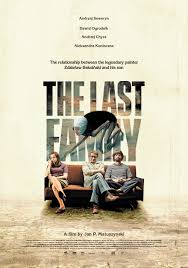
Most Notable Omissions:  As I mentioned, acclaimed biopic “The Last Family” from Poland was considered a real contender. Many were disappointed that Cristian Mungiu’s “Graduation” (which won Best Director at Cannes) failed to be selected to rep Romania.
Familiar Faces:   No world-famous people, though ex-Yugoslav stars Rade Serbedzija (“Liberation of Skopje”) and Lazar Ristovski (“Train Driver’s Diary”, “On the Other Side”) will be familiar to watchers of this category.


Last year's race:   I only got to see four of last year’s films including the equally charming drama “Bota” from Albania (B+) and road movie “Aferim!” from Romania (B+). I also managed to see the truly terrible “Summer of Sangaile” (D) from Lithuania and the rather average “The High Sun” (B) from Croatia. I still haven’t seen “Son of Saul”. Too grim. 

Thursday, July 30, 2015

OSCAR SUBMISSION PREDICTIONS 2015-2016, MACEDONIA to ROMANIA (Pt. 4 of 5)

UPDATE 13-AUG-2015: The Paraguayans are coming! Paraguay announced that they will enter the Oscar race for the first time in 2015. They'll announce their Oscar pick on Saturday, August 29th. 

And here's Group Four, including many of Oscar's smaller and more obscure countries. Only two of them (Netherlands and Poland) have ever won the Oscar and only a few more (Mexico, Norway and Palestine) have gotten multiple nominations.

1. MACEDONIA- "The Liberation of Skopje"  I visited Macedonia on vacation in May and it was wonderful. FYI, it should not be called FYROM unless you are a slave to the foreign policy of The Former Euro Republic of Greece. Despite some political turmoil (there were protests to bring down the government while I was there), the Macedonians have about a half dozen films to choose from this year. I predict they’ll send “The Liberation of Skopje” directed by and starring Serbian actor Rade Šerbedžija (“Mission Impossible 2”, “Harry Potter 7”, “24” etc.) who recently acquired Macedonian citizenship. Based on a beloved Yugoslavian play, it’s about WWII Macedonia seen through the eyes of an 8-year old boy. It hasn’t premiered yet, but the Macedonians often get their Oscar submissions screened at the very last minute. This has happened three out of the past four years. If "Liberation" doesn’t premiere in time, count on a victory for “Honey Night” by Ivo Trajkov (who repped Macedonia twice in 2004 and 2009) which kicked off the Skopje International Film Festival in April. Taking place on a single night during the early days of independence, it’s a marital drama with political overtones. A wire-tapping subplot in the film has coincided with a real-life government wiretapping scandal so things may also depend on who’s in power when the Macedonians make  their decision this summer! Less likely: “Children of the Sun”, a love story set against the background of an organized crime gang; it won Best Film at the Macedonian Film Festival in Toronto. Unlikely: psychological thriller “Three Days in September” and “Lazar”, about an ex-con trying to go straight. Macedonia tends to like period dramas, so if "Liberation" gets released, it's pretty much a sure thing. 

2. MALAYSIA- "Ophilia" Malaysia has only sent one film in the past ten years (action-thriller “Bunohan”) and they don’t have any standout films that would make me believe they’d enter again this year. Among the possibilities they do have are UFO-chasing comedy “Nova” (winner of the ASEAN International Film Festival) and ghost-chasing comedy “Men Who Save the World” (Busan, Locarno), which treads some tricky racial lines with its plot (I haven’t seen it, but it's about a group of Malay villagers who think there is a black ghost haunting the village), as well as gangland crime drama “Ophilia” and sentimental romance “Pilot Café”. I don’t see any of them as likely. Prediction: they send nothing, but if they send anything it will be “Ophilia”, followed by “Men Who Save the World”.

3. MALTA- "Do Re Mi" Malta joined the Oscar race for the first time last year with sea tragedy “Simshar”. I’ve only seen one Maltese film in my life and it was terrible (“Kont diga”) but I look forward to seeing "Simshar" and others. Tiny Malta is a popular filming location for European and Hollywood productions but the indigenous film industry is tiny, and the bilingual islands produce many of their films in English. Their only option this year is the intriguing “Do Re Mi Fa”, about the disturbing and lonely lives of four people- an aging actress, an arrogant radio DJ, a career-driven TV employee and a pedophile clown who performs at children’s parties. It’s in both Maltese and English and I’m not sure if it is over 50% in Maltese. But it’s Malta’s only shot.

4. MAURITANIA- Nothing eligible. Last year, Mauritania submitted Abderrahmane Sissako’s brilliant “Timbuktu”, garnering a nomination for the poor, French-speaking North African country. Although they deserved to win the award, they were passed over by a dreary film from Poland, possibly because it mentioned the Holocaust. Other than M. Sissako, Mauritania has no cinematic tradition and even M. Sissako himself is a French citizen who spent much of his life in Mali, where the film “Timbuktu” takes place. Interestingly enough, “Timbuktu” dominated this year’s French Cesar Awards because France considered the film to be wholly French with minimal Mauritanian input. I’m happy that AMPAS has loosened up the rules to allow films like “Timbuktu” to compete. But it’s highly unlikely Mauritania will be back until M. Sissako makes a new movie. He doesn’t have one this year so nothing is eligible.

5. MEXICO- "Desierto" The big problem with Mexico this year is that it is so difficult to know what is eligible. Will new festival films like “The Chosen Ones” (Las eligidas) from Cannes and “Carmin tropical” be released in Mexico, or will they be eligible next year? Will bilingual films like “600 Miles” (with Tim Roth) and US-coproduction “Desierto” (with Gael Garcia Bernal) contain enough Spanish to qualify? And most importantly, what will Mexico do with “The Perfect Dictatorship”? The political satire was a major critical and financial success in Mexico last year. It was submitted last year for the Oscars and was sent to the Goyas but it didn’t release at home until October 2014. Could it be reconsidered a second time? Assuming it was eligible, I think “The Perfect Dictatorship” could win this easily. However, I doubt Mexico will allow the film to have “two bites of the apple”, as we say in the USA (I heard vampire movie “Let the Right One In” tried this strategy in Sweden a few years back; Sweden said NO). So, with “Dictatorship” and this year’s Goya winner- slacker comedy “Gueros”- not eligible (“Gueros” was also submitted last year though it didn’t open wide until 2015), Mexico’s choices are a bit thinner, but they still have half a dozen worthy contenders. In fact, I think seven films are in with a chance, namely (in alphabetical order): “Carmin tropical”, “The Chosen Ones” (Las eligidas), “The Dark Springs” (Las oscuras primaveras), “Desierto”, “One for the Road” (En el último trago), “The Thin Yellow Line” (La Delgada Línea Amarilla) and “La tirisia” (aka "Perpetual Sadness"). Mexico’s longlist usually has about twenty films, so you can also expect to see LGBT anthology “Four Moons” (Cuatro Lunas), documentary “Echo of the Mountain” (Eco de la montaña) and Beijing Film Festival winner “Beginning of Time” (El Comienzo del Tiempo) but they won’t really compete for the Oscars. So, which one will Mexico pick? If you exclude last year’s biopic “Cantinflas”, Mexico likes their films grim, depressing and hopeless. That bodes well for “The Chosen Ones” and “Desierto”. “The Chosen Ones” (Cannes) focuses on a group of poor women who are kidnapped by a gang and forced into a life of sexual slavery/prostitution. “Desierto” (Toronto 2015), which I am told is mostly in Spanish, focuses on the U.S. border (the subject of their 2009, 2011 and 2013 submissions). Gael Garcia Bernal leads a group trying to crossover to the US, while escaping a fanatical American vigilante who takes the law into his own hands. It’s the sophomore effort of Jonas Cuaron (son of Oscar winner Alfonso). It seems likely the more exciting “Desierto” may go to the Oscars while the more arty “Chosen Ones” will go to the Goyas. In third place, “Thin Yellow Line”, starring Oscar nominee Damian Alcazar and produced by Oscar nominee Guillermo del Toro, about a group of workmen doing manual labor on a highway. In fourth place, “Carmin Tropical”, a mystery about a transsexual woman who returns to her hometown and becomes involved with solving the murder of another trans friend of hers. I would love to predict boisterous comedy “One for the Road” (which would probably do very well with AMPAS), about a group of 80-something friends who go on a road trip to fulfill their friend’s last wish, but the humorless Mexican Academy will be immune to its charms. I place it fifth. Not every likes erotic drama "Dark Springs" and the well-reviewed "La tirisia" (Karlovy Vary) may be too small to represent Mexico. 

6. MOLDOVA, a small Romanian-speaking republic in Eastern Europe, began submitting films to the Oscars two years ago. Last year they had two eligible films (“What A Wonderful World” and Oscar submission “The Unsaved”) but this year I think they have none. Not to worry as this year has seen a lot of positive developments. Last year, a new film law was passed slashing Soviet-era red tape and making it easier for filmmakers to get government funding. A National Film Center is due to be established this year. The Moldovans had a short student film at Cannes (“Echoes”) which competed in a Romanian sidebar, and an interesting new project (“How Far is Europe?) was pitched at Tallinn Black Nights. Moldovan filmmakers were also invited to participate alongside their Romanian counterparts at training workshops at the Transylvanian Film Festival. I think Moldova will be out of luck in 2015 but expect them back next year.

7. MONGOLIA- "Khuden" (Mist) Mongolia has been absent from the Oscar race for a decade despite a small but growing film industry. The movie "Father" (Aav), which opened in May, was the big winner at the Mongolian Film Awards this year, winning Best Picture, Best Director and Best Actor. It appears to be about a gangster raising a young daughter, but I'm not really sure. More likely to have the English subtitles required to send the film to the Oscars is “Huden” (Mist), which appears to be some sort of thriller about a rural family involved in a murder. It opened the Ulaanbaatar Film Festival but only managed a single win (Best Supporting Actress) at the Mongolian Oscars. There's also “Tutu”, about an aspiring ballet dancer who gets involved in political intrigue after returning home from her studies in Russia. None of these really look like a suitable Oscar contender…But I’d give the edge to “Khuden”. 

8. MONTENEGRO- "Gorcilo" Montenegro was the smallest of the former Yugoslav republics. This seaside country of less than a million people first entered the Oscar race in 2013 and again in 2014, sending crime thrillers both times. Their next Oscar submission will probably be “Time Between Us”, a drama set amidst the closing days of World War II, when a father is searching for his (presumed dead) son. It won financing from the Montenegrin government and the Sarajevo Film Festival. It's not scheduled to be released until 2016. This year, I only know of one Montenegrin film that has actually been released- culture clash comedy “Gorcilo”, about a new road that connects a remote village to the city- but reviews have not been great and I'm not sure Montenegro will think enough of it to send it in. We'll see! 

9. MOROCCO- "Fevers" Morocco is one of only three regular participants from Africa (alongside Egypt and South Africa). Like the country itself, Moroccan films are a mix of French and Arabic influences with very little from what the world thinks of as African. The hardest thing about predicting Morocco is that movies often sit on the shelf for months or even years before being released in local cinemas. For example, “Le sac de farine” (starring Hiam Abbass) premiered at the Tangier Film Festival in January 2012, but didn’t get a national release until April 2014. Neither last year’s winner at the Moroccan Film Festival (“Sotto Voce”) nor this year’s winner (“The Narrow Frame of Midnight”) seem to have been released in Moroccan cinemas (nor was my prediction last year, “Adios Carmen”), although any could conceivably get a summer release. My prediction this year is “Fevers”, winner of Best Picture at the FESPACO Film Festival of African Cinema and also the Moroccan representative in Abu Dhabi. It’s the story of a troubled Moroccan teenager sent to live with his father in France after his mother is sent to jail. The Moroccan Academy is often inclined to send movies about social issues, especially troubled youth. It appears to have gotten a limited release in Morocco last fall. If the Moroccan Academy doesn’t go for “Fevers”, there are a trio of strong contenders. The aforementioned “The Narrow Frame of Midnight” won Best Picture at the National Festival of Film in 2015, and also played at Dubai and Toronto. This moody story of a girl on the run from a gang of kidnappers has Danny Glover as a celebrity producer, but poor reviews outside of Morocco. “Blind Musicians” was the only Moroccan film in the main competition at the Marrakech Film Festival. Set in the 1970s, it features a father-son team during a time when blind musicians were often hired to perform at events for women. Last, there’s “Adios Carmen” (which I predicted last year), about the relationship between a young boy and a Spanish emigree living in Morocco in the 1970s. A possible dark horse is the upcoming 1970s drama “Other Side of the Sky” revolving around a poet and a bank robbery, which won Best Screenplay at the Moroccan Film Festival. Two well-made movies about prostitution- “Pillow Secrets” and “Grains de grenade”- will probably be too controversial, as will the banned “Much Loved” by Nabil Ayouch (also about prostitution) and “The Sea Behind” (transgenders). I bet on “Fevers”, with “Blind Musicians” as runner-up.

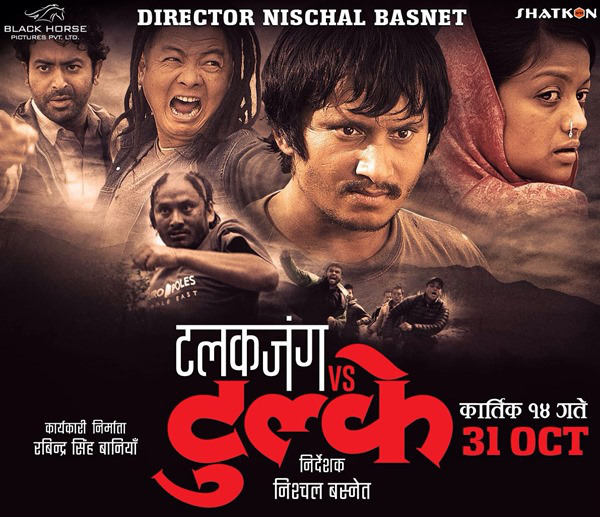
10. NEPAL- "Talakjung vs. Tulke" Nepal closed all its cinemas and canceled all film shoots for nearly two months after the April 2015 earthquake while the country was in mourning. That effectively puts the country at a bit of a disadvantage this year. However, the Oscars present Nepal with an excellent opportunity to promote new talent in their film industry. This year, I see two front-runners: “Bhimdatta” is a historical biopic of a renowned peasant revolutionary (though that may be too political). “Talakjung vs. Tulke” is a story of revenge and caste differences, set during the Nepali Civil War in the late 1990s. I don’t know much about the Nepali film industry, but dark horses could also include “Chankhe, Shankhe, Pankhe”, an expensive Bollywood-style comedy, orphanage drama “Highway to Dhampus” (which has good reviews but an American director and lots of English), and the unusual “Love You Baba”, which recently entered the Guinness Book of World Records for its youngest-ever 8-year old director Saugat Bista. I predict “Talakjung vs. Tulke” will represent the ex-Kingdom at this year’s Oscars, unless there’s a strong late release I don’t know about.

11. THE NETHERLANDS- "The Surprise" Lately, the Dutch seem to be specializing mostly in family films (as they always have) and comedies. Their two major national film prizes were awarded to somewhat strange choices this year. The Golden Calf for Best Picture went to “How to Avoid Everything” (known in Dutch as “Aanmodderfakker”….Try and say it out loud), a comedy about a 32-year old slacker who falls for a teenage babysitter. The Rembrandt Award for Best Picture went to “Vipers Nest 2”, a comedy sequel based on a TV show about a group of rich, trashy women. I’m not saying either of these are bad films (“Aanmodderfakker” looks quite entertaining), but they’re not the sort of film that will get anywhere with AMPAS. For Oscar, I think the Netherlands will choose either big-budget 16th century action movie “Admiral”, co-starring Rutger Hauer and Charles Dance (“Game of Thrones”), or “The Surprise”, this year's best comedy about suicide. The Netherlands last won an Oscar in 1997/1998 for 38-year old Mike van Diem’s feature film debut, “Character”. Despite his big Oscar success, van Diem never did direct another movie....until now. “The Surprise” is about a depressed millionaire who signs a contract to end his life. When he falls in love with a suicidal woman who signed the same agreement, they both find it’s difficult to get out of the deal. The sheer size and scale of seafaring drama “Admiral” means it’s probably going to get in, but I’m predicting a surprise for “The Surprise”. In third place: I would love to see this go to “Schneider vs. Bax”, a black comedy about a hit man encountering a bizarre series of problems getting his latest job done. Director Alex van Warmerdam did “Borgman”, which I loved. Rounding out the Top Five choices for Holland: #4- “Prince”, a drama-thriller about an Arab-Dutch teen who seeks to impress a pretty Dutch girl already engaged to a gangster. It won a special award for youth film in Berlin, and #5-  “Zurich”, about a young widow who discovers her husband had a second family. Less likely: music biopic “Blood, Sweat and Tears” (aka “Andre Hazes”) got great reviews but will probably be too local to be selected and the Serbian-language “The Sky Above Us" may not be considered Dutch enough. 

12. NEW ZEALAND- Nothing eligible. New Zealand has sent films in indigenous Pacific languages three of the past four years. This year, I don’t they have anything eligible in a foreign language. The only Maori film I’ve been able to find information about in 2015 was a 15-minute short comedy called “Ow What!”. That may change next year with the release of crowd-funded Maori tale “The Patriarch” (in English and Maori). But for this year, I just don’t think the Kiwis have anything to send.

13. NICARAGUA- "The Naked Screen" (La pantalla desnuda) Nicaragua rarely produces feature films, but French expatriate director Florence Jaugey made “La Yuma” in 2010, which was a major hit and which was their first Oscar submission in 22 years. This year, Jaugey is back with “The Naked Screen” (La Pantalla Desnuda), a topical drama about a teenage girl whose boyfriend pressures her into making a sexual video on his camera-phone, which is then stolen by a kid from the neighborhood. “Screen” hasn’t been as strongly received as “La Yuma”, but it looks interesting and is probably their only eligible film.

14. NORWAY- "The Wave" Norway traditionally releases a three-film shortlist before selecting their national nominee. This hasn’t been a particularly strong year for Norwegian cinema and I predict the Norwegian shortlist will be: incest drama “Homesick”, disaster thriller “The Wave” and upcoming revenge psychodrama "The Doll in the Ceiling" (aka "The Good Sister"). Comedy "The Wendy Effect" opens right before the deadline and could also make the list if it's good, as could cancer drama "All the Beauty" if it gets released (though it probably won't). Last year, the Norwegians selected “1000 Grams” which opened right before the deadline and which nobody had seen or heard of. Probably out-of-luck:  action-thriller “Haram”, about the country’s Pakistani immigrant community, family adventure “Operation Arctic”, about siblings trapped in a winter storm in remote Svalbard, and “Returning Home”, about two former soldiers searching for their missing father. I’m predicting upcoming “The Wave” a large-scale disaster movie about a real-life series of landslides and tidal waves that terrorized village communities 1934 Norway. “Homesick”, about romantic chemistry between two long-separated half-siblings may be too “icky”, "Doll" too small-scale, and comedy “Wendy Effect” a bit too silly. Norway's last Oscar nominee was the big "Kon-Tiki" so “The Wave” should be able to win this easily.


15. PAKISTAN- "Moor" Pakistan has been seeing a definite cinematic revival in recent years so it appears likely they’ll continue sending films after returning to the Oscars in 2013 after a 50-year break. This year, I feel confident they will send “Moor”, a drama set in the ethnic minority province of Baluchistan. Though the plot doesn’t sound too exciting (the decline of the railways industry in Baluchistan), it is said to be beautifully shot and tells the story from a very human perspective. It’s set to be released on Pakistani Independence Day in August.  The Pakistanis have several other options. The three biggest challengers are high-octane action drama “Yalghaar”, about a famed anti-terrorist operation, poet biopic “Main Manto” and “Ho Mann Jahan” (September, a more contemporary story with strong word-of-mouth, about three friends trying to make it in the music industry. Oscar winner Sharmeen Obaid-Chinoy is a question mark. She won Best Documentary Short in 2012 and released her first feature film this year- a popular 3D animated film for children called “Bahadur”. Obaid-Chinoy has chaired Pakistan's Oscar selection committee for the past two years. Will that mean anything? Despite good box-office and local reviews, it’s very much a children’s film so I’m hoping one of the more serious films gets the nod. Obaid-Chinoy’s documentary background may also make them consider “Beyond the Heights”, about the first Pakistani woman to climb Mount Everest. There are also three strong dramas with no release date: “Hijrat”, a love story set on the Afghan-Pakistan border, cricket biopic “Kaptaan” and most importantly patriotic  drama “Saya-e-Khudaya e Zuljalal”, repeatedly delayed since last year. In conclusion, I’m still feeling very good about “Moor”’s chances, with “Ho Mann Jahan" its main challenger.

16. PALESTINE- "Dégradé" Palestinian cinema has been moderately successful this year, with three films featured at major international festivals. “Villa Touma” (Venice 2014) is about three sisters from a wealthy Christian family who now find themselves living in poverty. “Dégradé” (Cannes 2015) is about a group of women at a beauty salon sheltering from Israeli bombings in Gaza. “”Love, Theft and Other Entanglements” (Berlin) is a thriller about a man who steals a car, not knowing an Israeli soldier is being held captive in the trunk. All three have gotten somewhat mixed reviews, with Western critics being especially harsh. There’s also the expensive Jesus Christ biopic “The Saviour”, and UK-funded documentary “Roshmia” about an elderly Palestinian couple forced from their home by Israeli soldiers. It won Best Feature in Dubai 2014. My prediction is “Dégradé”, whose twin-brother directors have successfully branded the movie as the Palestinian film to see this year. Hany Abu Assad’s two films that I mentioned last year haven’t advanced past the development/production stage.

17. PANAMA- "Canal Stories" (Historias del canal) Panama became the fourth Central American country to enter the Oscar race last year (after Costa Rica, Guatemala and Nicaragua, but before El Salvador and Honduras). Production is up and their clear front-runner is “Panama Canal Stories”, a series of five short films revolving around the Panama Canal at five different eras in Panamanian history (1913, 1950, 1964, 1977 and 2013), including one by Abner Benaim, who directed Panama's debut submission last year, and two helmed by women. There’s also surfing documentary “Breaking the Waves”, but I’m pretty sure “Canal Stories” will be selected. For an interesting article on Panama’s burgeoning film industry, see here 

18. PERU- "The Vanished Elephant" (El elefante desaparecio) Peru has about ten eligible films this year, not including Claudia Llosa’s “Aloft” starring Jennifer Connelly, which appears to be in English. I think it will come down to a very close race between confusing mystery-thriller “The Vanished Elephant” and “Climas”, a pretty film about the lives of women in three different regions of the country. “Climas” looks more like what the Peruvian Academy usually selects, but I’m going to predict “Elephant” because of director Javier Fuentes-Delon, who made my favorite Peruvian movie of all time- “Contracorriente”.  "Vanished Elephant", about a mystery writer trying to solve the mystery of his missing girlfriend, is said to resemble David Lynch, which can be a good thing or a bad thing. Peru has a few other candidates too. They could easily go for large-scale historical drama “Glory of the Pacific”, a war movie that got middling reviews at home but could try to emulate last year’s shortlisted “Libertador” from Venezuela, or select “NN”, which has played at a number of festivals, about a forensic team trying to identify the bodies found in mass graves- a real-life historical legacy of the former dictatorship. The other candidates are unlikely: quirky experimental film “Videofilia”, rape drama “Atacada”, low-budget drama “Solos”, comedy “The Grandfather” and “Desaparacer”, a missing-person thriller set amidst the world of illegal logging. 

19. PHILIPPINES- "Bwaya" (Crocodile)  The Philippines is one of the hardest races to predict this year. The Filipinos have gone arthouse the past five years with films that booked slots at major festivals. Three of these were co-produced by Cinemalaya, famous for making, edgy, often low-budget independent cinema. Many of these independent films don’t get a wide cinematic release (unlike mainstream Filipino films which are released alongside Hollywood films in multiplexes across the country) so I never know when they are eligible. Most Oscar watchers this year are predicting the Philippines will send Brillante Mendoza’s Cannes drama “Trap” (Taklub), about the aftermath of Typhoon Yolanda. It won the Ecumenical Jury Prize at Cannes, but Mendoza’s gritty films have never been selected before and “Taklub” is not his most acclaimed film. It has a chance, but I think Mendoza may have to continue to wait. No less than eight films from last year’s Cinemalaya Film Festival won major awards- “The Commitment”, “Crocodile”,”The Janitor”, ”Justice”, “K’na the Dreamweaver”, “Sparks”, “Sundalong Kanin” and “Where  I Am King”.  Two of these (“Crocodile” and “Sparks”) got Best Picture nominations at the Gawad Urian Awards (a good precursor for the Philippines Oscar submission). You can add to the race two very different biopics- one about a man who fought the Spanish (historical drama “Bonifacio”) and one about a living legend who fights everyone (boxing drama “Kid Kulafu”, about the life of Manny Pacquiao).  Popular rom-com “English Only Please”, about a Filipino-American trying to find a bride, may also be considered a dark horse since Americans may be able to relate to it. This is really a wide-open race and I see it coming down to three finalists; (1)- Mendoza’s “Trap” has the buzz and the momentum and last year the Filipinos chose the “festival favorite” (which they don't usually do). There may also be the feeling that he has been passed over so many times that he’s due, (2)- “Crocodile” (Bwaya) is a docudrama about a woman whose 13-year old daughter disappears after being attacked by a crocodile. It’s not a "big" film, but it has the advantage of positive notices at both mainstream and independent awards ceremonies, (3)- “Kid Kulafu” is about Manny Pacquiao, a man that Americans will know well. It was well-received by critics and got an A-rating from the Cinema Evaluation Board but it's clearly a mainstream effort for the masses. I predict an upset for “Crocodile”, with “Kid Kulafu”  and “Trap” second and third. Rounding out the top five will be “Where I Am King”, about an old man returning to his ancestral village, and “Sundalong Kanin”, about young brothers growing up during the Japanese occupation of the 1940s.  

20. POLAND- "Karbala" For the first time in their (nearly) 60-year Oscar history, Poland is attending the Academy Awards as reigning champion. While I will never understand the appeal of the well-made but forgettable “Ida”, it’s nice they got their chance to shine. This year they have a number of candidates with no clear front-runner. I‘m inclined to predict “Summer Solstice”, a drama following four characters in the Polish countryside in 1943- a Nazi officer, a Polish man and woman, and a Jewish woman who escapes from a concentration camp. The film- a co-production with Germany- is finished and was screened at Cannes Film Market representing Poland. It’s scheduled to premiere in German cinemas in October but has no release date in Poland. So I doubt it’s eligible, though Poland did do an Oscar-qualifying run for "In Darkness" so one never knows. Assuming it's not released, the race is wide open, with no less than five viable candidates. In alphabetical order, they are “Body” (winner, Best Director at Berlinale 2015), a dramedy about a man, his anorexic daughter and a therapist with unusual powers, “Gods”, which got ten nominations (but only one win) at last year’s Polish Eagles, the biopic of a renowned surgeon, “Heart and the Sweetheart” (director Kolski was selected in 2003), about a little orphan girl who aspires to be a ballerina, “Karbala”, a thriller about Polish soldiers fighting Jihadis in Iraq circa 2004, and “The Photographer” (director Krzystek was selected in 2012), a mystery-thriller about a serial killer. I’m inclined to think that “Karbala” (scheduled to premiere right before the deadline) will be the one to resonate with the Polish Academy, if “Summer Solstice” doesn’t premiere until October. It’s patriotic, exciting (hopefully) and will resonate with American audiences who saw their own soldiers fight in Iraq. If it sucks, then “Gods” will probably get this. Unlikely but still possible: “Close-ups”, about a woman with a domineering mother who wants a baby of her own, “Carte Blanche”, about a professor slowly going blind and “Influence”, a historical drama co-starring Crispin Glover (?!) which is in Polish.

21. PORTUGAL- "Arabian Nights, Volume One" Portugal has the worst record of any country at the Oscars- dozens upon dozens of submissions with zero nominations. This year, they’ll be hoping to change that with Miguel Gomes’ magnum opus “Arabian Nights”.  Premiering in Director’s Fortnight at Cannes, “Arabian Nights” is actually three 2-hour films, transporting Scheheradze and her stories to Portugal circa 2012, in the midst of that country’s devastating economic crisis. Will Portugal send the first film? Or the better-reviewed second one? Or will they try and do an Oscar-qualifying screening of the full 6 hour, 35 minute omnibus? Or will they just make a crazy decision and pick something else entirely, like when they ignored the acclaimed “Mysteries of Lisbon” for a documentary? “Arabian Nights” has been fairly warmly received so I think they’ll send the first film (though Variety indicates they are meant to be watched together), but the Portuguese often make mind-numbingly odd decisions. The biggest challenger is "Montanha", set to premiere at Venice Critics Week in August. This highly anticipated film is a coming-of-ager about a 14-year old faced with the death of his beloved grandfather. However, with no domestic release scheduled, it will likely not threaten until next year. Next up is "Grey and Black” (Cinzento e Negro), a revenge drama set amidst a small village. It will open in Portuguese cinemas in September. In Fourth Place, is likely to be “Horse Money” (Locarno 2014), a “neo-realist” sequel of sorts to a film called “Colossal Youth” (I've never heard of it) about a 70-year old destitute Cabo Verdean who has lived in Portugal for decades. Rounding out the Top Five choices: “Suddenly My Thoughts Halt”, a documentary about schizophrenia. I think the sheer scope of “Arabian Nights” and prestige of Cannes should wow the weak and perpetually disappointed Portuguese Academy.

22. PUERTO RICO- "La granja" Puerto Rico was unceremoniously dumped from the Foreign Oscar invite list in 2010. AMPAS has never given a good reason why they allowed the Spanish-speaking U.S. territory to compete from 1986-2010 (obtaining one Oscar nomination) before banning them in 2011. Greenland and Hong Kong, which have similar autonomous status, are still allowed to send films. Hopefully one day, AMPAS will rectify this extremely stupid decision. I still include them in my predictions. This year, Puerto Rico would be sure to submit the long-awaited “La Granja” (The Farm), a multi-strand drama about five characters living in an Argentine barrio. It played at the 2015 Cannes Film Market. Director Angel Manuel Soto has had shorts screened at Cannes twice before and this film has been in development for years. It will be released in Puerto Rico in the second half of 2015. 

23. ROMANIA- "Aferim!" Unfortunately, my research on Romania seems to have gotten erased by accident so I'll keep this one short. I predict an easy win for "Aferim!", a B&W historical drama that won Best Director at the Berlin Film Festival. Set in the 19th century, it's about a gendarme's search for a runaway "Gypsy slave" through the multi-ethnic Romanian countryside (then part of the Ottoman Empire). The film has been a critical success as well as an unexpected box-office hit in Romania, generating a great deal of debate about inter-ethnic relations. It's main competition is "One Floor Below", about a quarrel between neighbors that ends up in death. Was it a murder? Other options: comedy "The Treasure" (about a neighbor who asks for help finding buried treasure) and drama "Quod erat demonstratum" about a mathematician who learns he was betrayed by a dear friend twenty years before, during the Communist times. Though it's a 2013 film, it opened in Romania in October 2014. "Aferim!" should get this easily. 


POSSIBLE DEBUTS:
PARAGUAY is the only major Latin American country never to enter the Oscar race but with domestic film output up to 20 films in 2015 and a Goya nomination in 2013, I wouldn’t be surprised if they gave it a go with “Filthy Luck” (aka “Cicada Moon”), about an American who travels to Paraguay and gets involved in the country’s underworld, or “Mangoré”, a music biopic starring Mexican Oscar nominee Damián Alcázar. If they don’t, I’d expect them to join next year with the heavily buzzed-about road movie, “Guarani”. Acclaimed African New Wave director Souleymane Cissé of MALI appeared at Cannes 2015 with “O Ka”, a documentary about his family's struggles not to lose their land, only his second film in 20 years. Unfortunately, it probably never screened in Mali. NIGERIA said they would send a film for the first time last year, but they didn't.....This year's Ibo-language "Chetanna" is a fairly big-budget effort and it was the only non-English language Nigerian movie nominated at this year's African Academy Awards. And although it's highly unlikely, three small island states could send surprise submissions, namely "Jilel: The Calling of the Shell”, a film about a girl who sets out to single-handedly stop global warming from destroying her island atoll from MARSHALL ISLANDS; “Emme Fahu Vindha Jehendhen”, a Bollywood-style romance between two young people from different social classes which has been quite popular in the MALDIVES; and “Lonbraz Kann” (Seattle) from MAURITIUS a film in Mauritian Creole, about the effect the closure of a sugar mill has on the local community.