Showing posts with label Croatian cinema. Show all posts

Thursday, November 30, 2023

2023-2024 Oscar Submissions from Eastern Europe (20 films)

Here are my assessments of the 20 films from Eastern Europe. I’ve been very fortunate to see more than half (11of 20) of these films.

Number of Countries Participating this year: 20

Number of Countries That Have Participated in the Past: All 24 Eastern European countries have participated at least three times.

Who’s Missing?:  RUSSIA is boycotting the Oscars for the second year in a row in protest of…. alleged “disrespect to Russia” for their unprovoked invasion of neighboring Ukraine (?!). BELARUS, a Russian ally, is also sitting out after sending films from 2018-2020.

Sadly, AZERBAIJAN, which had a strong film year, is also not participating though their decision has nothing to do with Russia/Ukraine.  

The most surprising absence however is KOSOVO, a country that is typically obsessed with proving their nationhood (it’s still only recognized by half of UN Members, after declaring independence from Serbia in 2008). Kosovo has submitted every year since they were recognized by AMPAS in 2014 and this year the Kosovo Cinematography Center received four submissions, including frontrunner “The Land Within”, which won the Best First Feature award at Tallinn Black Nights 2022. Director Fisnik Maxville condemned the decision not to send any film to represent Kosovo. I’ve said it once and I’ll say it again. Most of the 92 submissions have little chance at being nominated, and I don’t understand why a country like Kosovo would refuse to send an award-winning film, and get some free publicity for their hard-working filmmakers.

FRONTRUNNERS:


1.  UKRAINE- “20 Days in Mariupol”  (Letterboxd: 4.2)

2.   ROMANIA- “Do Not Expect Too Much of the End of the World” (3.8)

These two frontrunners have charmed audiences in very different ways. UKRAINE’s “20 Days in Mariupol” is a devastating, gritty documentary, documenting the human tragedies and war crimes against civilians that took place during the first two weeks of the Russian siege of the city of Mariupol (Маріуполь) in February 2022. Tens of thousands of Ukrainian civilians were killed. Last year, I predicted that goodwill towards Ukraine would help “Klondike” make the shortlist....but "Klondike" was a very difficult film to appreciate. “Mariupol” is also difficult to watch, but it’s certainly more accessible and has the best scores on IMDB (8.7) and Letterboxd (4.2). I think it will be nominated in Documentary Feature and shortlisted in International Film. One possible hurdle: the version I saw was almost entirely in English….but it appears to be on the AMPAS list?

ROMANIA’s 3-hour comedy is Radu Jude’s fourth try at Oscar, and arguably the best-reviewed of his four films (yes, I know “Bad Luck Banging” won the Golden Bear, but it was quite divisive). Critics and audiences really seem to like it and it’s high-profile enough to get voters to watch it (which made all the difference last year). It’s on the bubble.

DARK HORSES:


3.  BULGARIA- “Blaga’s Lessons” (3.5)

4.  CZECH REPUBLIC - “Brothers” (3.4)

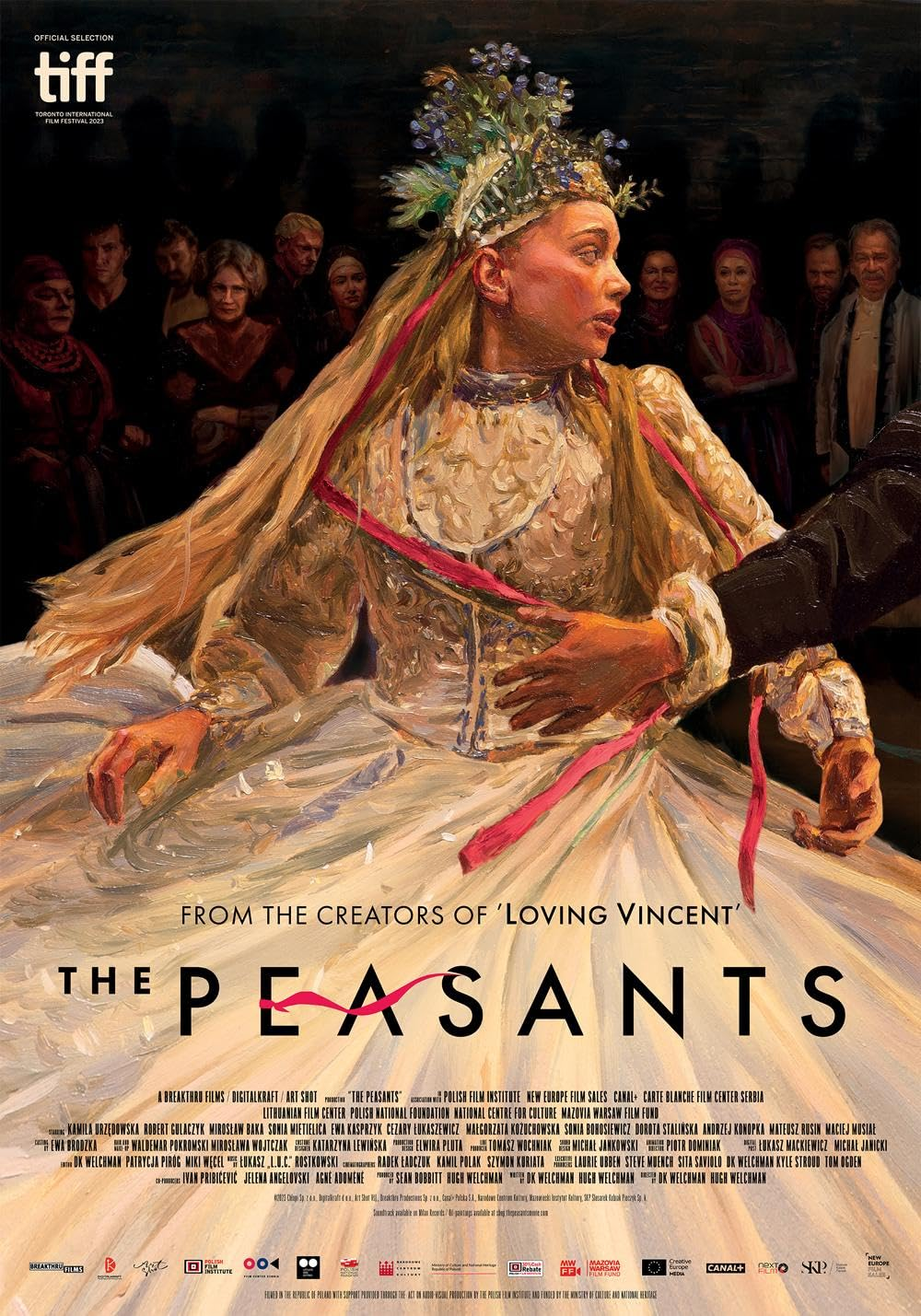
5.   POLAND- “The Peasants” (3.8)

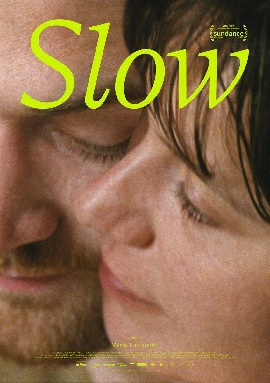
6.  LITHUANIA- “Slow” (3.8)


BULGARIA

In A Nutshell: A surprising thriller about an elderly victim of fraud who decides to seek revenge.

Pros: It’s a fantastic and original film with an Oscar-worthy performance by Eli Skorcheva, who came out of cinematic retirement to make the movie. Stepan Komandarev was shortlisted once before, so this committee appreciates his work.  

Cons: As last year proved, being a fantastic Bulgarian film isn’t enough to make the shortlist if nobody sees it. Bleak.  

CZECH REPUBLIC

In A Nutshell: Based on a true story, this is a thriller about a pair of brothers who go on a violent journey to escape Communist Czechoslovakia

Pros: This Cold War drama looks like a real “traditional” Oscar choice…even the creaky “Charlatan” made the shortlist a few years ago and “Brothers” is far more exciting.  

Cons: While Oscar likely won’t care that these brothers are very controversial figures in their native Czech Republic, nobody is talking about it. This was the last film on the list to premiere meaning few have seen it.

LITHUANIA

In A Nutshell: A quirky romantic drama about a dancer and a sign-language interpreter with dramatically different sex drives

Pros: Critics and audiences really seem to like it. Sundance play showed it has broad appeal with U.S. audiences. Asexuality has rarely been explored in film.

Cons: This is a small drama from a small country and is much more intimate the films Oscar usually shortlists.

POLAND-

In A Nutshell: A beautifully animated film set in rural 19th century Poland, by the makers of “Loving Vincent”

Pros: Good reviews and a very high profile. Based on the new rules, the important thing is getting the film seen…and the film has buzz and a U.S. released well-timed for December. “Loving Vincent” got an Oscar nomination and the film has overall good reviews.  

Cons: The reviews are good but people I know have been less enthusiastic. As far as I know, an animated fiction feature has never been shortlisted or nominated….They may feel this should be rewarded in Animated Feature.

A STRONG SHOWING:


7.  MACEDONIA- “Housekeeping for Beginners” (3.5)

8.  ESTONIA - “Smoke Sauna Sisterhood” (3.9)

9.  ARMENIA- “Amerikatsi” (3.6)

10.  SLOVAKIA- “Photophobia” (3.3)

These four countries are praying for a miracle.

“Housekeeping for Beginners” actually has really great reviews for its comedy-drama about a lesbian reluctantly forced into motherhood by her partner….but most of its festival play has come from LGBT sidebars.

 “Smoke Sauna Sisterhood” has some of the best reviews on paper, but this documentary about nude women (mostly shown without faces) bearing their souls in a traditional sauna is probably much too feminist to score here….stories about women rarely do….Plus Ukraine is likely to get the unofficial documentary slot. “Photophobia”, a docudrama about Ukrainian children surviving the Russian invasion, doesn’t have as strong reviews as "Sauna" and so will likely suffer a similar fate.

Finally, we have the lighthearted “Amerikatsi”, a crowdpleaser from Armenia about an Armenian-American who accidentally ends up in a 1950s Soviet prison when he  accepts an offer for emigres to help rebuild the homeland after WWII. This is a U.S. co-production which got a domestic release and it treats very serious subjects with humor…but that may lead to viewers thinking the film is too light.

MIDDLE OF THE PACK:


11.  BOSNIA-HERZEGOVINA- “Excursion” (3.3)

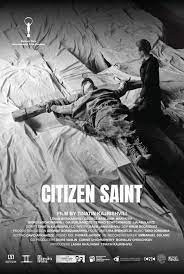
12.  GEORGIA- “Citizen Saint” (3.4)

13.  HUNGARY- “Four Souls of Coyote” (3.5)

14.  SLOVENIA- “Riders” (3.5)

In a field of 90-odd films, these four films are likely to be forgotten. I’ve seen “Citizen Saint” (Karlovy Vary), a B&W arthouse film from GEORGIA about a mysterious man who appears to be the reincarnation of a missing religious icon. “Citizen Saint” starts off sloooow…..and I’m willing to bet that many viewers won’t have the patience to finish it. That’s a shame, because the film has one of the most powerful endings in this group and it gave us a lot to talk about…But one of my friends left the room for 20 minutes in the middle and said she felt like she didn’t miss anything. From the former Yugoslavia, come two quiet dramas…“Excursion” from BOSNIA-HERZEGOVINA (Locarno) is about how rumors and lies about sex affect a teenage girl, her school and her entire community. It’s a great story but I don’t predict it will break out.  Set in 1999, SLOVENIA’s  “Riders” is an overlong coming-of-age story and road movie, with a mostly unlikable set of characters. It didn't find anything about it interesting, although apparently critics liked it better than I did. “Four Souls of Coyote” from HUNGARY (Annecy) is a very well-made 2D animated film about Native American mythology, with environmental issues prominently in the background. But animated films have an uphill battle in this category and the film may be unfairly compared to neighboring Poland’s “The Peasants” which has more innovative and beautiful animation. I found it to be a solid and well-made film, mixing a number of Native legends, but not particularly memorable. 


BETTER LUCK NEXT YEAR:


15.  SERBIA- “The Duke and the Poet” (2.9)

16.  MOLDOVA- “Thunders” (3.5)

17.  ALBANIA- “Alexander” (2.8)

18.  MONTENEGRO- “Sirin” (2.6)

19.  CROATIA- “Traces” (2.8)

20.  LATVIA- “My Freedom” (2.7) 

As I say every year, I’m very happy when smaller countries like Albania and Moldova send films and I’m always excited to see them. It gives me an opportunity to take a tour around the world and revisit countries I’ve travelled to (I’ve been to all 20 countries in this group except Poland). And it gives smaller film industries the opportunity to get their films seen in Hollywood.

These six films are here to represent their countries but they won’t be making it to the next round, in large part because American audiences won’t understand or relate to them. ALBANIA has selected a documentary – “Alexander” - for the first time. The subject of the documentary, Alexander Gruda, is an extraordinary individual who hijacked a warship to neighboring Yugoslavia during the Communist era alongside some friends, his wife, and his infant daughter who was killed by enemy fire. It’s an old-fashioned “talking head” doc and although Alexander (now working at a NYC hotel in anonymity) and his wife have a fascinating story, the documentary doesn’t caption any of the participants and it’s often confusing who characters are and where they are located. MOLDOVA, participating for only the fourth time, selected a new low-budget drama set in the 1990s called “Thunders”, about two children whose parents oppose their friendship. One of the only reviews I can find describes it as a “non-linear” film with a weak script.

From the former Yugoslavia, we have three dramas –“Sirin”, “Traces” and “The Duke and the Poet”. CROATIA’s “Traces” is a dull drama about a female anthropologist dealing with the death of her father. Having won only three small tech awards at Croatia’s national film festival, it was a surprise pick by the usually edgy Croatians (I loved their last three films) and “Traces” has one of the lowest Letterboxd and IMDB scores in the Eastern European group. I saw it and it’s well-acted but really not very interesting. MONTENEGRO’s “Sirin” was the only film submitted this year to represent the smallest country in Eastern Europe...but - unlike neighboring Kosovo- Montenegro sees the value of participation so here they are. The film is fairly interesting to watch but suffers from a really troubled script. The subject of the film seems to jump around and a lot of questions go completely unanswered. I read a synopsis of the film after watching it, and there were some key points that weren’t explained in the film at all. SERBIA is represented by “The Duke and the Poet”, an obscure effort about 19th century history which is unlikely to resonate with U.S. audiences. The film is supposed to be pleasant enough, but had no festival play and has been compared to a production for television.

Finally, LATVIA has selected “My Freedom”, based on the life of a Polish-Latvian woman who helped advocate for an end to Soviet rule in the late 1980s. Her personal life is interesting and there’s a lot (too much?) of interesting folk music….but too much of the film concentrates on the intricacies of Soviet Latvia’s burgeoning political parties and it’s just not likely to hold the interest of a non-Latvian. I think AMPAS audiences will be bored.

Genres:       We have three documentaries (Albania, Estonia, Ukraine) plus an odd docu-drama (Slovakia)…..and two animated films (Hungary, Poland). We also have three “dramatic comedies” (Armenia, Macedonia, Romania) and one thriller (Czech Republic. The other ten are straight-up dramas.

I’ve Already Seen: 11- Albania, Armenia, Bulgaria, Croatia, Estonia, Georgia, Hungary, Latvia, Montenegro, Slovenia and Ukraine. My favorite so far is Bulgaria’s “Blaga’s Lessons”.

Film I’m Most Excited To See: “Housekeeping for Beginners” (Macedonia). 

Number I Predicted Correctly: Ugh….Only 5 out of 20 (Bosnia, Bulgaria, Estonia, Romania and Slovenia) In my defense, my picks for Albania and Hungary were delayed to next year. And several countries picked very late releases.

Big Four Festivals: Very few!  

·      Cannes and Berlin- No Films

·        Sundance- Estonia (Best Director, Documentary), Lithuania (Best Director, Fiction), Ukraine (Best Documentary, Audience Award)

·        Venice- Macedonia, Slovakia

Women Directors- 7 films were directed or co-directed by women: All three directors from the Baltic Republics: Anna Hints (Estonia), Marija Kavtaradzė (Lithuania), and Ilze Kunga-Melgaile (Latvia) plus Una Gunjak (Bosnia-Herzegovina), Tinatin Kajrishvili (Georgia), Dubravka Turic (Croatia), and DK Welchman (co-director, Poland). 

Oldest and Youngest Directors- 58-year old Milorad Milinković (Serbia) is the oldest of the group, while 32-year old Marija Kavtaradze (Lithuania) is the youngest.

Languages Represented- We have four films in the Serbo-Croatian languages, plus two in Romanian, and one each in Albanian, Bulgarian, Czech, Estonian, Georgian, Hungarian, Latvian, Lithuanian, Macedonian, Polish, Slovene and Ukrainian (Slovakia). The Armenian and Ukrainian films are in a roughly even mix of Russian, English and the local language. 

How Many Have a Chance at the Shortlist?- Six or seven? 

Most Likely to Get Shortlisted/Nominated for the First Time- Ukraine has a shot at a nomination, with Lithuania is a dark horse for the shortlist.

Buzziest Films: Probably “The Peasants” from Poland, although that’s mostly for the film’s innovative animation techniques.

Letterboxd Ratings (as of 30 November 2023):      Best: Ukraine (4.2), Worst: Montenegro (2.6)

Dumbest Decision: Serbia’s inexplicable (corrupt?) snubbing of a critically acclaimed Cannes darling (“Lost Country”) and a big-budget WWII movie about Serbia-U.S. cooperation (“Heroes of Halyard”) to send an obscure Serbian history lesson.  

Controversies and Changes: The biggest controversy was in Poland, where the government actively attacked Oscar contender “The Green Border”, comparing Agnieszka Holland (who is part Jewish) to a Nazi, and insisting that a disclaimer accompany the film in cinemas. Kosovo also decided to be controversial (and dumb), when they announced that they wouldn’t send a film despite receiving two strong candidates-  “The Land Within” (Tallinn Black Nights) and LGBT drama “I Love You More”- in addition to an obscure documentary (“Actors of Cannes”) and an Albanian-German co-production (“The Albanian Virgin”) which probably would have been disqualified due to nationality. Trivia: In 2011, Albanian director Bujar Alimani threw a fit when serious Oscar contender “The Forgiveness of Blood” was chosen over his dull “Amnesty”. He complained to the Academy that Albania shouldn’t pick a movie by a foreign director (even though that’s not against the rules). But this year, Alimani submitted his film to represent Kosovo, even though he is Albanian and the film has almost no Kosovar input. Hypocrite!

Oscar History:  The only Oscar nominees are husband-and-wife team Dorotea and Hugh Welchman, who got a Best Animated Feature nomination for “Loving Vincent”.

Stephan Komandarev is representing Bulgaria for the third time, managing Bulgaria’s first and only shortlist spot for “The World Is Big and Salvation Lurks Around the Corner” and was later picked for “The Judgment”. Radu Jude is representing Romania for the fourth time in nine years, after the deserving “Bad Luck Banging or Loony Porn”, the charming “Aferim!” and the underwhelming “I Do Not Care If We Go Down in History as Barbarians”.

Two other directors are here for a second time: Goran Stolevski (Macedonia), who represented Australia last year for “You Won’t Be Alone”, and Ivan Ostrochovský (Slovakia) who had “Goat” in 2015.

Of the 20 competing countries, four have won the Oscar (Bosnia-Herzegovina, Czech Republic, Hungary, Poland), four others have been nominated (Estonia, Georgia, Macedonia, Romania), and two others shortlisted (Bulgaria, Serbia). The other ten are waiting for their first trip to the second round.

Most Notable Omissions: 


Every year, there are lots of wonderful films that fail to make the longlist due to the “one film per country” rule. And this year, four major contenders from Eastern Europe were eliminated in the preliminaries. The highest-profile of the four was Venice Jury Prize winner and European Film Award nominee “Green Border”, by three-time Oscar nominee Agnieszka Holland. Originally, most people said animated film “The Peasants” was the Polish frontrunner. Then when the Polish government began attacking Holland and her film prior to Polish elections, people said “Green Border” would be sent as a symbolic act of protest. In the end, migrant drama “Border” lost the tight two-way race.

Georgian-language drama “Blackbird Blackbird Blackberry” (Cannes) applied to represent both Georgia and Switzerland and was almost certainly the runner-up for both countries. It was considered the Georgian front-runner all year.

As mentioned above, “Lost Country” (Cannes) was a dark horse threat for an Oscar nomination and probably deserved to represent Serbia (I haven’t seen it yet). But Serbia selected the most obscure film on its 7-film shortlist which was extremely suspicious. Lastly, war-torn Ukraine had a fiercely competitive race, with acclaimed documentary “20 Days in Mariupol” ultimately beating out “Pamfir”.

Also out of luck: “The Art of Falling (Bulgaria), “We Have Never Been Modern” and “Restore Point” (Czech Republic), “Explanation for Everything” and “White Plastic Sky” (Hungary), “M” (Macedonia), “Varvara” (Moldova), “Freedom” and “MMXX” (Romania), “Guardians of the Formula” (Serbia), “Plastic Symphony” (Slovakia), and “Luxembourg Luxembourg” (Ukraine)

Most Famous Face: German actress Nina Hoss (“TAR”), who co-stars in Romania’s “Do Not Expect Too Much of the End of the World”

Last Year’s Race:  Last year’s best two films – “In the Heart of the Machine” (Bulgaria) and “Aurora’s Sunrise” (Armenia) – came from this region…but the Academy chose to ignore them both. These beautiful, inspiring, heartbreaking movies are two of the reasons I try to watch all the films each year. I give them both an ‘A’.

Also seen last year: Lithuania and Macedonia (A-), Croatia, Czech Republic, Serbia and Slovakia (B+), Georgia, Ukraine and Oscar nominee Poland (B), Romania (B-) Bosnia-Herzegovina, Estonia, Kosovo and Montenegro (C). I couldn’t find the films from Albania, Azerbaijan, Hungary, Latvia, Moldova and Slovenia anywhere…


Friday, August 3, 2018

FOREIGN OSCAR PREDICTIONS: Eastern Europe

It's that time of year again. The surprise announcement by BELARUS that they would be re-entering the Oscar race after over 20 years (with a "girl power" comedy, no less) spurred me to begin this year's review with the 24 countries of Eastern Europe. Last year, 20 of these countries sent films....This year, we could conceivably see all 24. 

Last year I saw 65 of the record 92 submissions, and I'll include my rankings after reviewing this year's new films, although I probably won't have time to look at all five regions. 

Here are my 24 predictions from Eastern Europe: 


1.  ALBANIA- “Delegation” Albania has a number of films in post-production but they’ve been absent from film festivals this year and I only know of one film (political comedy “The Expats’ Tale”) that has actually been released in theatres. My guess is that they will send a last-minute premiere by one of their previously submitted Oscar teams- either “The Delegation”, a black comedy about Communist Albania’s first encounters with the West in 1990, or “A Shelter Among the Clouds”, a rural drama about faith in a multi-religious region of Albania. “Delegation” is directed by two-time Albanian representative Bujar Alimani and written by Artan Minarolli, who made “Alive”, one of Albania’s best Oscar submissions ever. “Shelter” is directed by Robert Budina who represented Albania in 2013. Dramas “Open Door” and “Broken” could also be selected if they get released in time. My prediction: an early qualifying release for “The Delegation”.

2 ARMENIA- “Lorik” Armenia’s political revolution has energized an outpouring of creative energy in the country, but film output is way down . There were no National Film Awards last year (originally known as the Hayak Awards, then the Anahit Awards) and the national film festival only had one new feature- namely “Lorik”. “Lorik” stars acclaimed actor Michael Poghosian who has starred in most of Armenia’s Oscar submissions so far, so "Lorik" looks like a good bet. In this film, he plays an aging actor.  Earthquake drama “Spitak” won Best Director at the Moscow Film Festival, but the Russian/Armenian co-production situation looks too much like earthquake drama “Earthquake” which was disqualified by AMPAS for being too Russian. Possible dark horse: documentary short “With the Wind” won Best Doc at the national Film Festival in July (the Golden Apricots) and selecting this debut by a young 24-year old would show support for the nation’s youth....a high priority of the government after this spring's peaceful revolution. 

3.  AZERBAIJAN-“Return” Azerbaijan has slim pickings this year and I’m unsure of what they could possibly send. For now, I’ll put down “Return” (also known as “Returning in the Future” or “Dönüş”), a patriotic film about a medic soldier serving during the Nagorno-Karabakh war.  That seems more likely than “Devil” (aka “Khannas”), a new horror-thriller that earned Azerbaijan its only major film festival bookings this year, in Iran and Kazakhstan. 

4.  BELARUS- “Crystal Swan” Welcome back Belarus! For years, Belarus has been the only nation in Europe without an Oscar committee (some countries e.g. Azerbaijan and Moldova only submit infrequently, but they do have an active selection committee). So it was a major surprise when the reclusive Eastern Euro republic became the first country to announce their official Oscar pick of 2018. Belarus- which last entered the race in 1996- selected “Crystal Swan”, a surprisingly youthful (and slightly subversive) comedy about a young woman trying to engage in visa fraud to realize her dream of becoming a club DJ in the USA. The trailer looks low-budget but charming, and the film just won the Grand Prize at the Odessa Film Festival. I plan to see it this month. 

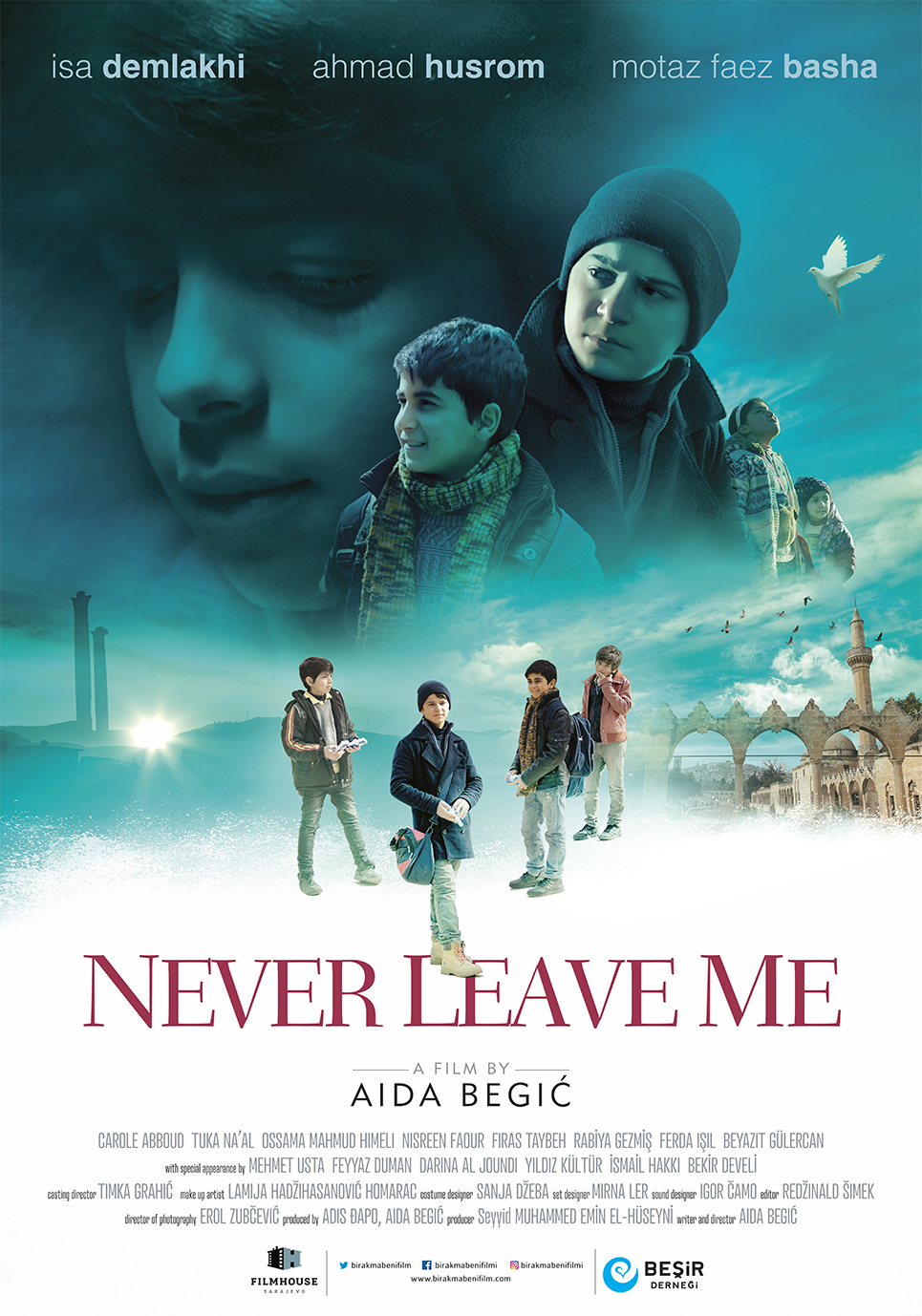
5.  BOSNIA-HERZEGOVINA- “Never Leave Me” Bosnia usually makes the “obvious choice” and this year that is Aida Begic’s children-in-peril drama “Never Leave Me”. Begic has been chosen twice before and Oscar loves war and cute kids. “Never Leave Me” was the only Bosnian-directed film in competition at Sarajevo (in the “In Focus” Section) and its story of three Syrian refugee boys is guaranteed to pull at the heartstrings. It’s in Arabic and Turkish but the main crew is Bosnian so it’s eligible.

6.  BULGARIA- “3/4”  Once the region’s cinematic laggard, Bulgaria has quietly been gaining a reputation for quality arthouse cinema. Last year’s “Glory” deserved an Oscar nomination and Bulgarian entries are generally much better than the dreary films from the Romanian New Wave next door. This year, the Bulgarians have several films to choose from. The most acclaimed “Bulgarian” film of the year- “Aga”- is actually not very Bulgarian at all. “Aga” competed in the Main Competition at Berlinale for Bulgaria, but it was filmed in Russia in the Yakut language by a Bulgarian director. It’s about the dying traditions of a Yakut family in a remote region of Siberia. It would be the obvious choice, but some countries prefer to select a film that showcases the culture of the country it is representing. In that case, Bulgaria could choose “3/4”, a quiet family drama about a young female pianist and her quirky family, or “Omnipresent”, a drama-thriller about a paranoid young man who becomes obsessed with spying on his friends and family. Bulgaria has two major film festivals- the Sofia Film Festival (where “¾” dominated) and the Golden Rose Festival (where “Omnipresent” was more popular). They also have two dark horses: “Heights”, a crowd-pleasing local hit and historical epic set in the 1870s when Bulgaria was fighting for independence from the Ottoman Empire and “Directions”, about a late-night taxi driver and directed by Bulgaria’s only Oscar-shortlisted director Stephan Komandarev. My prediction: “3/4” will pip the better-reviewed “Aga” due to nationality, with Komandarev’s “Directions” in third. 

7.  CROATIA- “Mali” I’m pretty sure that Croatia will select “Mali”, which won both Best Picture awards at the Pula Film Festival this year (Film Critics and Jury). Interestingly enough it came in 9th out of 12 film in the Audience Award competition, so that doesn't bode well for its chances. “Mali” is a grim family drama about a drug dealer trying to retain custody of his young son, and it's directed by Antonio Nuic (“Donkey”), a respected young director who was selected to represent the country in 2009. “Mali” doesn't have a domestic release date yet, potentially opening the door to three others- “All Alone” (another custody drama), “Comic Sans” (winner of Best Director, two acting awards, two tech awards and the Audience Award in Pula) and “Eighth Commissioner” (one acting and four tech awards). Rural comedy “Comic Sans” would definitely be the hometown favorite (it scored 4.92 out of 5 at Pula) but I don’t think Croatia would choose a movie that depends so much on dialect and local flavor. I have sentimental dramedy “Eighth Commissioner”, a box-office success based on a popular novel, ranked second. 


8.   CZECH REPUBLIC- “Bear With Us” The Czech Republic deserved a shortlist spot last year for the charming "Ice Mother” (maybe if the film hadn’t ended quite so suddenly?). This year has been weak for Czech cinema. There are four or five potential contenders, but none are likely to be nominated. I think the two top possibilities are road movie “Winter Flies” and the upcoming police procedural “Miss Hanoi”, which will both be released in the next 30 days. “Winter Flies” (directed by Slovenia’s Olmo Omerzu) is a road movie about two teens in a stolen car, and it won Best Director at Karlovy Vary. “Miss Hanoi” focuses on a murder within the Czech Republic’s minority Vietnamese community, which is being investigated by two Czech police partners, including the first Vietnamese-Czech woman on the force. Although “Miss Hanoi” hasn’t screened yet, I’m predicting it as the surprise Czech nominee, with “Winter Flies” in second place. Rounding out the Top Five (in order): family comedy “Bear With Us”, coming-of-age drama “Short Cut” and horror-thriller “Domestique”. UPDATE:  Now that "Miss Hanoi" has opened to little fanfare or strong feelings one way or the other, I'm switching my prediction to family comedy "Bear With Us". 

9.  ESTONIA- “Little Comrade” Estonian cinema got an extra dollop of funding due to this year’s centennial of independence. It’s difficult to see the Estonians choosing anything other than the heart-warming drama of “Little Comrade”, a local box-office smash about a little girl growing up in Communist Estonia, after her nationalist mother is deported to a labor camp. Confused by her mother’s sudden departure, she tries to be as good as she can be so that her mother will return to her. The only other possibility I could see is the Georgian-language “Confession” (see below). Georgian director Zaza Urushadze got Estonia their first-ever Oscar nominee for “Tangerines” but “Confession” has far less Estonian input, so I expect it will compete for Georgia. In a less competitive year, “The Manslayer. The Virgin. The Shadow”- featuring one lead actress playing three roles in three time periods- would also have a chance. 

10.   GEORGIA- “Dede” It’s a crowded race since two of last year’s top contenders (“Khibula”, which I predicted last year, plus “Dede”) got released domestically in Georgia this year. They join Georgia’s two festival films of 2018 (“Namme” from Tokyo and “Horizonti” from Berlin/Sarajevo) plus Oscar nominee Zaza Urushadze’s latest film, “Confession”. All of these films are said to be "good" and all make use of Georgia’s exotically beautiful countryside. None are universally loved. Variety called “Khibula” “illuminating but arduous” and “Confession” “a problematic follow-up” to the Oscar-nominated "Tangerines". "Khibula" is the latest from Giorgi Ovashvili (shortlisted for “Corn Island”). My prediction is that Georgia selects ethnographic love triangle “Dede” with “Confession”- about a priest tempted by a beautiful village girl who resembles Marilyn Monroe- in a very close second place. After all, “Father Amaro” had the same plot and middling reviews didn’t stop them from earning Mexico an Oscar nomination. “Khibula” may prove too political while “Namme” has no buzz. Georgia has chosen an obscure last-minute release three of the past four years so we could also see something completely new. 

11.  HUNGARY- “Sunset” Few countries have an easier decision than Hungary this year. László Nemes won an Oscar, a Golden Globe, a BAFTA and three awards at Cannes for his feature debut “Son of Saul” (which I still haven’t seen….) in 2016. His follow-up, “Sunset”, is another historical drama, this time set in the lead-up to WWI. It has booked a prime competition slot in Venice, initial photographs and clips look beautifully filmed, and the producers have arranged for it to debut in Hungarian cinemas a few days before the Oscar deadline. I can’t imagine Hungary choosing anything else….If the film were to flop (which is highly unlikely), they would presumably choose “One Day” (winner of Best Director at Cannes Director’s Fortnight), the directorial debut of the AD of Oscar nominee “Of Body and Soul”.  It’s about a harried housewife and in any other year, it would be a strong contender. 

12.    KOSOVO- “Cold November” Tiny Kosovo has two strong contenders this year. “The Marriage”- about a man clearly not in love with his fiancée- is clearly the most visible Kosovar film of the year, with regional screenings at film festivals in Tallinn (Best First Feature), Sarajevo and Transilvania. But moral dilemma drama “Cold November” is set to debut soon in San Sebastian and may have more momentum. It stars renowned Bosnian actor Emir Hadzihafizbegovic who has starred in no less than 14 Oscar submissions from former Yugoslavian countries since 2003. I think the LGBT storyline of “The Marriage” will be enough to doom them to second place. Still….an impressive year for tiny Kosovo!

13.  LATVIA- “Bille” I’m predicting Latvia sends “Bille”, a successful family drama about a little girl growing up in a poor family during the Great Depression. It should have a pretty easy time defeating thriller “Foam at the Mouth”, which won a Critics Prize at Moscow 2018 and whose director represented Latvia in 2013. Less likely: popular action-comedy “Criminal Excellence Fund” and Japanese co-production “Magic Kimono” (starring Kaori Momoi). Latvia’s biggest hit of the year- Aigars Grauba’s 13th century epic “The Pagan King”- was filmed in English. 

14.  LITHUANIA- “Isaac” Lithuania has a surprisingly competitive race with no less than five films strongly in the running. In alphabetical order: (1)- “Breathing Into Marble” is the only Lithuanian feature to play at a major festival in 2018. This “family thriller” concerns a family raising two young boys, one natural child with epilepsy and one adopted child with disturbing tendencies; (2)- the Russian-language “A Gentle Creature” by Ukrainian director Sergei Loznitsa isn’t exactly a Lithuanian movie, but the co-production has represented Lithuania at several EU Film Festivals and competed at the Lithuanian Silver Crane Awards as a domestic feature. The film premiered at Cannes 2017 where it garnered strong reviews for its story of a woman seeking to learn why the letters to her jailed husband in prison have been returned unopened; (3)- the upcoming (and controversial) “Isaac” (Izaokas) focuses on the murder of a Jewish Lithuanian in 1941 when Lithuania was occupied by both the Soviets and the Nazis. It’s set to premiere right before the deadline in September; (4)- “Miracle” won Best Picture (over “Creature” and “Marble”) at the 2018 Lithuanian Silver Crane Awards for its tragicomedy about a hog farm, a devoted employee and a capitalist who may be a con artist; (5)- “Wonderful Losers: A Different World”, about competitive cycling, won Best Documentary at the Silver Crane Awards (Lithuania has picked documentaries three times before) and has the highest score on IMDB. Lithuania’s most hotly anticipated film of the year- “Ashes in the Snow” will be released after the deadline on October 12 and will likely be next year’s submission. This is a tough one, but I predict “Isaac”, followed by “Miracle” (which I’m personally hoping for) and “Wonderful Losers” in third. 

15.    MACEDONIA- “Secret Ingredient” Macedonia has inexplicably refused to send a film two of the past five years, saying their films aren’t good enough, losing an opportunity for national filmmakers to get their films seen in America. This year, I think they'll be back....They have two critically-acclaimed dark comedies eligible, namely “Secret Ingredient” a marijuana-laced black comedy, and “Year of the Monkey”, starring a man and a chimpanzee.  Despite sounding silly, both films have received warm reviews from critics and Macedonia has selected comedies twice before.  “Secret Ingredient” is about a man who learns medicinal marijuana can cure his cancer-stricken father while “Year of the Monkey” (which represented domestic cinema at the 2018 Skopje Film Festival) features modern Macedonian life through the eyes of a zookeeper and his pet monkey. I give the edge to “Ingredient” which has slightly better reviews. Macedonia sometimes tries to announce their Oscar selection to publicize a movie released at the very last moment; if they decide to do that again, “The Mocking of Christ” is a potential nominee. 

16.  MOLDOVA-“The Last Day Before June” Moldova may be Europe’s least-visited nation but it’s also a very charming place (I vacationed here in 2016). They’ve sent films to the Oscars twice and I expect this year they’ll send “The Last Day Before June”. A rare Moldovan feature, it got Moldova’s first-ever nomination at Russia’s Nika Awards (for Best CIS Film) and also screened in the CIS Section at the Golden Apricot Film Festival in Armenia. It’s about an Italian man and his Moldovan wife who return to Moldova to try and take back the children she left behind with her Moldovan ex-husband.


17.  MONTENEGRO- “You Have the Night” Montenegro is the smallest nation in Eastern Europe (population: 620,000) and didn’t have any eligible films last year. This year, the small Balkan republic managed a rare festival slot at a Class-A festival, possibly for the first time in their history. Therefore, “You Have the Night”, which received support from the Ministry of Culture (which I think selects the Montenegrin Oscar candidate) is suddenly the clear frontrunner. Premiering in Venice, it’s about a woman who loses her job aboard a cruise ship. Less likely: I predicted triptych drama “Neverending Past” (aka “Između dana i noći”) last year but it still hasn’t been released; “The Books of Knige”, starring a bunch of TV comedians, was popular but looks too silly to be considered.

18.   POLAND- “Cold War” I’m predicting Poland sends “Cold War”, the sophomore film by Pawel Pawlikowski, Poland’s first Foreign Film Oscar winner (“Ida”). It also won Best Director at Cannes and is the best-reviewed Polish film of 2018. But unlike the front-runners from Hungary or Ukraine, this is by no means a sure thing. Pawlikowski has claimed that he has been blacklisted by Poland’s government. I have no idea whether Poland’s Oscar committee has government ties or whether this will matter (Authoritarian Russia has chosen films by anti-regime directors) but this will be one of Eastern Europe’s more interesting races. For the record, “Cold War” is a B&W romance set during the early days of Communism and I personally think it looks better than “Ida” which I found forgettable.  It’s a contender for a nomination if Poland chooses it. But what will Poland choose if they don’t? They’ve actually had a very good film year. There are three new films by previously submitted directors (“Pardon”, “Ether”, “Once Upon A Time in November”), two Polish films that premiered at Berlin (“Mug”) and Cannes (“Fugue”), the winner of last year’s national film awards (“Silent Night”), two baity historical dramas (“303 Squadron” and “The Butler”) plus a controversial film about priests (“Kler”). I really think “Cold War” will get this, but the main competition should be considered to be “The Butler”, a lavish period drama spanning most of the early 20th century that (unlike many of the others) has a release date.

19.  ROMANIA- “I Do Not Care If We Go Down in History as Barbarians” Usually a win at Cannes, Berlin or Venice will guarantee your film a chance at Best Foreign Film but Romania’s Berlinale 2018 winner largely naked “Touch Me Not” has gotten terrible reviews and probably contains too much English to qualify, leaving Romania without a front-runner. The Romanian race should become clearer after Sarajevo, where a number of Romanian films will premiere and/or expand their reach. That should leave the door open for “I Do Not Care If We Go Down in History as Barbarians” which won the Grand Prize in Karlovy Vary. Director Radu Jude represented Romania with “Aferim!” a few years ago. His latest film is about Romania’s dark past as an ally of Nazi Germany in WWII. It's a politically tricky topic which may upset some Romanians, but it’s the strongest Romanian film of the year. Some years (like last year), Romania will choose a relatively little-known film (last year’s forgettable “Fixeur” beat out “Ana mon Amour” and “One Step Behind the Seraphim”). This year, the "small" contenders could be “Octav”, about an old man who returns to his village after several decades, and “Pororoca”, a slow-burn mystery-thriller about a missing child. “Love. 1. Dog” (by New Wave director Florin Serban) sounds strong but doesn’t have a release date. The quirky “One and a Half Prince” sounds more interesting but doesn’t have the support of a studio. I predict “Barbarians” gets this, with “Love. 1. Dog” and “Octav” the most likely alternatives. 

20.  RUSSIA- "Salyut-7" 

21.  SERBIA- “Offenders” Serbia is fairly confusing this year. The grand days of Yugoslav cinema are mostly gone so one would think that getting a slot at Cannes would be guaranteed to be their Oscar pick. However, "The Load", a slow road movie about a truck driver, has been savaged by critics. “Witch Hunters”, about a boy with cerebral palsy, has gotten the best reviews of any Serbian film this year but it’s primarily a children’s film and Serbia tends to like their films with grittiness and violence. Buzzy sci-fi flick “Ederlezi Rising” is in English. So, this is probably a race between two new Serbian thrillers- “Offenders”, about a professor who encourages his students to experiment with anarchy and chaos, and “Horizons”, a dysfunctional family drama. “Offenders” has more star power and a more experienced director, and it won Best Serbian Feature at the FEST International Film Festival (“Horizons” competed but didn’t win anything) so it’s my prediction. You have to pay a fee to enter the Oscar race in Serbia, so expect “The Load” to get this if “Offenders” doesn’t enter.

22.  SLOVAKIA- “The Interpreter”  Martin Sulik has made six fiction features since Slovakia gained independence in 1993 and he has been selected for the Oscars six times. This year, his “The Interpreter” is by far the best-reviewed Slovak film in a relatively weak year and it was the only Slovak feature to screen at Karlovy Vary (Slovak films are allowed to compete in the "Czech Film Section" and usually there are lots of Slovak films there). The film- about an old man who confronts the man who killed his parents during the Holocaust- is a near lock. Runner-ups: historical drama “Dubcek”, and “By A Sharp Knife”, an upcoming thriller about a community shocked when the killers of a small child are released without punishment.

23.  SLOVENIA- “Ivan” Slovenia appears to have five eligible films by previously submitted directors- Rok Biček, Janez Burger, Jan Cvitkovič, Marko Naberšnik and Sonja Prosenc. Ultimately, this will probably come down to a race between Burger (2005 and 2011) and Prosenc (2015). Burger’s “Ivan” swept the 2017 Slovenian Vesna Awards, winning eight awards including Best Fiction Feature (though it lost Best Picture to a documentary and Best Director to last year’s Slovenian nominee “The Miner”). "Ivan" is a drama about a woman torn between her love for her abusive, married boyfriend and her love for her newborn child. “History of Love”, a mostly wordless teen angst drama, was the only Slovenian film to play at a major festival in 2018 (Karlovy Vary). Disturbing documentary “The Family” (Biček, who probably got Slovenia close to a nomination for “Class Enemy”) won Best Picture at the Vesnas, is definitely a potential spoiler. My predicition: "Ivan", "Family" and "History of Love". 

24.  UKRAINE- “Volcano” Ukraine has one of the easier choices this year and they’re extremely likely to choose abdurdist comedy-drama “Volcano” which represented the country in-competition at Ukraine’s largest film festival, in Odessa, and also in the East of the West Section of Karlovy Vary. Director Roman Bondarchuk has been selected once before and “Volcano”, about a translator stranded in a strange little town, has gotten better reviews than that forgettable documentary. Ukraine often selects a three-film shortlist so the other two are likely to be rural village drama “Where the Trees Fall” (Berlinale Panorama 2018) and documentary “Delta”, which won Best Ukrainian Feature in Odessa (“Volcano” competed in a separate international section).