Here are the 23 submissions from Eastern Europe and the former Soviet Union.
DISQUALIFIED:
 23. KYRGYZSTAN- "Night Accident" Kyrgyzstan announced road movie "Night Accident" as their Oscar submission on September 27th. The film got very good reviews but didn't appear on the final list (though it was on the Golden Globes submission list). My guess is that it didn't arrive in Los Angeles in time, but there's been no confirmation either way.


BETTER LUCK NEXT YEAR
22. LITHUANIA- "Wonderful Losers"
21. LATVIA- "To Be Continued"
20. CZECH REPUBLIC- "Winter Flies"
19. MONTENEGRO- "Iskra"
18. GEORGIA- "Namme"
For the second year in a row, LITHUANIA is in my bottom two. Their dull 75-minute documentary "Wonderful Losers" is about professional cycling. It focuses on the members of professional cycling teams whose job (apparently) is to support the team captains but it also focuses on the medical teams that follow the racers. There was actually no explanation of how these cycling races are organized and the stories were of very little interest. LATVIA also selected an unheralded documentary, choosing "To Be Continued", following a number of rural children through their first year of school. Even if it's very well-done it won't make an impact here. Both were probably chosen thanks to a new rule that all documentaries submitted for the Foreign Language category will automatically be entered in the Best Documentary competition.
 MONTENEGRO has the most obscure film on the list, namely "micro-budget" political thriller Iskra", the feature debut of 28-year old Gojko Berkuljan. The few reviews online say this is a very engaging film, focused on a series of unsolved murders and disappearances. But with no awards, no buzz, no festival play and no budget, it will have to content itself with the extra publicity it will get from the Oscar race. GEORGIA also chose an obscure film- "Namme"- over some more high-profile entries ("Khibula", "Dede" and a local version of "Hamlet"). "Namme" is about an old man who is the caretaker of a holy spring with healing waters, and a (possibly) magical fish. His three sons have left home leaving his reluctant youngest daughter to carry on the tradition. "Namme" has a sweet story and showcases Georgia's natural beauty....but it's slow-moving and slightly dull.
The CZECH REPUBLIC should be embarrassed to be in the bottom tier alongside these four small republics. "Winter Flies" was one of the worst of the 46 submissions I've seen so far. If you want to see a road movie with two unlikable 13-year olds jerking off together in a car, go see "Winter Flies".


TOO MUCH COMPETITION
17. KOSOVO- "The Marriage"
16. BELARUS- "Crystal Swan"
15. ARMENIA- "Spitak"
14. ROMANIA- "I Do Not Care If We Go Down In History As Barbarians"
13. MACEDONIA- "Secret Ingredient"
After a 22-year absence, BELARUS is back in the Oscar race with "Crystal Swan". I feel terrible ranking it so low because I really loved the film. It's definitely one of my favorites and one of the reasons I try to see all the films- not just the apparent front-runners. Set in the 1990s, "Crystal Swan" is about, Velya, a 20-something Belarusian slacker who dreams of being a DJ and dreads ending up like her mother, a responsible civil servant. Velya is trying to get a visa to leave her conservative country and work illegally in America. When she learns that the US Embassy will call the fake phone number she put on her visa application "sometime this week" to verify her employment as a factory manager, she travels to rural Belarus to find the family that has the number and convince them to let her sit by the phone. "Crystal Swan" is a low-budget feature debut but it's charming, funny and original, while also treading into some very dark places. I loved it. Much the same can be said for the crowd-pleasing marijuana comedy "Secret Ingredient" from MACEDONIA. Vele's conservative father is dying of cancer and in constant pain, and Vele cannot afford the medicine needed to keep him. But instead of a dark Balkan drama, this is a very dark Balkan comedy as Vele discovers a cache of drugs and uses the potent marijuana to make Dad feel better. He tries to keep this a secret to avoid trouble with the police and with the drug dealers who lost their stash, but Dad can't keep a secret and tells the whole neighborhood that his son is a miracle healer. It's also a low-budget effort but it's very entertaining and very well-done. Bravo to both.
Also from the former Yugoslavia, we have "The Marriage" (available on Amazon). Who would have thought that the only gay-themed film from Europe this year would be from the tiny, conservative breakaway republic of KOSOVO. This is another one of those films that I really enjoyed but will simply be forgotten here. The story follows a seemingly happily engaged Kosovar couple whose relationship is strained by the arrival of the groom's best friend who emigrated to France many years before. The two men were in love but could not make things work in conservative Kosovo. Reviews have been mixed-to-positive but I really liked it.
More memorable and less enjoyable is ROMANIA's intellectual drama "I Do Not Care If We Go Down in History as Barbarians", a didactic, talky drama exploring Romanian history. This may be the "smartest" movie in competition, as the modern-day characters have intellectual debates about the meaning of history, the actions of Romania's WWII leadership and the ability of the public to process historical revisionism. It's a good film with a great ending...but it's not very accessible and definitely requires some knowledge of Romanian history. Last but not least, ARMENIA has chosen earthquake drama "Spitak", a Russian co-production . Strangely enough, Armenia was disqualified for another Russian co-production about the same earthquake two years ago. "Spitak" is an Armenian man in Moscow who rushes home to find his family after hearing about the disastrous 1988 earthquake that killed roughly 40,000 people. Destined to be an also-ran.


MIDDLE OF THE ROAD
12. SERBIA- "Offenders"
11. BULGARIA- "Omnipresent"
10. CROATIA- "The Eight Commissioner"
9. SLOVENIA- "Ivan"
Balkan neighbors Bulgaria and Serbia have chosen very different films about the power of surveillance and voyeurism. Dark comedy "Omnipresent" (BULGARIA) is slightly more likely than dark thriller "Offenders" (SERBIA), though neither is likely to make the finals. "Offenders", one of is about a group of graduate students who set up a series of video cameras in a poor neighborhood to prove their professor's theory of anarchy. Bulgaria is a lighter (but still sometimes creepy) film about a man who becomes obsessed with watching the security cameras he has set up in his home and office. The man had set up one camera in his father's apartment to catch a thief but the cameras proceed to reveal family secrets and betrayals that he uses to his own advantage.
CROATIA's comedy "The Eighth Commissioner" revolves around a fast-rising bureaucrat who is forcibly relocated from the capital to a remote island after an embarrassing political scandal. His new "district" is filled with a few dozen elderly citizens (plus a Bosnian fugitive, a Ukrainian prostitute and a slew of goats) who have no intention of cooperating. They have already driven the first "seven commissioners" away. This is a flawed but definitely charming film. The ribald humor and the overlong running time will make sure this film is likely to rank in the 30s or 40s. Finally we have SLOVENIA and "Ivan", which is a really hard one to rank. It's a well-made film with an extremely unsympathetic lead character, namely a young woman who has just given birth to the son of her wealthy, married boyfriend. This is a good, twisty drama with a lot of meaty moral dilemmas but isn't likely to stand out enough to make the Top Six or be one of the three that are saved.

 HOPING FOR A MIRACLE
8. RUSSIA- "Sobibor"
7. ESTONIA- "Take It Or Leave It"
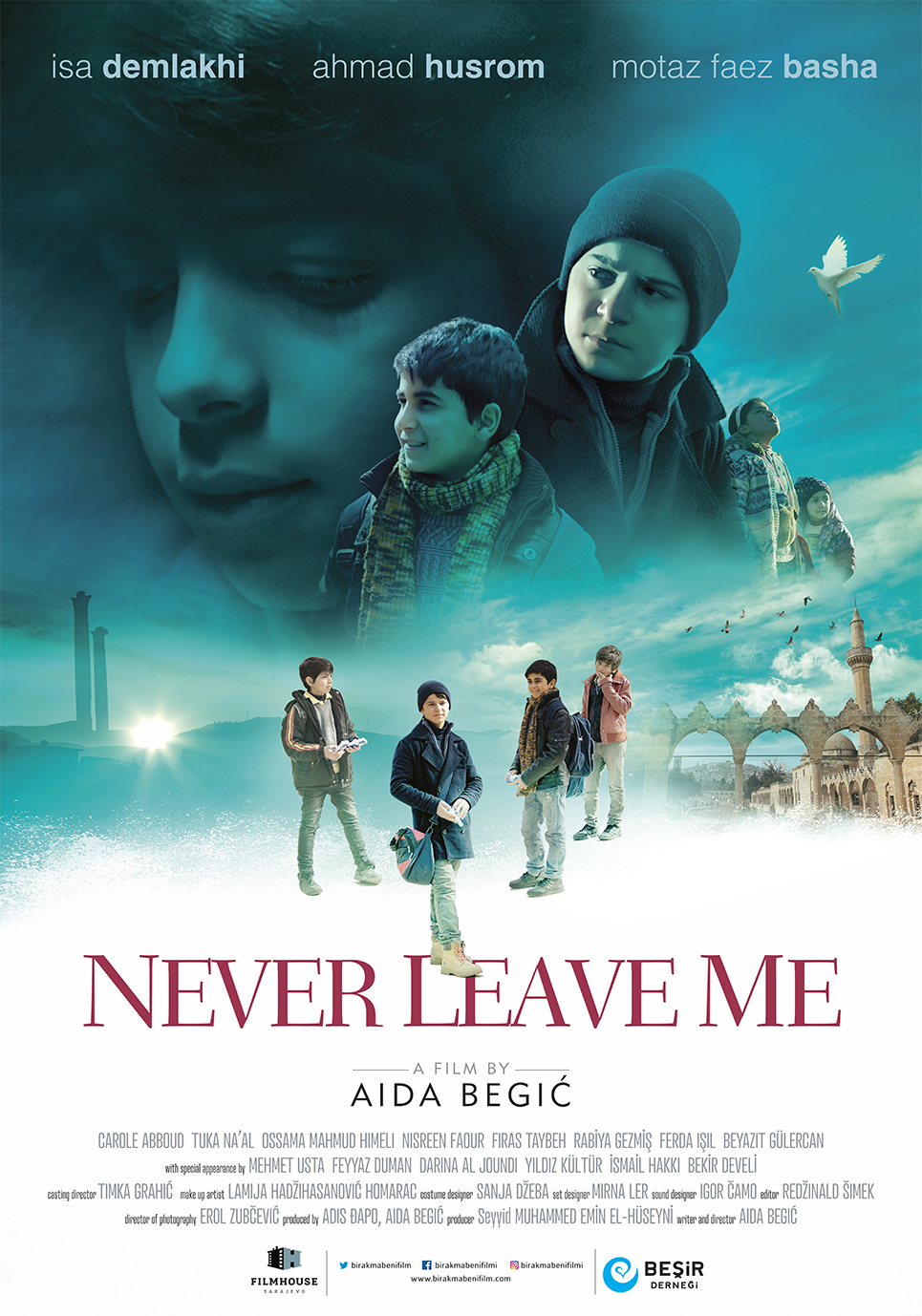
6. BOSNIA- "Never Leave Me"
I'll keep my remarks on these three brief.
I've only seen "Take It Or Leave It" (ESTONIA), a well-made family drama about a 20-something Estonian laborer who receives a phone call from his ex-girlfriend notifying him that he has become a father and that she is giving the child up for adoption. The man reluctantly decides to raise the child by himself and what results in a very realistic (this is not "Mr. Mom" or "Three Men and a Baby") look at the struggles of single fatherhood. Probably too small to compete here but a strong effort. It will compare favorably with the similarly themed "Ivan" from Slovania.
BOSNIA-HERZEGOVINA selected refugee drama "Never Leave Me", about Syrian refugees trying to survive in Turkey. Starring real-life child refugees, it's guaranteed to tug at the heartstrings. Reviews have been very positive, but note a tendency for the plot to get off-track. The film will be hurt by comparisons to Lebanon's more prominent "Capernaum" from Lebanon. RUSSIA has selected a more traditional war drama-"Sobibor"- revolving around the real-life uprising of prisoners being held in a Nazi extermination camp. The film itself is said to be an extremely realistic look at WWII history, but lacking in character development
DARK HORSES
 5. HUNGARY- "Sunset"
4. KAZAKHSTAN- "Ayka"
3. UKRAINE- "Donbass"
Let's take a look at these three dark horses:
 Hungary-
BLUF: A young woman's life in turn of the century Hungary.
PROS: The film looks beautiful. Director Nemes won the Oscar for "Son of Saul"
CONS: That's about it for Pros....Although reviews haven't been bad, a lot of people are lukewarm on the film. It has the lowest score in Europe on Rotten Tomatoes (52% from critics and 55% from audiences)
 BOTTOM LINE: While hoping to emulate "The Notebook", another Hungarian film with mixed reviews that somehow made the shortlist, "Sunset" is probably out of luck.
 Kazakhstan
BLUF: A grim drama about an unemployed, Central Asian woman living in Moscow. She has just had a baby and is desperate to make ends meet.
PROS: Won Best Actress in Cannes.
CONS: Unrelentingly grim and depressing. Most reviews single out the acting more than the film itself.
 BOTTOM LINE: Kazakhstan pushed hard for this film to get into the Oscar race as it was originally going to be disqualified for not meeting nationality requirements (director Sergey Dvortsevoy was born and raised in Kazakhstan and has represented them once before....but is now based in Russia and recently gave up his Kazakh citizenship). But it can't make the Top Six and there's too much competition for a save.
 Ukraine
BLUF: A series of vignettes focused on war-torn, eastern Ukraine
PROS: It's an intellectual, arthouse choice focusing on the issue of fake news and propaganda (a hot topic in the U.S.), and it's not required to know about Ukrainian politics......
CONS: ....but it helps. The "coldness" and lack of regular characters will turn off some voters and this definitely won't fly with the large committee.
BOTTOM LINE: I predict that "Donbass" is seriously considered by the elite committee for a "save"....and ultimately loses out.


FRONT-RUNNERS
2. POLAND- "Cold War"
1. SLOVAKIA- "The Interpreter"
As of December 14th, I have both of these films in my Top Nine predictions. "Cold War", from POLAND, has been a favorite all-season and has gotten rapturous reviews for its decidedly unromantic story of star-crossed lovers who meet in post-WWII Communist Poland and who manage to meet again in Yugoslavia, France and finally Poland. Of course it's well-done (I thought it was much better than Oscar-winning "Ida", which I found forgettable) and the Cinematography is likely to be nominated for an Oscar. But the film's characters aren't likable and the film, like the title, is "cold". It failed to get a Golden Globe nomination and is probably less safe than people think. "The Interpreter" from neighboring SLOVAKIA, could be the one that surprises everyone. This is the story of two old men on a road trip through Austria and Slovakia to research long-buried secrets from WWII. 80-year Ali, a Slovakian Jew and German-language interpreter, finds himself paired with 70-year free spirit George, an Austrian whose father was the Gestapo officer who had Ali's parents killed. It's funny, it's sad and it tells a Holocaust story in a completely different way. However, the ending (which I liked) has apparently turned a lot of people off. This film is going to be a strong contender to win over the traditionally older, male Large Committee....unless the influx of new voters this year really changes the demographics.
Now the statistics:
DISQUALIFIED:


BETTER LUCK NEXT YEAR
22. LITHUANIA- "Wonderful Losers"
21. LATVIA- "To Be Continued"
20. CZECH REPUBLIC- "Winter Flies"
19. MONTENEGRO- "Iskra"
18. GEORGIA- "Namme"
For the second year in a row, LITHUANIA is in my bottom two. Their dull 75-minute documentary "Wonderful Losers" is about professional cycling. It focuses on the members of professional cycling teams whose job (apparently) is to support the team captains but it also focuses on the medical teams that follow the racers. There was actually no explanation of how these cycling races are organized and the stories were of very little interest. LATVIA also selected an unheralded documentary, choosing "To Be Continued", following a number of rural children through their first year of school. Even if it's very well-done it won't make an impact here. Both were probably chosen thanks to a new rule that all documentaries submitted for the Foreign Language category will automatically be entered in the Best Documentary competition.

The CZECH REPUBLIC should be embarrassed to be in the bottom tier alongside these four small republics. "Winter Flies" was one of the worst of the 46 submissions I've seen so far. If you want to see a road movie with two unlikable 13-year olds jerking off together in a car, go see "Winter Flies".


TOO MUCH COMPETITION
17. KOSOVO- "The Marriage"
16. BELARUS- "Crystal Swan"
15. ARMENIA- "Spitak"
14. ROMANIA- "I Do Not Care If We Go Down In History As Barbarians"
13. MACEDONIA- "Secret Ingredient"
After a 22-year absence, BELARUS is back in the Oscar race with "Crystal Swan". I feel terrible ranking it so low because I really loved the film. It's definitely one of my favorites and one of the reasons I try to see all the films- not just the apparent front-runners. Set in the 1990s, "Crystal Swan" is about, Velya, a 20-something Belarusian slacker who dreams of being a DJ and dreads ending up like her mother, a responsible civil servant. Velya is trying to get a visa to leave her conservative country and work illegally in America. When she learns that the US Embassy will call the fake phone number she put on her visa application "sometime this week" to verify her employment as a factory manager, she travels to rural Belarus to find the family that has the number and convince them to let her sit by the phone. "Crystal Swan" is a low-budget feature debut but it's charming, funny and original, while also treading into some very dark places. I loved it. Much the same can be said for the crowd-pleasing marijuana comedy "Secret Ingredient" from MACEDONIA. Vele's conservative father is dying of cancer and in constant pain, and Vele cannot afford the medicine needed to keep him. But instead of a dark Balkan drama, this is a very dark Balkan comedy as Vele discovers a cache of drugs and uses the potent marijuana to make Dad feel better. He tries to keep this a secret to avoid trouble with the police and with the drug dealers who lost their stash, but Dad can't keep a secret and tells the whole neighborhood that his son is a miracle healer. It's also a low-budget effort but it's very entertaining and very well-done. Bravo to both.
Also from the former Yugoslavia, we have "The Marriage" (available on Amazon). Who would have thought that the only gay-themed film from Europe this year would be from the tiny, conservative breakaway republic of KOSOVO. This is another one of those films that I really enjoyed but will simply be forgotten here. The story follows a seemingly happily engaged Kosovar couple whose relationship is strained by the arrival of the groom's best friend who emigrated to France many years before. The two men were in love but could not make things work in conservative Kosovo. Reviews have been mixed-to-positive but I really liked it.
More memorable and less enjoyable is ROMANIA's intellectual drama "I Do Not Care If We Go Down in History as Barbarians", a didactic, talky drama exploring Romanian history. This may be the "smartest" movie in competition, as the modern-day characters have intellectual debates about the meaning of history, the actions of Romania's WWII leadership and the ability of the public to process historical revisionism. It's a good film with a great ending...but it's not very accessible and definitely requires some knowledge of Romanian history. Last but not least, ARMENIA has chosen earthquake drama "Spitak", a Russian co-production . Strangely enough, Armenia was disqualified for another Russian co-production about the same earthquake two years ago. "Spitak" is an Armenian man in Moscow who rushes home to find his family after hearing about the disastrous 1988 earthquake that killed roughly 40,000 people. Destined to be an also-ran.


MIDDLE OF THE ROAD
12. SERBIA- "Offenders"
11. BULGARIA- "Omnipresent"
10. CROATIA- "The Eight Commissioner"
9. SLOVENIA- "Ivan"
Balkan neighbors Bulgaria and Serbia have chosen very different films about the power of surveillance and voyeurism. Dark comedy "Omnipresent" (BULGARIA) is slightly more likely than dark thriller "Offenders" (SERBIA), though neither is likely to make the finals. "Offenders", one of is about a group of graduate students who set up a series of video cameras in a poor neighborhood to prove their professor's theory of anarchy. Bulgaria is a lighter (but still sometimes creepy) film about a man who becomes obsessed with watching the security cameras he has set up in his home and office. The man had set up one camera in his father's apartment to catch a thief but the cameras proceed to reveal family secrets and betrayals that he uses to his own advantage.
CROATIA's comedy "The Eighth Commissioner" revolves around a fast-rising bureaucrat who is forcibly relocated from the capital to a remote island after an embarrassing political scandal. His new "district" is filled with a few dozen elderly citizens (plus a Bosnian fugitive, a Ukrainian prostitute and a slew of goats) who have no intention of cooperating. They have already driven the first "seven commissioners" away. This is a flawed but definitely charming film. The ribald humor and the overlong running time will make sure this film is likely to rank in the 30s or 40s. Finally we have SLOVENIA and "Ivan", which is a really hard one to rank. It's a well-made film with an extremely unsympathetic lead character, namely a young woman who has just given birth to the son of her wealthy, married boyfriend. This is a good, twisty drama with a lot of meaty moral dilemmas but isn't likely to stand out enough to make the Top Six or be one of the three that are saved.

 HOPING FOR A MIRACLE
8. RUSSIA- "Sobibor"
7. ESTONIA- "Take It Or Leave It"
6. BOSNIA- "Never Leave Me"
I'll keep my remarks on these three brief.
I've only seen "Take It Or Leave It" (ESTONIA), a well-made family drama about a 20-something Estonian laborer who receives a phone call from his ex-girlfriend notifying him that he has become a father and that she is giving the child up for adoption. The man reluctantly decides to raise the child by himself and what results in a very realistic (this is not "Mr. Mom" or "Three Men and a Baby") look at the struggles of single fatherhood. Probably too small to compete here but a strong effort. It will compare favorably with the similarly themed "Ivan" from Slovania.
BOSNIA-HERZEGOVINA selected refugee drama "Never Leave Me", about Syrian refugees trying to survive in Turkey. Starring real-life child refugees, it's guaranteed to tug at the heartstrings. Reviews have been very positive, but note a tendency for the plot to get off-track. The film will be hurt by comparisons to Lebanon's more prominent "Capernaum" from Lebanon. RUSSIA has selected a more traditional war drama-"Sobibor"- revolving around the real-life uprising of prisoners being held in a Nazi extermination camp. The film itself is said to be an extremely realistic look at WWII history, but lacking in character development
DARK HORSES
 5. HUNGARY- "Sunset"
4. KAZAKHSTAN- "Ayka"
3. UKRAINE- "Donbass"
Let's take a look at these three dark horses:
Hungary-BLUF: A young woman's life in turn of the century Hungary.
PROS: The film looks beautiful. Director Nemes won the Oscar for "Son of Saul"
CONS: That's about it for Pros....Although reviews haven't been bad, a lot of people are lukewarm on the film. It has the lowest score in Europe on Rotten Tomatoes (52% from critics and 55% from audiences)
 BOTTOM LINE: While hoping to emulate "The Notebook", another Hungarian film with mixed reviews that somehow made the shortlist, "Sunset" is probably out of luck. Kazakhstan
BLUF: A grim drama about an unemployed, Central Asian woman living in Moscow. She has just had a baby and is desperate to make ends meet.
PROS: Won Best Actress in Cannes.
CONS: Unrelentingly grim and depressing. Most reviews single out the acting more than the film itself.
 BOTTOM LINE: Kazakhstan pushed hard for this film to get into the Oscar race as it was originally going to be disqualified for not meeting nationality requirements (director Sergey Dvortsevoy was born and raised in Kazakhstan and has represented them once before....but is now based in Russia and recently gave up his Kazakh citizenship). But it can't make the Top Six and there's too much competition for a save. Ukraine
BLUF: A series of vignettes focused on war-torn, eastern Ukraine
PROS: It's an intellectual, arthouse choice focusing on the issue of fake news and propaganda (a hot topic in the U.S.), and it's not required to know about Ukrainian politics......
CONS: ....but it helps. The "coldness" and lack of regular characters will turn off some voters and this definitely won't fly with the large committee.
BOTTOM LINE: I predict that "Donbass" is seriously considered by the elite committee for a "save"....and ultimately loses out.


FRONT-RUNNERS
2. POLAND- "Cold War"
1. SLOVAKIA- "The Interpreter"
As of December 14th, I have both of these films in my Top Nine predictions. "Cold War", from POLAND, has been a favorite all-season and has gotten rapturous reviews for its decidedly unromantic story of star-crossed lovers who meet in post-WWII Communist Poland and who manage to meet again in Yugoslavia, France and finally Poland. Of course it's well-done (I thought it was much better than Oscar-winning "Ida", which I found forgettable) and the Cinematography is likely to be nominated for an Oscar. But the film's characters aren't likable and the film, like the title, is "cold". It failed to get a Golden Globe nomination and is probably less safe than people think. "The Interpreter" from neighboring SLOVAKIA, could be the one that surprises everyone. This is the story of two old men on a road trip through Austria and Slovakia to research long-buried secrets from WWII. 80-year Ali, a Slovakian Jew and German-language interpreter, finds himself paired with 70-year free spirit George, an Austrian whose father was the Gestapo officer who had Ali's parents killed. It's funny, it's sad and it tells a Holocaust story in a completely different way. However, the ending (which I liked) has apparently turned a lot of people off. This film is going to be a strong contender to win over the traditionally older, male Large Committee....unless the influx of new voters this year really changes the demographics.
Now the statistics:
Number of countries that have participated in the past: 27
Number of countries participating this year: 23 (including Kyrgyzstan)
Number of debuts: Zero.
Who's out?: Albania, Azerbaijan, Moldova and Tajikistan.
Number I predicted correctly- I did pretty well, predicting 9 correctly (Bosnia, Hungary, Kyrgyzstan, Macedonia, Poland, Romania, Serbia, Slovakia and Slovenia), though most of these were pretty easy.
Already Seen: I've seen 13 out of 23 so far and they are a likable bunch- Belarus (A-), Bulgaria (B+), Croatia (B+), Czech Republic (D), Estonia (A-), Georgia (C+), Kosovo (B+), Lithuania (D+), Macedonia (B+), Poland (B+), Romania (B), Slovakia (A) and Slovenia (B+).
Film I'm most looking forward to seeing: Serbia's "Offenders".
Number of Female Directors: 4- Aida Begić (Bosnia-Herzegovina), Liina Triškina (Estonia), Blerta Zeqiri (Kosovo) and Darya Zhuk (Belarus)
Oldest and Youngest Directors: 28-year old Montenegrin director Gojko Berkuljan is the second-youngest filmmaker in the 87-film competition. 84-year old Ivars Seleckis of Latvia is by far the oldest.
Number of Foreign Languages Represented: It's a big mix this year as films from Bosnia, Estonia, Hungary, Lithuania, Poland, Russia, Slovakia, Slovenia and Ukraine all straddle real or imagined borders, and have dialogue in more than one language. But if we do majority languages, we have 4 in Russian (Belarus, Kazakhstan, Russia and Ukraine), 3 in Serbo-Croatian (Croatia, Montenegro and Serbia) plus one each in Albanian (Kosovo), Arabic (Bosnia), Armenian, Bulgarian, Czech, Estonian, Georgian, German (Slovakia), Hungarian, Italian (Lithuanian), Latvian, Macedonian, Polish, Romanian and Slovene.
Number of Documentaries: 2- Latvia and Lithuania
Number of countries with a realistic chance at making the shortlist: Hmmm.....3 or 4 at most.
Highest profile film: Of course "Cold War" from Poland.
Oscar History: We have two Oscar winners on the list- Poland's Paweł Pawlikowski's "Ida" won in 2015, and Hungary's László Nemes' "Son of Saul" won in 2016.
Not sure if this is a record or not, but Slovakia's Martin Šulík is in the race for a seventh time....and he's only 56 years old...... On their third try: Aida Begić of Bosnia ("Snow", "Children of Sarajevo") and Janez Burger of Slovenia ("The Ruins" and "Silent Sonata"). On their second try- Sergey Dvortsevoy of Kazakhstan ("Tulpan"), Radu Jude of Romania ("Aferim") and Arūnas Matelis of Lithuania ("Before Flying Back to Earth").
Not sure if this is a record or not, but Slovakia's Martin Šulík is in the race for a seventh time....and he's only 56 years old...... On their third try: Aida Begić of Bosnia ("Snow", "Children of Sarajevo") and Janez Burger of Slovenia ("The Ruins" and "Silent Sonata"). On their second try- Sergey Dvortsevoy of Kazakhstan ("Tulpan"), Radu Jude of Romania ("Aferim") and Arūnas Matelis of Lithuania ("Before Flying Back to Earth").
 Most Notable Omissions: A lot of countries had an easy choice, but not Poland. Controversial priest drama "The Clergy" (Poland) probably gave "Cold War" a last-minute run for its money. And astronaut drama "Salyut-7" never got much buzz but probably would have done extremely well. Others eliminated early: "Directions" (Bulgaria), "Dede" (Georgia), "A Gentle Creature" (Lithuania), "The Last Day Before June" (Moldova), Silver Bear winner "Mug" (Poland), "Dovlatov" (Russia), and "Volcano" (Ukraine).
Familiar Faces: French actor Christopher Lambert stars in "Sobibor" (Russia). German actor Peter Simonischek ("Toni Erdmann") and Czech actor/director Jirí Menzel star in "The Interpreter" (Slovakia).