
ALGERIA- “Six Feet Over” Algeria took last year off, although they
reportedly did form a committee. I’m not sure what happened. Despite Algeria’s
strong anti-colonialist stance, the Algerian Academy tends to prefer films made
by Algerian-French rather than homegrown directors….which has always struck me
as odd. So, I suspect they’ll pick “Six Feet Over”, a drama about an Algerian
university student trying to regularize his immigration status in Lyon. It’s a
largely French production but director Karim Bensalah is French and Algerian (and Brazilian!).
In second place, there’s mystery “No
Harm Done”, about an actress confronted by a series of murders. It’s directed by
Merzak Allouache who repped Algeria way back in 1996. Algeria did have a film
at Berlinale Panorama- the grotesquely titled period drama “True Chronicles of the Blida Joinville
Psychiatric Hospital in the Last Century, when Dr Frantz Fanon Was Head of the
Fifth Ward between 1953 and 1956”….And if it premieres in time, I could see
them choosing 16th century period biopic “Sidi Lakhdar Ben Khlouf” about an acclaimed
poet. However, they ignored a much bigger period drama last year and poetry
always loses something in translation.

BURKINA FASO- “Katanga- The Dance of the
Scorpions ” There’s a
great article about how Burkina Faso’s Islamic insurgency and recent
military coups have affected the country’s status as Africa’s capital of
arthouse cinema. Burkina Faso sent the tragically beautiful “Sira” last year
(their first submission in over 30 years) which certainly deserved to be among
the Final 5 Oscar nominees. This year, director and griot Dani Kouyate has
completed his first film in a decade- an African noir version of Shakespeare’s
Macbeth. Burkina Faso’s film industry revolves around the bi-annual FESPACO Film
Festival which takes place in 2023 and 2025. That’s why local films premiere in odd
years so I think “Katanga” is more likely to compete next year…especially
since domestic instability has reduced the number of films produced. We’ll see.
It would be great to have Burkina Faso as a more regular participant.

CAMEROON- “Nganu” Cameroon is split into two linguistic areas- a large French-speaking region and a smaller English-speaking region. Since 2020, Cameroon has sent four films by Anglophone directors from the country’s small NorthWest region in the English-speaking part. I suspect they’ll send “Nganu”, which got a Netflix deal, about an abusive husband who joins the army to channel his anger and rage. The director is also from the Northwest and was an actor/producer on one of Cameroon’s previous submissions. Other options include crime drama “Abakwa” (directed by the Assistant Director of another of Cameroon’s previous submissions and who is also a Northwesterner). The director of “Silent Storm” has been picked twice before, but the film looks like it has way too much (standard) English to qualify.

CHAD- Nothing Chad’s premier international director (and former Minister of Culture) Mahamat-Saleh Haroun has sent three of his films to the Oscars since 2002. He hasn’t made a film since “Lingui” (which was very good!) in 2021. I don’t think they have anything eligible.

CONGO-KINSHASA- “Rising Up At Night” Congo hasn’t sent a film since their Oscar debut in 1997…that’s a longer gap than any country in the world, other than Kuwait. Last year would have been a good year to return since Belgian co-production “Omen” likely would have qualified (Belgium sent it instead). This year, a Congolese director competed in Berlinale Panorama with documentary “Rising Up At Night”, about how persistent blackouts and electricity shortages affect ordinary Congolese.

CÔTE D’IVOIRE- “Gla” The Ivory Coast sent movies in 2015 and 2020 directed by French-Ivorian director Philippe LaCôte. He doesn’t have any films this year (IMDB says he’s working on his English-language debut with Joseph Gordon Levitt and Shailene Woodley) so they’re unlikely to send anything. For the sake of completion, I’ll predict “Gla”, a French-language horror-drama about a traditional African mask.

EGYPT- “Flight 404” Egypt usually sends a film though they’ve missed two of the past ten years. The majority of their films have been “arthouse” dramas, though last year they sent a very well-reviewed commercial comedy. This year, they had two films at Cannes sidebars (docudrama “The Brink of Dreams” and comedy-drama “East of Noon”) and it’s just been announced that they’ll have two more films at Venice sidebars this year (“Seeking Haven for Mr. Rambo” and “Perfumed With Mint”). To these options, I would add two films by previously submitted directors (Hani Khalifa’s “Flight 404” and Abu Bakr Shawky’s “Hajjan” from Toronto 2023) plus “Rat Hole”, a drama that just competed in Moscow. I see the three key contenders as “Flight 104”, “Hajjan” and the upcoming “Seeking Haven for Mr. Rambo”. Ultimately, I think the box-office success and strong critical reviews will boost melodrama “Flight 404”, about a pious Egyptian woman who returns to a past she isn’t proud of when confronted with a financial emergency, to be the Egyptian nominee. “Mr. Rambo”, which will premiere in Venice in September, about a man seeking to protect his dog who has been accused by a neighbor of being vicious, could be picked if it gets good reviews…but it won’t have much time to premiere in Egypt by the September 30 deadline. Camel racing Saudi co-production “Hajjan” should also be a strong contender.

ETHIOPIA- “Doka” Ethiopia sent four films between 2010-2019 and then seemingly gave up. Because of the “five-year rule”, it’s my understanding that Ethiopia will have to reapply to AMPAS if they don’t send a film this year. So, I’m hopeful that they send “Doka” , a new drama about a nurse who saves a child during wartime.

GHANA- “Tejiri” Ghana only sent a movie to the Oscars once in 2019 and they’re unlikely to send anything this year. Most of their movies are made in English, although they do have the mistaken identity comedy “Kwame Atta”, which is mostly in Akan and thriller “Tejiri” which repped Ghana at the Zanzibar Film Festival…but appears to have premiered on television.
IRAN- TBD I've honestly no idea what they'll send....I'll fill this in later.

IRAQ- “1988” Iraq sends some of the most interesting submissions year after year and it’s a shame they haven’t been nominated yet (my personal favorite was “Reseba: The Dark Wind”). With the country more stable, they have sent films eight of the past ten years. This year, they are likely to send “1988”, about the Saddam Hussein regime’s chemical weapon attacks against Kurdish civilians at Halabja. Arabic directors have been chosen three of the past four years, so it is fitting that this year’s contenders are all from the Kurdish north. They could also consider “Transient Happiness”, a family drama about an elderly couple that just got a release on Amazon, “Where is Gilgamesh?”, about a museum guard trying to recover a lost artifact, or “Grief”, a social drama.

ISRAEL- “Pink Lady” In late July, Israel announced the 30 feature films that would compete for the 2024 Ophir Awards, which essentially doubles as a “longlist” for the Israeli submission (I think there were 28 last year). It’s a pretty obscure list- only one, rap musical “The City”, has more than 40 votes on IMDB…18 out of 30 don’t have any. The key to predicting Israel’s submission is to predict the five Best Picture nominees at the Ophirs. This is almost impossible to do with such a poorly known list but my guesses are “Come Closer” (Tribeca), “EID” (Winner, Best Israeli Film, 2024 Jerusalem Film Festival), “Pink Lady” (Nir Bergman, 1-time winner and 5-time nominee in this category), “Reading Lolita in Tehran” (a Persian-language drama directed by Eran Riklis and starring exiled Iranian actresses Golshifteh Farahani and Zar Amir Ebrahimi) and “Under the Shadow of the Sun”. However, this lineup would be unusual since it would focus on three minority (Bedouin, Persian and Ethiopian) communities. So, “Milk”, “Neither Day Nor Night” and “Soda” are almost equally probable Ophir nominees. You can see a full list of 29 of the 30 eligible Israeli films here (one- Dondi Schwartz's "Absolutely Combative" isn't on IMDB yet). As for the winner, I’m stumped….it’s way too early to tell until these films get screened for critics. But for now, I’m predicting “Pink Lady”, an upcoming drama about an ultra-Orthodox family who are being blackmailed over a homosexual affair. Bergman is a consistent director who hasn’t won in two decades, and women directors have been picked three of the past four years…so their luck has to run out eventually. As runner-up, I have Tribeca First Feature “Come Closer”, a semi-autobiographical drama about the grief of a young woman for the sudden death of her brother. “EID”, about an Arab Bedouin family, should finish a strong third. UPDATE: "Pink Lady" didn't make the list but I got two right- "Come Closer" and "Eid"- plus my alternate "Milk". Also on the list of finalists: "Highway 65" (not a surprise) plus "Halisa" and "Girls Like Us". "Come Closer" got the most nominations so that's my new prediction. All except "Halisa" also got Best Director nominations, so that's probably the most unlikely.

JORDAN- “The Strangers’ Case” There are always confusing nationality cases in this category and this year, that looks likely to affect Jordan. “The Strangers’ Case” is a well-reviewed film focusing on the international refugee crisis, and how events in places like Syria can eventually affect countries on the other side of the world. Reviews are good, the short film it was based on was shortlisted for an Oscar (it didn’t get nominated) and it got a prestigious berth in the “Berlinale Special” section….where it was credited as a wholly Jordanian production. The problem? The writer/director is American. Contrary to popular belief, films with American directors have been allowed to compete in the past (Angelina Jolie, Josh Kim) but it’s always risky because AMPAS is often inconsistent in its decisions. Still, I think “Strangers” will qualify. If not, they could send “Saleem”, possibly Jordan’s first animated film, or “My Sweet Land”, a documentary about Armenia.

KENYA- “The Battle for Laikipia” Kenya has submitted films seven years in a row….That’s the best record of any country in Sub-Saharan Africa….But for the past three years they have selected local films that weren’t known outside Kenya…and that did not do particularly well with critics. Hopefully this year will be different because they have two strong options. Documentary “The Battle for Laikipia” played at the Sundance Film Festival and focuses on race relations and climate change in rural Kenya. The co-directors are a Greek woman (who got an Oscar nomination for Best Documentary Short) and a Kenyan man. Coming-of-age drama “After the Long Rains” is about a young village girl who aspires to be an actress in Europe. The director is Swiss-Kenyan. This will be difficult but I’m picking “Laikipia” because it has one director who was actually born and raised in Kenya.

KUWAIT- “Honeymoonish” The conservative Gulf kingdom of Kuwait used to submit films in the 1970s but hasn’t sent a film since 1978….46 years ago. Oddly enough, their best option this year is the frothy rom-com “Honeymoonish” , about a newly married couple who realize how incompatible they are while on their honeymoon. It’s the first-ever Netflix movie from Kuwait.

LEBANON- “Arzé” Lebanon failed to send a film last year, for the first time since 2012. I found this very surprising…although I just learned that the two films I predicted they would send (“Mother Valley” and “Dirty Difficult Dangerous”) didn’t get a domestic release until 2024. So maybe that’s why? Both appear to be eligible this year. Two other films- “Arzé” and “Valley of Exile”- will probably help coax Lebanon back to the competition. It will be difficult to choose between these four but I expect the feminist “Mother Valley” may be too French and “Dirty”, about the relationship between two migrants from Syria and Ethiopia, may not be considered “Lebanese enough”. “Arzé” (Tribeca) about a family confronted by a stolen bicycle, probably has the edge over Syrian refugee drama “Valley of Exile”…although the fact that the latter film was filmed in a refugee camp may tug at Lebanese heartstrings. It will be close!

LESOTHO- Nothing The tiny Kingdom of Lesotho submitted festival darling “This Is a Burial, Not a Resurrection” during the pandemic in 2020….but they haven’t produced any feature films since. We’ll probably have to wait until director Lemohang Jeremiah Mosese makes his next movie to see Lesotho back.

MALAWI- “16 Barz: King of Bawo” Malawi has sent dramas twice since 2018. This year, they could coming-of-age musical “16 Barz: King of Bawo”, which has the same screenwriter of their last submission.

MAURITANIA- “Black Tea” Mauritania submitted the brilliant “Timbuktu” as their first-ever Oscar submission way back in 2014….and it got a well-deserved Oscar nomination. Director Abderrahmane Sissako took ten years to make his next movie…and “Black Tea” finally came out in 2024 after years of production delays. The film- about Africans in China- premiered at Berlinale but it has not gotten great reviews so it’s unclear if Mauritania will take the time to send it or not. I think it looks quite interesting.

MOROCCO- “Hounds” For the second year in a row, I’m predicting father-son thriller and 2023 Cannes Un Certain Regard Jury Prize winner “Hounds”, which premiered in Morocco in January 2024. Another movie about Moroccan criminals from Cannes 2023- “Deserts”- is also eligible this year. “Deserts” is a lighter film by a previous submitted director but reviews for “Hounds” are better. Both got competition berths at the Marrakech International Film Festival, alongside last year’s submission “Mother of All Lies”. Also possible: coming-of-age drama “Fez Summer ‘55” and Moroccan Film Festival winner “My Father Is Not Dead”. Other options seem unlikely- sci-fi drama “Animalia” and fever-dream “Birdland” aren’t universally liked, and “Moroccan Badass Girl” and “Coup de tampon” don’t seem serious enough…As one final note, Morocco never fails to send a Nabyl Ayouch movie but his latest Cannes drama “Everybody Loves Touda” is scheduled to screen in Moroccan cinemas at the end of the year….though they could technically arrange a qualifying release.

MOZAMBIQUE- “The Nights Still Smell of Gunpowder” Mozambique sent a film in 2017 and they are still the only Portuguese-speaking country in Africa to do so. This year, they actually have two interesting contenders that could be their second entry. Documentary “The Nights Still Smell of Gunpowder” screened at Berlinale Forum this year. It’s about one family’s memories of Mozambique’s brutal 15-year civil war. Arthouse drama “Hidden Era” played at the Tribeca Film Festival, and is about a local artist trying to provide for his family in the capital, Maputo. I’d love Mozambique to enter. I’d give “Nights” the edge because the director is Mozambican, while “Hidden Era” is directed by a Berlin-based Colombian. (though Mozambique’s first submission was directed by a Brazilian!).

NAMIBIA- “Lukas” Namibia sent a film to the Oscars for the first time last year with the surreal Lynchian mystery “Under the Hanging Tree” which I really liked…though I couldn’t really articulate why. This year, they’re likely to submit “Lukas”, directed by a Frenchman who has lived in Namibia for over 25 years. It’s a drama in Afrikaans about a kid living on the streets of Windhoek, the capital. Director Philippe Talavera is probably most famous for directing Namibia’s first LGBT film a few years back.

NIGER- “2G” Niger sent a film just once in 2018. I don’t think they have anything eligible but documentary “2G”, made by an Algerian-Swiss director in Niger, follows the lives of four human smugglers and their lives in the barren Sahara Desert.

NIGERIA- “Freedom Way” Nigeria, home to Africa’s largest (though not best) film industry, has sent three films to the Oscars since 2019. After the disqualification of “Lionheart”, AMPAS decided that films can be sent in Pidgin English (which is ironic because “Lionheart” was in standard English so it seems like it wouldn’t have qualified anyway). Since then, Cameroon and Nigeria have benefited from this new rule…but it’s still a gray area. This year, “Freedom Way”, a new arthouse drama emulating “Crash”, will premiere at the Toronto International Film Festival, but I’m not confident it will meet the language requirements as it’s advertised as being in English…but it’s still Nigeria’s best chance. If it’s not eligible, I predict they’ll send “Lakatabu (The Monster)”, a crime thriller mixed with supernatural mysticism in Yoruba…it’s much more in the traditional Nollywood mold. It’s also possible they’ll vote not to send anything (like in 2021 and 2022) …but there’s also Ibo-language Netflix funeral drama “Afamefuna” and Yoruba-language wedding comedy “Ajosepo”.
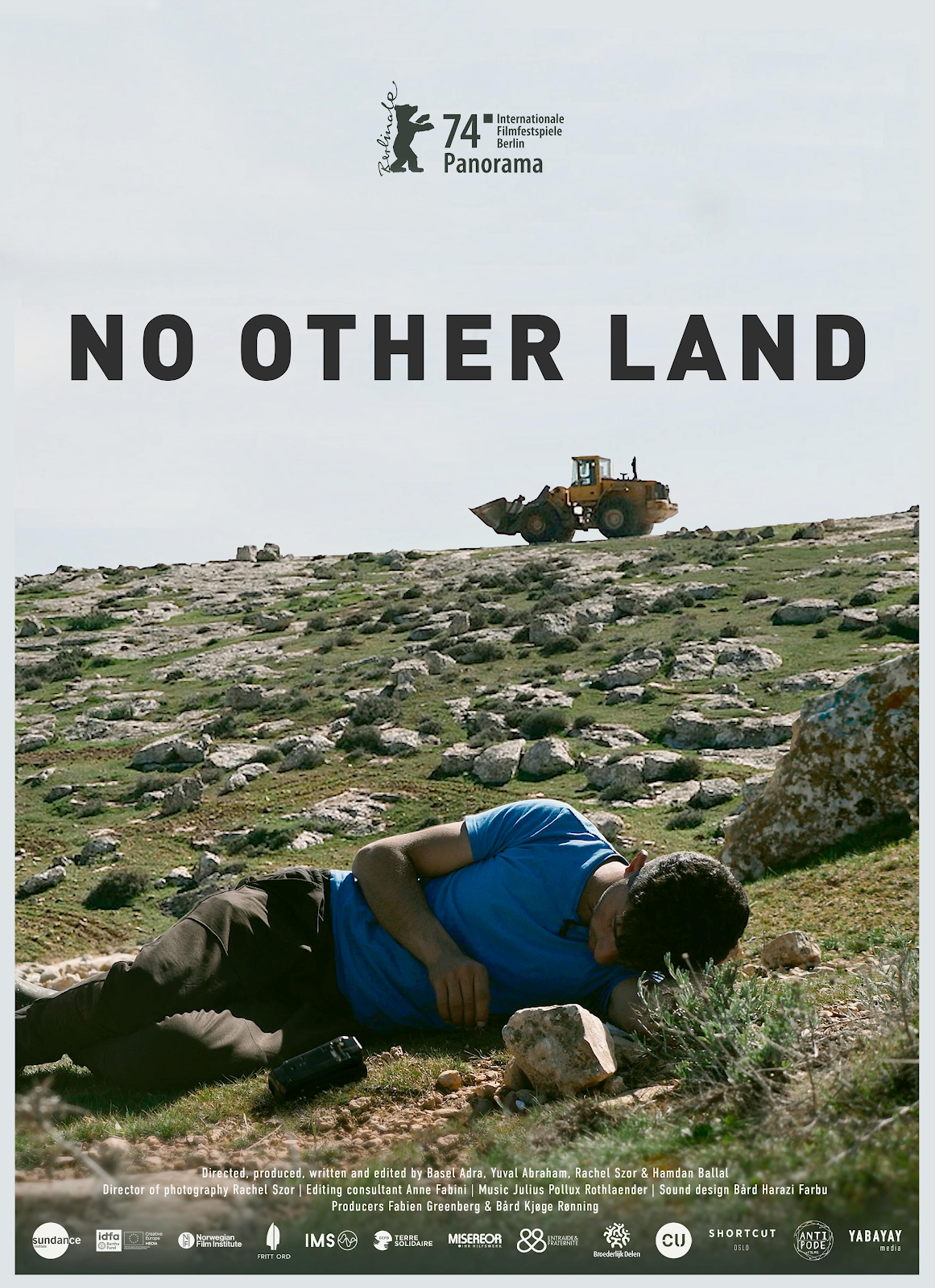
PALESTINE- “No Other Land” With no end in sight to the war in Palestine, the Palestinian Academy (which I understand is affiliated with the Palestinian Ministry of Culture) is going to look for a film that will rally support to the Palestinian cause…so documentaries will have the advantage. The obvious choice would be “No Other Land” (Berlin), in which a collective of Palestinian and Israeli filmmakers work together to highlight military atrocities in the West Bank. It has very good reviews and shows interethnic cooperation. Another doc, “From Ground Zero” features a compilation of 22 amateur short films shot in Gaza during this year’s conflict. It would also check this box. I personally prefer fiction features and Palestine has two great ones- “To A Land Unknown” (Cannes), about two Palestinian refugees in Greece, and “The Teacher” (Toronto), by Oscar-nominated Palestinian-British director Farah Nabulsi. If selected, “The Teacher” will have AMPAS getting out the stopwatch because it’s roughly half in English. Dark horse: doc “Life is Beautiful”, about a Palestinian filmmaker who goes away on a one-month work trip only to find he’s unable to return to Gaza for seven years after the borders are closed.

SAUDI ARABIA- “Norah” Saudi Arabia only legalized cinemas in 2018 but they’ve now sent five films in a row. They’ve sent a diverse group of seven quirky films, including a bold romantic comedy, a supernatural folk tale, a feminist political drama, and a Saudi “Wolf of Wall Street”. This would have been unthinkable just a decade ago and I really love watching the Saudi submissions. This year, they have three main contenders- “Hajjan” and “Night Courier” (both from Toronto 2023) and “Norah”, the first Saudi Arabian film to premiere in Cannes Un Certain Regard, where it won a Special Mention. The Saudi Academy has mostly chosen popular commercial films in the last few years, which bodes well for dark, alcohol-fueled comedy “Night Courier”, about Saudi Arabia’s new underground nightlife. But the Cannes label will help “Norah”, about the life of a young woman living in a small community prior to liberalizing reforms. “Hajjan”, a traditional coming-of-age tale set in the Wadi Rum desert, will likely come in third since it doesn’t have a Saudi director. This is a tough call…both frontrunners are feature debuts that are said to be flawed but very promising. I can’t wait to see both but I’m predicting “Norah”. Possible spoiler: upcoming drama “Hobal”.

SENEGAL- “Dahomey” Senegal has become a regular participant in this category, sending five films in the seven years since they made their Oscar debut, This looks like a fierce two-way race between two previously submitted directors who premiered their films at Berlinale- Mati Diop’s “Dahomey” and Mamadou Dia’s “Demba”. Documentary “Dahomey” won the Golden Bear and Mati Diop was shortlisted for her (overrated) African ghost story “Atlantics”….all but assuring her selection. “Dahomey” follows the repatriation of a number of cultural artifacts from France to Benin. I actually think drama “Demba”, about a retired Senegalese civil servant dealing with grief and depression would actually do better with AMPAS…but that Golden Bear will make this an uphill battle. It’s only hope is that “Dahomey” doesn’t get a domestic release in Senegal in time.

SOMALIA- “The Village Next to Paradise” Somalia sent a film to the Oscars once in 2021, with the excellent “Gravedigger’s Wife”. This year, they had “The Village Next to Paradise” in the Un Certain Regard section of Cannes. It’s a slice-of-life drama set in a Somalian village made by a first-time Somalian director based in Austria, and it would be a great way to highlight the country’s nascent cinema.

SOUTH AFRICA- “Carissa” No longer a strong contender in this category, South Africa is often handicapped by the fact that its best films are made in English. Last year they sent a documentary about Zulu music and the year before they didn’t send anything at all (for the first time since 2007). This year saw a slight uptick in the number of films in local languages….but most of them don’t have release dates, putting their eligibility at risk. The most prestigious possibility is the Afrikaans-language “Carissa”, about a woman who gets a job with a company that she learns is going to dispossess her family’s ancestral land. It’s due to premiere at Venice Horizons in September and is one of the films without a domestic release date. Among the other possibilities are a trio of films that premiered at the 2024 Durban International Film Festival- comedy-thriller “Sierra’s Gold” (in Afrikaans, English and Zulu), comedy “Month End” (in Tswana), and crime drama “Sonti” (in Sotho). Of these, the low-budget “Sonti” looks like the gritty sort of film that South Africa usually sends. Less likely: crime drama “Inkabi” (in Zulu) and sports drama “Queenstown Kings” (in Xhosa) look like they premiered on Netflix which is no longer allowed post-pandemic.

SUDAN- Nothing Last year’s “Goodbye Julia” would probably have been my Oscar winner. The fact that it wasn’t even shortlisted shows how unfair the system is. Sudan is in the middle of a brutal civil war and as far as I know, there are no eligible films this year.

SYRIA- “Under the Sky of Damascus” A selection committee in exile, allied to the national opposition, submitted a documentary to the Oscars once in 2017. They haven’t sent anything since but – if they did – it would probably be feminist documentary “Under the Sky of Damascus” which seeks to expose domestic violence and misogyny in the country. It played at Berlinale 2023.

TANZANIA- “EONII” In 2022, Tanzania submitted a film for the first time in over twenty years, with great fanfare, but then they skipped last year. They have a few options, including EONII, the country’s first-ever sci-fi movie and one that won Best Tanzanian Feature at the 2023 Zanzibar International Film Festival. They could also consider “The Empty Grave” (Berlin), a documentary and German co-production which looks at atrocities committed under colonial rule. Less likely: “Muhali”, a drama about Zanzibari cultural traditions. We may have a better idea when ZIFF 2024 announces its winners on August 4.

TUNISIA- “Who Do I Belong To?” Tunisia appears to have an easy decision since Tunisian-Canadian director and Oscar Short Film nominee Meryam Joobeur made her feature debut in the Main Competition of the Berlin Film Festival with “Who Do I Belong To?”, an expansion of her Oscar-nominated Short Film “Brotherhood”. It’s about a jihadist returnee from Syria- a subject that Tunisia has often featured in its submissions. If that doesn’t get a Tunisian release, it’s likely to be “The Needle”, about a family disrupted by the birth of an intersex child, or possibly “Behind the Mountains”. Unlikely: Tunisia has three new films at Locarno (“Agora” and “Red Path”) and Venice (“Aicha”)…. but Tunisian films usually take a long time to reach cinemas…expect them to be considered next year.

TURKEY- “Dormitory” Turkey (Türkiye) has sent three films by Nuri Bilge Ceylan and two by Semih Kaplanoğlu in the past ten years. Since neither has a film in the running this year, it’s a wide open race in Turkey. The other five years, they sent three small arthouse dramas and two commercial movies with cute kids. The Turks have a huge film industry but I’m hearing the frontrunner is the 3-hour melodrama “Life” about a conservative father on the hunt for his daughter fleeing a marriage he arranged. That’s definitely very possible, but I’m predicting “Dormitory”, a coming-of-age drama about a boy sent against his will to an Islamic school by his newly converted father. However, I’m hearing that may be a controversial choice for some reason…Also possible: “Not What You Think”, about three siblings who meet after the death of their father, “Hesitation Wound” (Venice Horizons), about a murder investigation, “The Reeds” (Toronto), about a village dominated by local gangs, and “Sayara”, about a Turkmen immigrant investigating the murder of her sister. Less likely: rock biography “Tears of Cem Karaca” and Ottoman horror-drama “Cadi”, which both have good reviews but are probably a little too commercial for the Turkish Academy.

UGANDA- “Lions of Buganda” Uganda submitted for the first time in 2022 with the low-budget but very entertaining “Tembele”. Recently there has been a growing trend to make movies in indigenous African languages rather than English, including Luganda and Swahili. At this year’s film awards, 3 of the 5 Best Picture nominees were in African languages. The two big winners were “Makula” which won four awards, including Best Picture and Best Director, and “Lions of Buganda” which won three awards, including Best Indigenous Language Film. Ironically “Makula” beat “Lions” for Best Picture while “Lions” beat “Makula” for Best Indigenous Film. Human trafficking melodrama “Makula” has better reviews than “Lions”, but the royal costumes and action scenes look better so that’s my prediction.

YEMEN- “The First Lecture” Yemen has submitted three excellent films over the years, including last year. This year they have a medium-length film (55 minutes) called “The First Lecture”, about a man wooing a young woman whose sister has cancer. Movies over 40 minutes are eligible so this is probably their only potential submission. An interesting new film- “The Station”- by Oscar-nominated Scottish-Yemeni filmmaker Sara Ishaq could potentially compete for Yemen next year.


