Here are my predictions for the countries from Africa and the Middle East. Fourteen African countries have entered the Oscar race, but most of them have only submitted once or twice. This year, Ghana and the United Arab Emirates have announced that they will send films for the first time, and Nigeria (which has never submitted a movie) has been invited since 2014.


ALGERIA- "Let Them Come" Algeria submits a
film only if they feel they have something good to send. They’ve sent films five of the past ten
years and the last four (i.e. all submissions since 2010) have focused on
freedom fighters fighting for liberation from France. That being the case, it
would appear the most likely submission this year would be “The Seven Ramparts
of the Citadel” which focuses on the question of why the Algerians so suddenly
(according to the director) rose up against French imperialism in the mid 20th
century, after over a hundred years as a French colony. The problem is that, as
of June, the film was still being edited so it may not premiere by the
September 30 deadline. In that case, I predict they send “Let Them Come”, which
won the Jury Prize at Dubai 2015 and was finally shown at home in Fall 2016.
This is a more modern-day tale, centering on a man living during Algeria’s
“lost decade” (the 1990s) when terrorism plagued the country. I’d prefer they
sent the talky drama “I Still Hide to Smoke” with its all-female cast, led by Palestinian actress Hiam Abbass. Set amidst a crew of nine eccentric characters at a women’s hammam
and featuring very, very minor nudity, the film may be too much for the stuffy
Algerian Ministry of Culture. Ditto for Merzak Allouache’s documentary
“Investigating Paradise”, which seeks to get in the head of suicide bombers. It was Algeria’s only film at Cannes this year. “Let Them Come” already beat “Smoke” in the Best First Film category at the 2016 Carthage Film Festival and I predict it will be the Algerian nominee.


BURKINA FASO- "Borders" Burkina Faso prides
itself on being the capital of African arthouse cinema as well as the home of the
world’s most important African Film Festival (FESPACO). They produce a few films annually but have only entered the Oscar race once, way back in 1989.
This year, Burkina Faso had three new films competing at FESPACO, two of
which won awards. If they choose to rejoin the race, an excellent candidate would be “Borders”
(Frontieres), a tragicomedy about four women traders who meet along the long journey
from Senegal to Nigeria, crossing four national borders. Also released this year is “La forêt du Niolo” a drama about a corrupt politician poisoning the local
water supply to force a poor, local village to relocate. “Niolo” got
significant government support, but “Borders” won three awards and has greater
international exposure so I give it the edge. This year also saw a Burkinabe
co-production (“Wallay”) at Berlinale, but its director and crew are almost all
Europeans.

CAMEROON- "Lifepoint" Cameroon reportedly tried to send a Bollywood movie to the Oscars last
year just because it had a Cameroonian in the
crew, or something like that. If that means that the Oscars are back on their radar (they sent a film just once in 1980), they
could send “Life Point” a new drama about an elderly professor who has just
lost his wife, who is planning to end his life before meeting and falling for a young, Central African
refugee. As is typical in Cameroon, the film is in a
mix of French, English and “pidgin”, and may or may not meet the language requirements.

CHAD- "Hissien Habre. A Chadian Tragedy" Chad has submitted two films by Mahamat-Saleh Haroun, the country's only professional film director. This year, Haroun accepted a position as the
country’s Minister of Culture and Tourism. Last year, he had a “Special
Screening” of his new political documentary “Hissein Habré, A Chadian Tragedy”
premiere at Cannes. The documentary, about the brutal dictator who ruled the
country from 1982-1990 and who was convicted of crimes against humanity in
2016, could represent Chad if it managed to get a theatrical release this year.
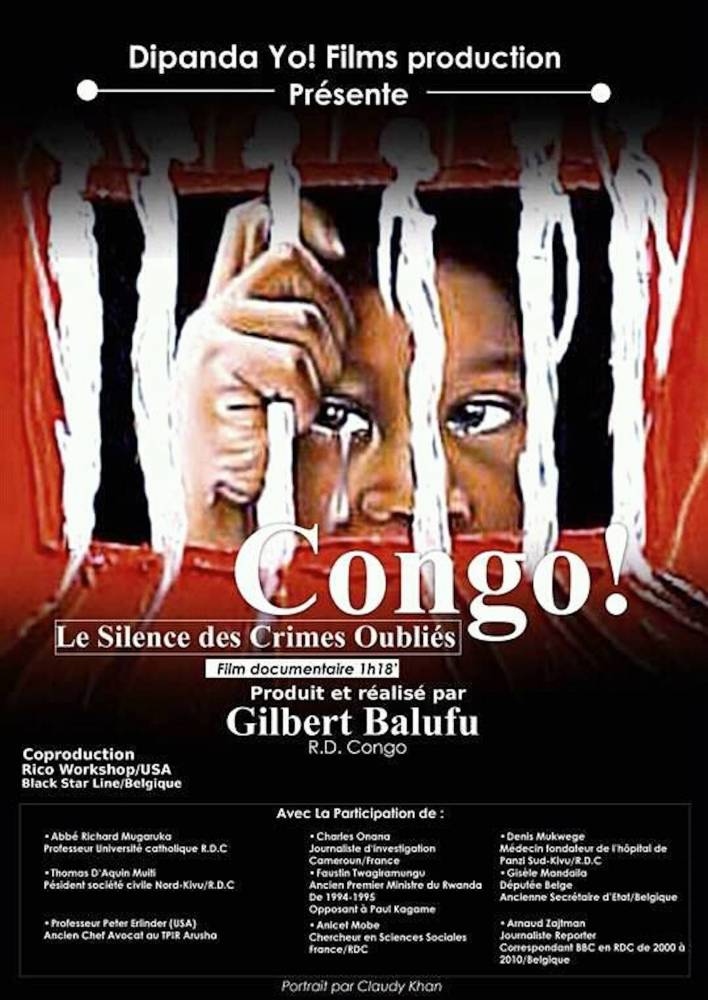
CONGO-KINSHASA- "Congo! Le silence des crimes oubliés" Congo-Kinshasa submitted a film once in 1997 but hasn't submitted any
others since, even when they have a strong contender (like “Viva Riva”). This
year, their highest profile feature is “Congo! Le silence des crimes oubliés”,
a documentary about the atrocities committed against civilians in eastern Congo.
Although there have been a lot of strong documentaries made about Congo in
recent years, this is one of the few directed by a Congolese. It won Second Prize
in the documentary competition at the 2017 FESPACO film festival.

COTE
D’IVOIRE- "Innocent Malgré Tout" The Cote d'Ivoire (aka Ivory Coast) took a forty-year break from the Oscars
before returning in 2015. This year they had two feature films in competition at
FESPACO, in addition to a number of shorts and documentaries, signaling a
possible resurgence of their national film industry. If they enter the race this year, it
makes sense they’d choose one of these. “The Interpreter”, a thriller about a
married female interpreter who becomes involved with a visiting
African-American businessman, won Best Editing at FESPACO but I think it’s more
likely they’ll send “Innocent malgré tout”, about
an impoverished young man falsely accused of participating in a gang rape.

EGYPT- "The Preacher" (Mawlana) Egypt has the
largest film industry in the Middle East and yet I really think that their
Oscar race will fall to a competition between just two acclaimed new films- “The
Preacher” (Mawlana) and “The Originals”. “The Preacher” has been a box-office hit in
Egypt and has been a darling of Western film critics for its story of a moderate Islamic
mullah whose devoted following leads to a lavish lifestyle, and national influence (similar to the frightening phenomenon of American televangelists). Called “witty”,
“twisty” and “powerful”, this drama-cum-thriller really has the potential to go
far, especially with increasing interest in cinema from the Islamic world. Egypt
has repeatedly been passed up for an Oscar nomination sending numerous worthy films (“Yacoubian
Building”, “Clash”) and "Preacher" would be a great choice. They could also choose
Marwan Hamed’s “The Originals”, a thriller about an upper-class executive and
family man who is abruptly fired from his job due to downsizing, and who is offered
a shadowy new job in its place. This would be a much more populist choice, which would have a much smaller shot at a nomination. The directors of both films have been selected once
before (in 2002 and 2006) and both films have gotten strong reviews. Unlike
other Arab countries, the Egyptian Academy doesn’t seem to have any problem
selecting films that are controversial at home. So even though many Sunni
Muslim leaders have complained, and called for “Preacher” to be banned, it got released anyway and should be Egypt’s Oscar representative. Less likely: Wedding comedy-drama “Brooks, Meadows and
Lovely Faces” (Locarno) and fantasy-romantic-dramedy “Good Night” both look
great, but probably aren’t serious enough to represent Egypt.

ETHIOPIA- "Fre" Ethiopia apparently
has a thriving film industry but there’s virtually no evidence of it online. A
quick IMDB search indicates four films were produced in the past two years but
that’s simply not true. I had the pleasure of visiting Ethiopia on vacation in April and I was
struck by the number of cinemas showing local films. Most of them didn’t seem
to show anything else. So, movies are being made. However, I struggled to find
even one movie that I thought could be sent to the Oscars this year. I just
came up with “Fre”, which represented the country at FESPACO, about a
widower whose life is turned upside down when his young daughter becomes the victim
of a sexual assault.

GHANA- "Nakom" Ghana had its
official Oscar selection committee recognized in 2017 and seems likely to send
what will be the fourth-ever West African film to the Oscars (after “Yaaba”,
“Run” and Oscar nominee “Timbuktu”). Their probable first-ever submission is “Nakom”, a
drama about a medical student studying abroad whose entire life plans are
placed in jeopardy by the death of his father in Ghana. It has appeared in a
number of important global film festivals (including Berlin, Hong Kong, Seattle
and Vancouver in 2016) and was the opening film at Ghana’s local Black Star
festival. Despite what it says on IMDB, the film is mostly in the Kusaal
language. It has gotten great reviews and will represent Ghana proudly.

IRAN- "Ferrari" Iran is once
again returning champion, thanks to Asghar Farhadi’s “The Salesman”, a good
film to be sure, though probably one of his weaker efforts. Farhadi did not
attend the awards because of the on-again, off-again American travel ban
against Iranians, so it's possible that Iran will boycott the Oscars, as
they did in 2012. With its two most famous international directors (and only
Oscar nominees) working overseas (Farhadi in Spain and Majid Majidi in India), and
with the director of the most acclaimed film of the year (Cannes 2017 anti-corruption
drama “A Man of Integrity”) in jail, the field is wide open. It seems likely
they’ll look to this year’s Fajr Film Festival for their Oscar nominee. The two
big awards (Best Picture and the Audience Award) were both won by “Midday Event”,
a historical thriller about the Iranian government’s struggle against a rival group
trying to seize power after the 1979 Islamic Revolution. Director Mahdavian also won Best Picture at Fajr last year for "Standing in the Dust", which was shortlisted
against “The Salesman” to represent Iran at the Oscars. It should be noted however that the Fajr winner and the Iranian Oscar nominee has only matched up once in
the past fifteen years. That's because the Iranians tend to shy away from sending their
patriotic pro-revolution dramas to Hollywood (probably a smart move) so it’s
perhaps more likely they send “Ferrari”, a more modern drama about an 18-year
old Iranian woman who finds trouble when she comes to the big city to have her
picture taken with a classic car. It won four awards at Fajr (including the
Jury Prize), it's directed by a respected, senior director who has never been selected before, and it's written by Kambuzia Partovi, who has written several
Iranian Oscar submissions. It seems Iran’s most likely choice at this point.
Other options: “No Date, No Signature”
about a coroner who finds himself examining an old friend, and family drama “Under the Smoky
Roof”, which is seeking to be the first film by a female helmer to represent
the Islamic republic.

IRAQ- "The Dark Wind" Iraq has
submitted films from its largely independent (and mostly peaceful) Kurdish region for the past
three years, and they’ll probably do so again this year. This year, the two
frontrunners competed against each other
at the Dubai Film Festival where the controversial “The Dark Wind” won Best
Arab Feature Film (because Iraq is an “Arab” country, even though the director
and most of the language of the film is Kurdish). “The Dark Wind” is a bold and timely drama
about ISIS atrocities against Iraq's Christian Yazidi minority. The
film follows a young woman who escapes from sexual slavery in the ISIS zone,
only to be shunned upon her return to her village and her family. The film caused a
scandal in Kurdistan as some felt the film portrayed their community in a
negative light. “House Without Roof” is a bit lighter, following three Kurdish
siblings raised in Germany who return to Kurdistan to bury their mother.
It won the Audience Award at the inaugural Kurdish Cinema Awards (where most of
the winners were films from Turkey’s Kurdish region). Until now, Iraq’s only Arabic-language movies to go to
the Oscars were both directed by Mohamed al-Daradji; he and his brother have
two new films this year- Mohamed has “The Journey”, a tense thriller about a
female suicide bomber, while his brother Atiya has “Path of Maryam”, which was
Iraq’s submission to the Asia-Pacific Screen Awards. Iraq will have a tough decision; frontrunner “The
Dark Wind” is very controversial and Iraq’s pick may depend on the personal feelings of
the committee members. My prediction: “The Dark Wind” squeaks through “Maryam” and "Roof", but it will be really close.

ISRAEL- "Longing" Thanks to
“Spartak” for sending a list of this year’s 31 eligible films from Israel.
Israel is unique in the world in that they automatically send the Best Picture
winner from their national film awards (the Ophir Awards) to the Oscars (Greece used to have a similar system,
sending the Best Greek Film winner from the Thessaloniki Film Festival). So, to determine the Israeli submission, we
have to predict which five out of the 31 films will be nominated at the Ophirs.
Four previous Ophir winners- Sabi Gabizon, Eran Riklis, Dan Wolman and Dover
Kosashvili- all have films in contention. Gabizon has made three features since
1990 and all three won Best Picture at the Ophirs....quite a strong record. This year, his new film “Longing” is
also one of five eligible Israeli films debuting at the Jerusalem Film Festival
(JIFF), another strong precursor for the Ophir nominations. "Longing" is a tragicomedy about a
wealthy man in his fifties who learns from a college classmate that he has an adult
son he never knew about. If it wins Best Picture at JIFF, it will be the film
to beat. However, until it premieres, it's hard to say how good it is. Predicting the other four Ophir nominees is
tough. Israel has no frontrunners and nearly a dozen strong contenders. I'm confident three of the slots will go to “Beneath the Silence” (Montreal 2016/Shanghai 2017),
about a family dealing with a father suffering from PTSD after the Six-Day War,
“An Israeli Love Story” (Wolman’s film), a romance set against the
backdrop of Israeli’s declaration of independence, and “Scaffolding”, about a
boy who aspires to more than just continuing the blue-collar family business. The
fifth nominee is less certain. It could easily be “Before Memory”, about corruption in the
religious Hasidic community, “Land of the Little People" (Rome), produced
by Oscar nominee Tony Copti (“Ajami”), a chilling, violent allegory about
military-minded Israeli youth, or the buzziest Israeli film of the year- In
Between”- a comedy-drama about young Israeli Arab women living in liberal Tel
Aviv. But I think it’s more like to be something less daring, namely, “Past
Life”, a creaky-sounding drama about two sisters growing up in the 1970s. Riklis’ new thriller “Refuge”
and Kosashvili’s new relationship drama “Love Birds” probably won’t come into
play, but it's all so confusing when most of these movies haven't premiered yet. I have my fingers crossed for another dark horse, and the Israeli film I most want to see this year, namely feminist cannibal
comedy “Madam Yanekelova’s Fine Literature Club”, about a most unusual version
of a “pig party”. In the end, I predict “Longing” represents Israel, followed by “An
Israeli Love Story”. The Jerusalem Film Festival will announced its awards on July 23rd, which may clarify things somewhat.

JORDAN- "The Curve" Of course, Jordan should send “Blessed Benefit”, a well-reviewed, low-key comedy about a middle-aged
construction worker sentenced to three months in a quirky Jordanian prison on a
minor fraud charge. It has quietly gained a solid reputation, representing Jordan at
numerous international festivals (including Toronto, Dubai, Busan and Warsaw).
It was partially funded by the Royal Jordanian Film Commission and the
country only produces one or two movies annually, so it should be a shoo-in,
right? Unfortunately, Jordan mysteriously banned the film shortly after its February
premiere screening so it did not get a local cinematic release. Apparently Jordan-
considered one of the Arab world’s more easygoing countries- objected to
certain scenes that implied official corruption existed in the country. I’m hoping the matter
will be resolved by the September 30 deadline, but I’m not sure how likely that
is. Therefore, I’m predicting they send “The Curve”, a talky, low-budget road
movie about a Jordanian “share taxi” driver and his three quirky Lebanese and Palestinian passengers.

KENYA- "Kati Kati" Kenya submitted a film just once in 2012 when they sent the edgy “Nairobi Half Life”, which many said was the sign of a
new kind of East African cinema…but then nothing much happened. Kenya didn’t have a single film nominated at the African Academy Awards and only a
single short film represented the country at FESPACO. If they enter a film, I
see two possibilities- fantasy drama “Kati Kati” is the story of a woman
with amnesia who wakes up in a strange hotel, where she is told that she is dead
and must make peace with her past along with a few other lost souls. It is
produced by Tom Tykwer whose production company made “Nairobi Half Life” and it
has been seen at a number of global festivals including Seattle, Toronto and Zanzibar. It’s also roughly 50% in English (not sure
exactly how much) so it may not be eligible. The second option is local film
“Get Some Money”, a strange comedy-drama retelling Judas’ betrayal of Jesus
Christ, but setting the story in what looks like a cross between Ancient Rome
and Ancient Kenya. It’s entirely in Swahili. I predict Kenya will send
“Kati Kati” if it’s eligible. If not, they won’t send anything at
all.

KUWAIT- "Ateej" Kuwait hasn’t
submitted a film since 1978, the longest absence of any of the 113 competing
countries. Recently there’s been an uptick of Oscar interest among the Gulf countries
(since 2013, Saudi Arabia, the UAE and Yemen have applied to have national committees recognized by AMPAS) so perhaps
we’ll see the Kuwaitis finally return. They actually have a half dozen eligible films
this year (sometimes they have zero), although production values are usually modest. Their
best prospect this year would be “Ateej”, about three sets of characters linked by a set
of prayer beads. It’s said to offer a peek into modern-day Kuwaiti society and
got released all over the Gulf in November 2016.

LEBANON- "Solitaire" Lebanon is always
one of the most fun countries on the Oscar longlist because they are willing to
send films from all sorts of genres, ranging from comedies (“Caramel”, “Ghadi”) to
musicals (“Bosta”) to thrillers (“A Very Big Shot”) to arthouse (“Void”, “Blind
Intersections”). The Lebanese also like movies about strong women; four of their past seven nominated films have been directed or co-directed by women.
Nadine Labaki alone has deserved at least two nominations in the past ten years
but Lebanon has unfortunately never yet been nominated. This year, tiny Lebanon has six main contenders: (in alphabetical
order) “Listen”, “Nour”, “Nut$”, “Solitaire”, “Tramontane” and “The
Traveller”. More than most countries,
Lebanon shows appreciation for its commercial cinema so romantic drama “Listen”
(by Philippe Aractingi who has repped Lebanon twice) and the female-helmed
Tarintinoesque gambling thriller “Nut$” are both in with a chance. “Listen” won
Best Picture at this year’s Lebanese Film Awards and is supposed to be charming
and original…though still really just a movie romance. I visited Lebanon on holiday this year, which is where I saw one of my favorite films of the year- family comedy “Solitaire” (Dubai, Seattle), which has been charming the international film
festival circuit with its story of a young Lebanese woman whose seemingly sweet mother is willing to do anything to sabotage her engagement to her handsome Syrian fiancé. The clash between two families joined by marriage has been done many times, but "Solitaire" manages to be original and still relatable. Another comedy- “The Traveller”- (which may be too French)
is about a smooth-talking travel agent who is overwhelmed when he travels
abroad for the first time. On the arthouse side, we have “Nour”, a emotionally
draining drama about a teenaged girl forced into a marriage to an older man,
and “Tramontane” (Cannes Critics Week 2016, Dubai), which is about a young, blind
musician forced to go on a journey around Lebanon to unravel the mystery of why
his birth certificate is fake. Six good choices! I know I’m rooting for “Solitaire” to raise its international profile, so I'm predicting that, followed by “Nour”, “The Traveller” and “Tramontane”.

MAURITANIA is one of those countries that really only has one famous
international director, in this case Oscar nominee Abderrahmane Sissako. He
hasn’t made a film since his brilliant Oscar nominee “Timbuktu” and Mauritania
won’t figure into the Oscar race until he does. The only film I know from the
country is the 9-minute short film “The First Box”, which has represented the
country at some festivals specializing in regional films or shorts.

MOROCCO- "Burnout" Morocco has three
well-known international directors- Nabil Ayouch (who was invited to join AMPAS in June), Faouzi Bensaidi and Noureddine Lakhmari (some might add Laila Marrakchi, though
she’s younger than the others and has never been selected). Their films have
been selected five times since 1998 and all three have hotly anticipated new
films this year. However, as of June, none of them has premiered and none has a local release date. So, it really depends which (if
any) gets a release by September 30. Moroccan films often tour the festival
circuit for awhile, so I predict only “Burnout” , by Noureddine Lakhmari,
(which promises to be released “between September and November) will be
eligible. It’s about a series of characters living in modern-day Casablanca,
including a politician, a medical student who moonlights as a prostitute, a
poor shoeshine boy, a wealthy businessman and his wife. Nabil Ayouch’s “Razzia”
(also about Casablanca) and Faouzi Bensaidi’s “Volubilis” probably won’t make
it in time (if all of them were, “Razzia” should win this easily despite
Ayouch’s highly publicized battles with the Moroccan censors). But what if none of them are released? For the past three
years, Morocco has gone with small local films that nobody has ever heard
of. At Morocco's National Film Festival in March, twelve out of fifteen competing
films won awards but the big winner was
“Sweat Rain” (produced by Nabil Ayouch), about an impoverished man trying to
survive a drought and hold on to his meagre parcel of land in a small
village. Other possibilities include
“The Tears of Satan”, a revenge thriller about a man just released from prison,
“Basta”, a social drama about the problems faced by Moroccan youth or “Fadma”
(aka "Julie-Aicha"), a light drama about a Moroccan mother who visits her elder
son and granddaughter in France. Less likely: “Mimosas” won Best Picture in
Cairo, but it’s a majority French film, “Headbang Lullaby” has appeared at
several festivals but is likely too strange and arty, while B&W drama “Fidaa”
covers nationalist history but doesn’t look as professional made as their
other choices. I predict “Burnout” if it’s released and “Sweat Rain” if it’s
not.

NIGERIA- "'76" Nigeria has
one of the world’s largest film industries on paper, but it mostly produces straight-to-DVD cheapies for the local market. It had an Oscar committee officially recognized in 2014 but hasn't submitted any movies. It’s my understanding that
AMPAS will invite countries that do not submit films for five years, before they fall off the invite list. Many of Nigeria's top films this year are largely in English, including comedy “Dara Ju” (SXSW), “Green White Green”
(Toronto), and thriller “Kada River”. I don’t think they’ll send
anything but in case they do, I’ll predict “’76”, a political thriller about a coup d’etat in
the 1970s. It was one of two Nigerian movies nominated for Best Picture at the
African Academy Awards and it’s split roughly evenly between the English and
Ibo languages. Even that may have too much English to qualify.
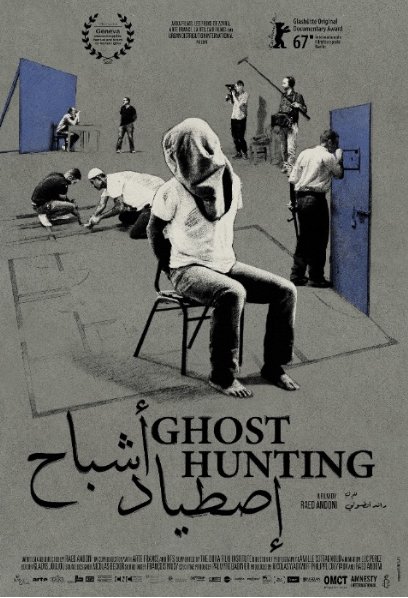
PALESTINE- "Ghost Hunting" Palestine has had
a slow year, and most of their movies this year have been documentaries. The
most hotly awaited feature of the year is “Wajib” by two-time Palestinian Oscar
representative Annemarie Jacir. It’s a family drama about an estranged father
and son forced to hand-deliver wedding invitations around the West Bank as part
of a local tradition. It sounds charming, and a nine-minute preview of the
film was shown at the Cannes Film Festival in May. Unfortunately, it’s still in post-production
and it’s unlikely to get a release in the West Bank by September
30. As for Palestine’s other two internationally recognized directors, Elia
Suleiman has been inactive and Hany Abu-Assad’s latest film is in English. So what will Palestine do? They’ll probably
send a political documentary, as they did in 2015. The obvious choice would be “Ghost Hunting”, a
sort of “Missing Picture” about the trauma of Palestinian political prisoners. It won the Best Documentary award at Berlinale 2017. But they could also
send “Ambulance” (about ambulance drivers during the Israel-Gaza war), “Speed
Sisters” (feminist race car drivers) or “Off Frame” (Palestinian cinematic
history). I predict “Ghost Hunting”
unless “Wajib” is finished ahead of schedule.

SAUDI ARABIA- "Madayen" Saudi Arabia has
no cinemas (they’re banned) but local filmmakers have managed to enter the
Oscars twice (with two absolutely wonderful films!) by relying on foreign
cultural centers and expat facilities on oil compounds. I don’t think they have
anything eligible this year, but for the sake of completeness, I’ll choose
“Madayen”, which appears to be a horror-documentary hybrid in the style of
“Paranormal Activity” or “Blair Witch”. It's about three guys investigating a
supposedly haunted site in the far north of the country. The director is
Filipino/Saudi. The Saudis also have a completed feature in the
can…Coming-of-age drama ”The Great Muse” could compete next year.

SOUTH AFRICA- "Asinamali" South Africa has
eleven official languages, but most films are made in English or Afrikaans, with most of the rest in Zulu or Xhosa.
This year, I predict South Africa will send apartheid-era resistance musical
“Asinamali”, which will premiere at the Durban International Film Festival this
summer. It’s produced by Oscar nominee Darrell Roodt (“Yesterday”) and well
over 50% in Zulu, and comes from the same team as hit Broadway musical
Sarafina. South Africa makes some beautiful musicals (e.g. "U-Carmen") and this is
clearly a stirring subject for one. At the 2017 African Academy Awards, the
Zulu-language “Vaya” (Toronto 2016)- about three strangers whose lives
intersect on a cross-country train ride- was the top nominee with 10
nominations. It would be an excellent choice, but IMDB says it won’t premiere
at home until October, after the deadline. Two other major contenders are (1)- “Krotoa”, an Afrikaans-language drama about a 17th century Khoi (Bushman) servant girl who becomes a strategically important translator between
Dutch settlers and her African tribe, and (2)- the Xhosa-language “The Wound”
(Sundance/Berlin), about the traumatic coming-of-age ceremonies of the Xhosa
people. My top five: “Asinamali”, “The Wound” and “Krotoa”, followed by gritty
prison drama “28S” and interracial canoeing drama “Beyond the River”.

TANZANIA- "Kiumeni" Tanzania has a well-established film industry of “Bongo” movies, which
are usually produced on a shoestring budget in weeks (or days) and produced
solely for the home video DVD market. They’ve entered the Oscar race once with
US-Tanzania co-production “Maangamizi: The Ancient One”. This year, their most
likely selection would be “Kiumeni” which is trying to buck the low-quality "Bongo" trend. It’s a
fairly paint-by-numbers romantic dramedy about a rich man who falls for a poor
girl who has a jealous thug of an ex-boyfriend. "Kiumeni" was specifically made for a
cinematic release, has been released in neighboring Kenya, and is touted as a
“game-changer” for the local industry.

TUNISIA- "Flower of Aleppo" Tunisia had
perhaps the strangest journey to the Oscars last year. First they announced
they were returning to the Oscars after a fifteen-year hiatus with “Flower of
Aleppo”. A few weeks later, there was a separate (and more official)
announcement saying they would send “As I Open My Eyes”. As bloggers wondered which story was
accurate, when the final list was announced, Tunisia wasn't on it at all! What
happened? There was never any explanation. “Flower of Aleppo”, about a mother
who goes into ISIS-occupied Syria to bring back her fundamentalist son,
actually premiered after last year’s deadline so I predict it may be getting a second
chance. That is, unless the country is reluctant to highlight the fact that the traditionally moderate country is contributing so many foot soldiers to ISIS. Tunisia actually has a lot of good movies
this year so I'm hopeful they will return. “Beauty and the Dogs”, about a conflicted young woman dealing with
the aftermath of a sexual assault by Tunisian police officers, premiered at Cannes
2017 although I don’t think it will get a domestic release by September 30.
“Zaineb Hates the Snow” (which is variously described as a drama or a
documentary….is it both???) won Best Film at Tunisia’s Carthage International
Film Festival and probably has the
strongest reviews of any Tunisian film this year. It’s an upbeat little film about
a little Tunisian girl who emigrates to Canada and hates the snow and cold
weather. “Foreign Body”, about an illegal immigrant fleeing an abusive
marriage, is directed by provocative female helmer Raja Amari (“Satin Rouge”)
and co-stars Salim Kechiouche and Hiam Abbass. “Burning Love” is about the
lives of three characters and their lives after the Arab Spring. I’m probably wrong, but
I’m predicting “Aleppo”, followed by “Zaineb Hates the Snow”.

THE UNITED ARAB
EMIRATES- "Only Men Go to the Grave" The UAE had an Oscar selection committee approved this year but I’ve been
expecting them to join for years. The UAE has tons of money, loves publicity
and has seen a growing number of local films being released. Their first-ever
Oscar submission will probably be family drama “Only Men Go to the Grave”,
which won Best Emirati Film at the 2016 Dubai International Film Festival. It’s
about an old woman who dies in an accident after promising the family that she
was going to reveal a shocking secret. Screendaily notes that the film delves
into some rather taboo subjects but if it was rewarded in Dubai, then that
should be enough for it to succeed here. The challengers are “The Waiting
List”, a romantic drama about five friends, and “The Worthy”, a
post-apocalyptic action-thriller set in a world with almost no fresh water. The
latter film is directed by Ali F. Mostafa, generally considered one of the
country’s most promising filmmakers.
YEMEN, amidst a
devastating civil war, was a surprise first-time entry to the Oscars last year
for “I Am Nojoom, Aged 10 and Divorced”. The film was produced in 2014 before the
violence got really bad but I can’t imagine how they managed a seven-day
screening in the country during the civil war. I’m sure they don’t have anything eligible this year.
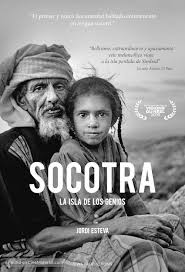
The highest-profile film about the country is “Socotra, the Land of Djinns”, a
B&W documentary filmed on the remote island of Socotra in their local
Soqotri language. However, the film has a Spanish director and wholly Spanish
crew, and surely was never screened in Yemen.


