Showing posts with label Iranian cinema. Show all posts

Tuesday, December 19, 2023

2023-2024 Submissions from Africa and the Middle East (19 films)

Here are the 19 films from Africa and the Middle East. The eleven films from Africa ties the record number of submissions from the continent set in 2020, when screening requirements were eased during the pandemic…. If Algeria hadn’t unexpectedly been absent we’d have a new record.

Number of Countries Participating this year: 19

Number of Countries That Have Participated in the Past: Well, technically 35….but many of them only submitted once or twice.  

Number of Debuts: 1, NAMIBIA.

Who’s Missing?:  The two most notable absences are regional powerhouses ALGERIA and LEBANON. Having submitted every year for a decade and amassing two Oscar nominations, Lebanon was the most surprising absence worldwide. At least one journalist contacted Lebanon’s Ministry of Culture to remind them of the deadline but he received no response and it’s unclear why Lebanon failed to send a film. They will be missed. Algeria usually sends a film and I read somewhere that 89-year old Palme d’Or winner Mohammad Lakhdar-Hamina headed a selection committee this year…It’s possible there were no submissions? Their leading candidate- costume drama “The Last Queen”- was submitted last year even though it didn’t premiere until 2023. Maybe they declined to consider it a second time?  

ETHIOPIA submitted on a somewhat regular basis from 2010-2019 but they seem to have given up, and they didn’t have a good contender this year. They’ll have to submit a film next year or else they’ll be relegated to getting their committee re-approved again.

The other missing countries have only ever submitted once (Congo-Kinshasa, Ghana, Lesotho, Mauritania, Mozambique, Niger, Somalia, Syria, Uganda), twice (Kuwait, Malawi, Tanzania) or three times (Chad, Cote d’Ivoire). From this group, I only expected to see UGANDA, which debuted last year, submit a film this year.

FRONTRUNNERS:
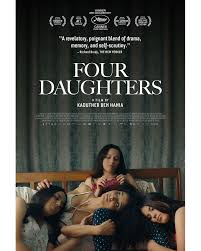
1.      TUNISIA- “Four Daughters” (Letterboxd: 3.9)

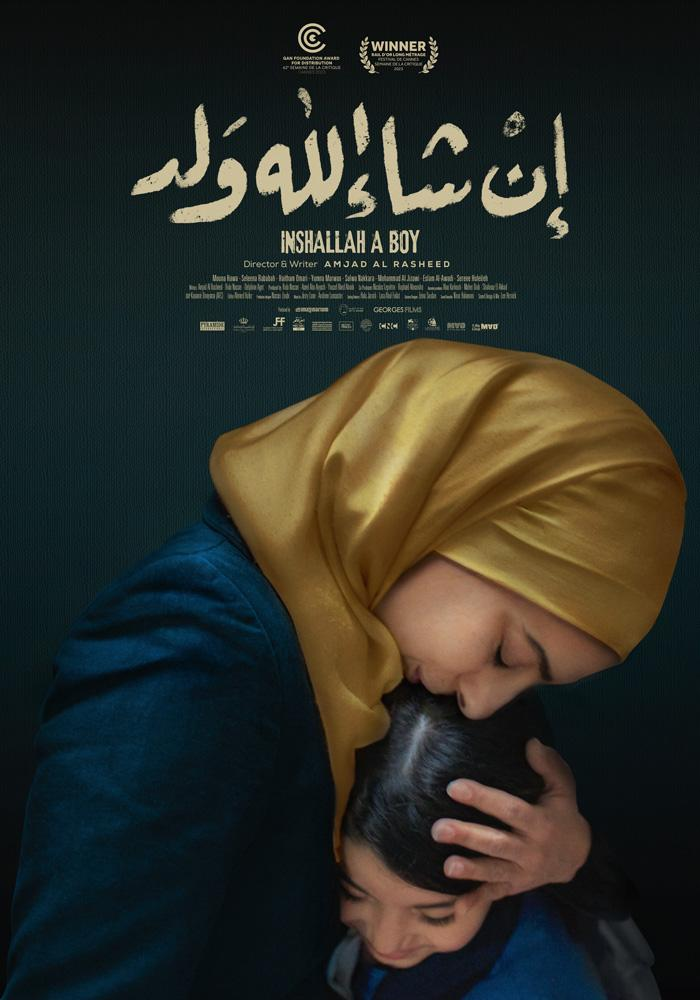
2.      JORDAN- “Inshallah A Boy” (3.6)

Docudrama "Four Daughters" has been a critical darling since it premiered in Cannes 2022, winning several small awards. Director Kaouther Ben-Hania ("The Man Who Sold His Skin") has made an unusual documentary about a woman with four daughters who wakes up one day to find that the two eldest (and clearly evil) have run away to join ISIS. Ben-Hania uses actresses to replace the two terrorist girls in what most critics say is a very effective piece (I haven't seen it yet). Although there are a lot of documentaries in the mix this year, only two (Ukraine and Tunisia) are considered favorites. 

I am probably ranking JORDAN's beautiful character study of a Muslim widow in crisis- "Inshallah A Boy"- too high. Every year, I forget that simply because a film is excellent doesn't mean it will make the shortlist (see "Aurora's Sunrise", "Circus of Life", "Eva Nova", "Tu Me Manques") because AMPAS doesn't always treat little films with the care they deserve. However, in additional to being on the strongest films, it’s also been mentioned as  a dark horse contender on several websites and I’m hoping this will be one of the surprises. 

DARK HORSES:


3.     TURKEY- “About Dry Grasses” (3.9)

4.      ISRAEL - “Seven Blessings” (3.6)

5.      BURKINA FASO- “Sira” (3.3)

6.     NIGERIA- “Mami Wata” (3.5)

ISRAEL has sent a raucous family dramedy about a week-long series of family dinners, uniting a large extended Moroccan Jewish family for the wedding of an estranged daughter. With so many characters, the film starts off incredibly confusing but the director manages to fix that within 20 minutes. The film, about a woman with two mothers who are also sisters (long, long story) is the sort of film that I think Oscar would have loved 10-15 years ago....It's a great pick, but I'm not certain it can make the Top 15. 

Unfortunately, TURKEY (Turkiye?) has a better chance than Israel. I don't like Nuri Bilge Ceylan's overlong, virtually silent films and "About Dry Grasses" is his longest yet (3 hours and 18 minutes)....but this story of a village teacher does have some fans. I'm unlikely to see it. 

The leading candidates from sub-Saharan Africa are the buzzy candidates from Burkina Faso (back after a 33-year absence) and Nigeria (here for the first time since 2020). People don’t seem to love BURKINA FASO's “Sira”, a story of survival about a young bride who is kidnapped, raped and left for dead in the desert after surviving an attack on her wedding caravan. The level of filmmaking here is incredible given the difficult environment in rural Burkina Faso, which is suffering from an Islamic insurgency in real life. I admit some of the acting is shaky at times but overall the non-professional actors do a good job. This is a brave film that is exciting, topical and ultimately uplifting. It’s one of my favorites of the 40 I’ve seen. “Mami Wata”, from NIGERIA, got an Independent Spirit nomination for Best international Film, which is an important precursor. This B&W fantasy film steeped in West African mythology focused on a village seeking the help of a mermaid goddess to combat a local plague killing local children. Most of the film’s notices are for its gorgeous cinematography so I think it will miss the shortlist stage. 


MIDDLE OF THE PACK


7.     MOROCCO- “Mother of All Lies” (3.5)

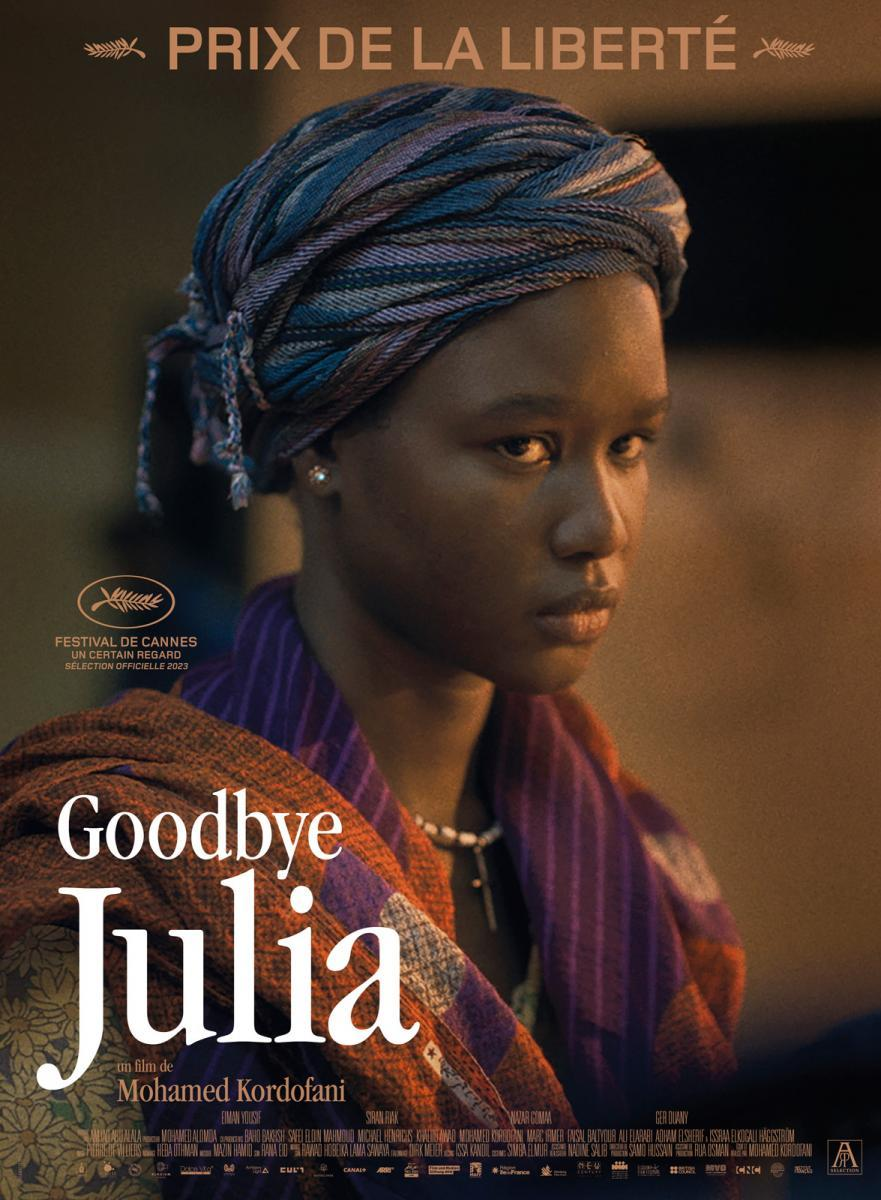
8.     SUDAN- “Goodbye Julia” (3.7)

9.    YEMEN- “The Burdened” (3.4)

10.  IRAQ- “Hanging Gardens” (3.3)

These four films from the Arab world will make their countries proud, though they probably won’t be able to breakthrough. Honestly, I really didn’t like “Mother of All Lies”, a deeply personal documentary about a woman interviewing family members and neighbors to learn about a secret from the past. It’s very much like “The Missing Picture” but I felt the film takes an hour to get to its main plot and I had little interest by then. But I seem to be in the minority; the film has great reviews (and the conservative grandma could have a career in acting!)

The other three films are important stories from countries plagued by recent wars. YEMEN deals with an unwanted pregnancy. IRAQ uses the humorous motif of a sex doll (abandoned by US soldiers) to explore serious issues of morality and violence in Iraqi society. SUDAN explores the relationship between a Muslim employer and her Christian South Sudanese employee, following a civil war influenced by religion. Though I’ve only seen the film from Iraq, these are probably three of the most interesting and important films on the list. “Hanging Gardens”, about an impoverished boy and his father who make a living scavenging rubbish dumps, was clearly made under difficult conditions. It’s a slow and quiet film, that mixes  a great dark sense of humor with pathos and tragedy. I’m so happy to see all three countries participating. Of these three, Sudan is the most likely to break through.

LOWER DOWN THE LIST:


11.   EGYPT- “Voy! Voy! Voy!” (3.7)

12.   PALESTINE- “Bye Bye Tiberias” (3.7)

13.   IRAN- “The Night Guardian” (3.2)

14.    SENEGAL- “Banel & Adama” (3.3)

After taking last year off, EGYPT is back in the race with a well-reviewed but thoroughly commercial effort- "Voy! Voy! Voy!", about a man who pretends to be blind in order to join a sports team. In a less PC and less embarrassingly "woke" Hollywood environment, it would be ripe for an American remake. This is probably a film that will make audiences laugh (unless they are "woke") but not one they will award an Oscar to. It will be interesting to see if PALESTINE (or ISRAEL) will get sympathy votes for the war in the Middle East....After "Klondike" was snubbed last year, I think not. "Bye Bye Tiberias" is a very personal documentary about the life and family of acclaimed Israel-born Palestinian Hiam Abbass, directed by her daughter Lina. The normally private Abbass, one of the most prolific and talented actresses working in international cinema, discusses her family's history during the Nakba, her marriages and her career. It's an interesting documentary but it's also very small and intimate. 

SENEGAL sent "Banel & Adama" (Cannes) a weird drama about two newly married lovers in a village, including a reluctant young chief who- per tradition- marries his brother's wife after his death. The fanatically lovestruck wife is devoted to her husband, adamantly opposed to having a child, and obsessed with a series of ancient houses buried under sand nearby. It's a weird film that I didn't really like while watching it but which I couldn't stop think about after. 

Lastly, we have "The Night Guardian" from IRAN, described as a "downbeat social drama set amid Iran's swelling underclass". Iran often does well with Oscar, but this film is one of the most obscure on this year's list and doesn't seem to have gotten any play. Although most Oscar voters probably won't realize, the film's selection was protested by independent Iranian filmmakers so that could cause some heartache too. 

BETTER LUCK NEXT YEAR:


15.  SAUDI ARABIA- “Alhamour H.A.” (3.4)

16.  NAMIBIA- “Under the Hanging Tree” (2.4)

17.  KENYA- “Mvera” (3.0)

18.  SOUTH AFRICA- “Music Is My Life” (3.0)

19.  CAMEROON- “Half Heaven” (2.5)

Welcome NAMIBIA! First of all, I loved "Under the Hanging Tree", the first-ever submission from the southwestern African country. It's a weird mix between David Lynch (who I love) and Nuri Bilge Ceylan (who I don't), set against the background of a bizarre murder case in the Namibian savannah. The film is crazy and doesn't always make sense, but I really enjoyed it. But it's too out-there to contend here. 

The three other Anglophone African countries in this category have even less of a chance. KENYA sent "Mvera", a low-budget drama about human and organ trafficking. The cinematography looks great but the film has no buzz and it's the only film that doesn't have any votes on IMDB and only four on Letterboxd. CAMEROON sent a weird drama in Pidgin English about Evangelical Christianity that will probably make voters uncomfortable, while SOUTH AFRICA sent a rather routine music documentary. Voters may be impressed by the Zulu-language music but won't remember the film- an homage to an obscure South African group that has performed with a number of very famous Hollywood artists.  

As for SAUDI ARABIA, they've sent what I've heard is a very entertaining "Wolf of Wall Street"-type comedy and the first-ever "R-rated" Saudi feature. Though I don't think Oscar voters will vote for such a commercial film, it's great to see Saudi Arabia - where cinema was illegal until a decade ago- branch out into a new genre of film.   


Genres:       We have four documentaries (Morocco, Palestine, South Africa and Tunisia), two comedies (Egypt and Saudi Arabia) and one fantasy film (Nigeria).  

I’ve Already Seen: 8- Burkina Faso, Iraq, Israel, Jordan, Morocco, Namibia, Palestine and Senegal. My favorites were Burkina Faso and Jordan.

Film I’m Most Excited To See: Definitely “The Burdened” from Yemen, because I loved the director’s last film so much.

Number I Predicted Correctly: 10/19 - Cameroon, Iraq, Jordan, Namibia, Nigeria, Senegal, Sudan, Tunisia, Turkey and Yemen

Big Four Festivals: 

·        Berlin- Burkina Faso (Panorama Audience Award), Yemen (Amnesty International Award)

·        Cannes- Jordan, Morocco (Best Director, UCR + Documentary Prize), Senegal, Sudan (Freedom Prize, UCR), Tunisia (Documentary Prize), Turkey (Best Actress)

·        Sundance- Nigeria (Best Cinematography)

·        Venice- Iraq, Palestine

Women Directors- 6 films had female directors: Kaouther Ben Hania (Tunisia), Asmae El Moudir (Morocco), Ayelet Menahemi (Israel), Lina Soualem (Palestine), Ramata-Toulaye Sy (Senegal), and Apolline Traoré (Burkina Faso)


Oldest and Youngest Directors- 
I’m not 100% sure but probably Nuri Bilge Ceylan (Turkey), who is 64, and Daudi Anguka (Kenya) who is 30.

Languages Represented- This is a confusing question since roughly half the films are multi-lingual. Eight films are totally in Arabic, while two more (Israel and Palestine) are partially in Arabic. Two films are entirely in Persian and Turkish. Two African films are mostly in dialects of the Fula languages (Burkina Faso and Senegal). Other languages: Afrikaans (Namibia), Fon (Nigeria), French (Burkina Faso, Israel, Palestine), Hebrew (Israel), Pidgin English (Cameroon, Nigeria), Swahili (Kenya) and Zulu (South Africa). The films from Kenya, Namibia, and South Africa are also largely in English.

How Many Have a Chance at the Shortlist?- Maybe seven?

Most Likely to Get Nominated for the First Time- Turkey

Buzziest Films: “Four Daughters”, followed by “Mami Wata” and “About Dry Grasses”

Letterboxd Ratings (as of December 18, 2023):      Best: Tunisia and Turkey (3.9)  Worst: Namibia (2.4)

Dumbest Decision: Most of these countries made smart decisions (or, alternately, selected the only reasonable film eligible…) Of course, I think that Cameroon, Iran and South Africa could have made better choices, but it’s possible the films I have in mind didn’t get a proper domestic release. The dumbest decision was- of course- LEBANON which had a number of eligible films, including the acclaimed “Dirty, Difficult, Dangerous” (Venice 2022)…but sent nothing.

Controversies and Changes:  The biggest controversy came from IRAN. After the announcement of “The Night Guardian”, a group of exiled filmmakers released a statement calling the selection unrepresentative of Iranian cinema and appealing to AMPAS to allow a film to be selected by a non-government affiliated organization.

Oscar History:   Kaouther Ben Hania is the only Oscar nominee here. She got a surprise (but well-deserved) Oscar nomination for “The Man Who Sold His Skin” three years ago, and she was also selected in 2018 for “Beauty and the Dogs”, which was my favorite film of that year.

Nuri Bilge Ceylan is representing Turkey for the sixth time since 2003, and is one of the most submitted directors from any country. He got Turkey to the shortlist for the first and only time in 2008, with “Three Monkeys”.

Reza Mirkarimi was selected to represent Iran for the fourth time after “So Close, So Far” (2005), “Cube of Sugar” (2012), and “Today” (2014), although Iran withdraw “Cube of Sugar” due to an ill-advised political boycott.

Here for the second time: Amr Gamal (Yemen; “10 Days Before the Wedding”) and Enah Johnscott (Cameroon, “Fisherman’s Diary”)

Most Notable Omissions: Probably the most important omissions are were “Terrestrial Verses” (Cannes...also known in some countries as "Kafka in Teheran"), which couldn’t pass the censors in Iran, and political thriller “Burning Days” (also Cannes), which lost a competitive race in Turkey.


Also absent: “The Last Queen” (Algeria), “Mambar Pierrette” (Cameroon…maybe eligible next year???), “The Rain Bride” (Iraq), “Delegation” and “Vanishing Soldier” (Israel), “Queens” (Morocco), “Alam” (Palestine), “Within Sand” (Saudi Arabia), “Father and Soldier” (Senegal), “Harka” (Tunisia), and “Black Night” (Turkey).


Most Famous Face: 
Hiam Abbass, the star and subject of “Bye Bye Tiberias” (Palestine). It’s true that music mega-stars like Dolly Parton and Paul Simon were interviewed for “Music is My Life” (South Africa), but I don’t think that counts.

Last Year’s Race: I saw 12 out of 16 films last year and there were some truly amazing films…that Oscar mostly ignored. My favorite was “World War III” from Iran (A), a twisty drama in the Farhadi tradition. I can’t understand why it hasn’t attracted more international attention. “Mediterranean Fever”, a jet-black comedy from Palestine was also brilliantly plotted (A).

I also loved “Farha” (Jordan, A-), “Blue Caftan” (Morocco, A-) and “Cinema Sabaya” (Israel, A-).

I also saw the films from Saudi Arabia, Iraq and Uganda (B+), Lebanon (B), Tunisia and Turkey (B-) and Tanzania (C).

Friday, August 11, 2023

INTERNATIONAL FEATURE OSCAR, PREDICTIONS FOR AFRICA AND THE MIDDLE EAST (35 countries)

And here are my predictions for the countries from Africa and the Middle East:

1. Algeria- “The Last Queen” Two years ago, Algeria selected "Heliopolis" but changed their mind when the film's release date was changed.....They submitted the film the following year. I'm predicting the same thing happens this year. Although "The Last Queen" was on last year's Algerian shortlist, it finally premiered in Algeria in June 2023. It's a glossy historical drama about a 15th century princess negotiating political intrigue, and it's been billed as Algeria's first costume drama. If they don't consider that to be eligible, “Soula”, an indie film about the hardships of a single mother in conservative Algerian society, would be the most appropriate Algerian submission. It played in a special sidebar section at FESPACO (Africa’s most prestigious film festival) and got a domestic release in France. 

2. Burkina Faso- “Sira” Director Apolline Traore was unsuccessful at negotiating the AMPAS bureaucracy when she tried to submit “Desrances” a few years ago. African arthouse power Burkina Faso hadn't sent a film since their debut in 1989 and the country did not have an approved committee at the time. Traore’s “Sira”, about a young woman who survives an Islamic terror attack, won the Best Film award at Berlin Panorama, so I’m really hoping they return.  

3. Cameroon- “Half Heaven” Cameroon has sent films three years in a row now, making them one of only two countries in Sub-Saharan Africa to do so (the other is Kenya). Oddly enough, all three movies were made by filmmakers from the country’s Northwest Region, home to the country’s English-speaking minority. For that reason, I’m predicting “Half Heaven”, a Christian-themed drama by the director of “The Fisherman’s Diary”, which brought them back to the Oscars in 2020 after a 30-year absence. It has gotten screened in both the USA and regional powerhouse Nigeria. Like “Fisherman’s Diary”, it’s in a local dialect of English. “Mambar Pierrette”, a naturalistic look at the life of a young mother which played at Cannes Director’s Fortnight, or “Le spectre du Boko Haram”, a topical documentary from the French side, would probably be better choices.

4. Chad- “Choose Me” (Amchilini) Chad only competes at the Oscars when Mahamat-Saleh Haroun has a new movie. But for the sake of completion, I’ll predict “Choose Me”, an interesting documentary about how attitudes towards arranged marriages and proposals are changing in modern-day Chad.

5. Congo-Kinshasa- “Omen” Congo-Kinshasa hasn’t sent a film since 1997 but I’m really hoping that could change after “Omen” premiered in Un Certain Regard at Cannes 2023. It’s an ensemble piece about a man who returns to his home country from Europe and finds himself amongst a group accused of sorcery. It's one of the films in this group that I want to see the most. 

6. Côte d'Ivoire- “Je reste photographe”  Côte d'Ivoire hasn’t sent a film since they were shortlisted for “Night of the Kings” in 2020. They were represented at FESPACO by documentary “Je reste photographe”, a documentary about an artistic inheritance. But they probably won’t enter.

7. Egypt- “Hajjan” Egypt announced a five-film shortlist last year- including three movies by previously submitted directors- and then voted that none of the films were good enough to represent the country at the Oscars. This year, the situation is even more bleak. So far this year, Egyptian cinema has mostly been a flurry of silly comedies and they've been virtually absent from international festivals. Even at CIFF (Cairo International Film Festival), there were only two Egyptian features- “19B” (one of the five films rejected last year) and music documentary “Far from the Nile”. Two promising films- Saudi co-production “Hajjan” (by the director of “Yomeddine”) and the controversial “The Atheist” are finished but don’t have any domestic release dates yet, although "Hajjan" will premiere in Toronto. Melodramas “I Am For Your Lover” and “Kamla” (Red Sea Film Festival) have gotten limited releases in Egypt. I’m wondering if Egypt may skip this year again....but “Hajjan” could be selected if it’s released in Egypt in time. 

8.     8. Ethiopia- “Doka” Ethiopia has sent four films since 2010 but they’ve been busy with a civil war and absent since 2019. They make a lot of low-budget movies for local consumption but there’s nothing they are likely to send to the Oscars. For the sake of completion, I’ll predict “Doka”, about a nurse and a little girl who find themselves caught up in a violent conflict. 

       9. Asantewaa” Ghana’s “Ghollywood” film industry makes most of its films in English, while rival “Kumawood” makes movies in the local Akan/Twi language….However, Kumawood has been in decline, and I don’t see any strong contenders. But I’ll predict children’s animated film “Asantewaa- Battle for the Golden Stool”, which is in Twi and English. Ghana launches a call for submissions every year but has only sent a movie once, in 2019. Last year, GhanaWeb campaigned for the critically acclaimed “Borga”…but Ghana didn’t send it.

10.  Iran- “Cause of Death: Unknown” Despite poor relations with the U.S., Iran has missed only two years since they joined the Oscar competition in 1994 (including a rather ridiculous public boycott over a YouTube video in 2012). I’m seriously confused as to what Iran will send this year, and a big part of me expects they may select a late release like last year that we may not have heard of yet. Last year, they selected the brilliant and underrated “World War III” which definitely would have been in my Top Five.  And although it's true that Iran usually sends a wonderful film, their selection committee will limit their candidates to films that are politically acceptable and made by approved directors. So, the critically acclaimed “Terrestrial Verses” (Cannes), about people beaten down by the Islamic bureaucracy, is out of luck, as is “Beyond the Wall” (Venice) which hasn’t passed the censors. I’m going out on a limb and predicting “Cause of Death: Unknown”, a thriller about seven strangers on a minibus who decide to split a passenger’s money when he mysteriously dies on the journey. Two other strong possibilities: “Cinema Metropole” is an ode to cinema (like “Cinema Paradiso” or “Last Film Show”) that won Best Iranian Film at the Fajr Film Festival. But only two Fajr winners in the past 20 years have gone to the Oscars, so it’s not a strong precursor; “Empty Nets” (Karlovy Vary), about two young lovers forced to keep their relationship secret. Rounding out the Top Five Iranian options are “In the Arms of the Tree” about a married couple in crisis, and social drama “Leather Jacket Man”, about women plagued by drug addiction.  Also possible: acclaimed Afghan migrant drama “Endless Borders” (Rotterdam), comedy “Fosil”, historical drama “Intoxicated By Love”, father-son drama “Scent of Wind”, and family drama “A Tale of Shermoon” (San Sebastian). In my opinion, this is the hardest country to predict in the group.

11. Iraq- “Hanging Gardens” Iraq has two distinct film industries, one in the Kurdish-speaking North and one in the Arabic-speaking south, and the Iraqi Academy tries to alternate between the two. This year it looks like a two-way race between Arabic “Hanging Gardens” (Venice 2022), about a rubbish picker who unexpectedly finds a sex doll in the trash, and Kurdish “The Rain Bride” (which swept the Kurdish Duhok Film Awards), about a wife who becomes a dancer when her husband goes off to war. “Hanging Gardens” has better reviews and the Venice pedigree….and they chose a Kurdish film last year. So that’s my pick. Dark horse: 3-hour documentary “Tales of the Purple House”.

12. Israel- “Delegation” "Seven Blessings" Israel automatically sends the winner of the Best Picture award at the Ophir Awards. So, before the Ophir nominations were announced, I predicted the five nominees would be "The Altman Method", "Delegation", "Matchmaking", "The Monkey House" and "Vanishing Soldier", with "The Other Widow" as my alternate. I only got one right, plus my alternate. I'd like to think the main reason for that is that almost all the Israeli finalists were films that hadn't yet been screened. The five finalists including "Vanishing Soldier" (11 nominations), about a soldier who goes AWOL but who is reported in the national media as a missing POW; it premiered at Locarno, and "The Other Widow" (9 nominations), a dark comedy about a mistress who goes to her lover's funeral....plus three unscreened movies- "Home" (9 nominations), a drama set in Israel's ultra-Orthodox community, "Running on Sand" (4 nominations), about an Eritrean refugee on an Israeli football team, and "Seven Blessings" (12 nominations), a comedy-drama about family secrets amongst a large Moroccan-Jewish family. Still pretty surprised at the absence of "Delegation"! So, what film will represent Israel? "Running on Sand" was a nominee out of left field and didn't get any other major nominations, while "Other Widow" missed the all-important Best Screenplay nomination- 8 out of the past 10 Ophir winners got nominations for Picture, Director and Screenplay. Nominated in almost every category, "Seven Blessings" appears to be the frontrunner...and it's also the nominee I most want to see. I have "Vanishing Soldier", which got positive reviews this month at Locarno, in second place and the complete unknown- "Home"- in third and "Other Widow" (which also looks charming) in fourth. 

13. Jordan- “Inshallah A Boy” Jordan has started to submit more regularly and last year they had a brutally competitive race. But this year should be an easy choice. I’m certain they’ll send “Inshallah A Boy”, about a Jordanian widow who fakes a pregnancy to ensure she maintains control of her house and family. It won two minor awards in Cannes and has very good reviews.

14. Kenya- “Between the Rains” Kenya has a competitive two-way race between climate change documentary “Between the Rains”, which won Best Documentary at the 2023 Tribeca Film Festival, and “Shimoni”, which premiered in Toronto and represented the country at FESPACO. Documentaries are usually at a disadvantage but Kenya has picked one once before and “Rains” looks like it has slightly better reviews. So that’s my pick. Dark horses: upcoming thrillers “Zahma” and “Gaza”.

15. Kuwait- “How I Got There” Although they submitted two films in the 1970s, oil-rich Kuwait has been absent since 1978- longer than any other country. This year, they have a really fun possibility, namely “How I Got There”, a fast-paced action-crime-comedy-drama that has been compared to Guy Ritchie. It won the Audience Award at the Red Sea Film Festival in neighboring Saudi Arabia and co-stars Ron Perlman (!).

16. Lebanon-  “Dirty, Difficult, Dangerous” “Dirty, Difficult, Dangerous”, a love story between two foreign migrants in Beirut (a Syrian man and Ethiopian woman) has been charming audiences since it premiered at Venice 2022, and it’s the best-reviewed Lebanese film of the year. The runner-up- and very possible- is French co-production “Mother Valley”, about a conservative Lebanese wife and mother who discovers feminism. If they want a film telling a more authentically Lebanese story, they could choose gritty thriller “Hardabasht”, drama “The Anger” or comedy “All Roads Lead to Rome”.  

17. Lesotho- Nothing. Tiny Lesotho submitted a film by Berlin-based filmmaker Lemohang Jeremiah Mosese in 2020. Lesotho doesn’t really have a local film industry and they’ll likely wait until Mosese makes a new film before they consider submitting again.

18. Malawi- “Is the President Dead?” Malawi unexpectedly submitted two low-profile films in 2018 and again in 2021. This year, the only film that I know about is light political thriller “Is the President Dead?”….but it would appear to be ineligible because it’s in English.

19. Mauritania- “The Perfumed Hill” Mauritania deserved an Oscar when they submitted for the first and only time with “Timbuktu” in 2014….They made the Final Five before losing to the highly overrated “Ida”.  Director Abderrahmane Sissako is Mauritania’s only international director and he is expected to premiere the long-delayed “The Perfumed Hill”, set mostly in China and currently in post-production, before the end of the year. If it premieres in time, that will likely be Mauritania’s second-ever submission.

20. Morocco- “Hounds” (Les meutes) Hot off making the shortlist for the second time last year, Morocco has quite a few possibilities, including two films from Venice 2022 and three from Cannes 2023. My prediction is “Hounds”, a fast-paced thriller about a father-son duo trying to dispose of a dead body….It won the Cannes UCR Jury Prize and that’s a major accomplishment for a genre film and for Morocco. The Moroccan Academy likes crime dramas, and reviews have mostly been good. Two similarly themed road movies about low-level criminals- “Queens” (Venice; two women) and “Deserts” (Cannes; two men)- are also possible though I think “Hounds” has better reviews. “Deserts” is directed by Faouzi Bensaidi, who represented Morocco once before (and who has a second eligible film this year; comedy-drama “Days of Summer”). Morocco's two shortlisted films in the past were largely French so we can’t count out French co-production “A Summer in Boujad”, a coming-of-age drama about a 13-year old who moves from Paris to Morocco after the death of his mother. Some may predict documentary “Mother of All Lies” (Best Director, Cannes UCR) and “The Damned Don’t Cry” (Venice) but I think the former is too subversive and the second too queer (conservative Morocco isn’t going to pick Queer movies two years in a row).

21. Mozambique- “O Ancoradouro do Tempo” Mozambique submitted a film once in 2017- and quite a good one too…..After being absent five years in a row, they’d have to request AMPAS to re-approve a selection committee and I doubt they’ll do that. If they do submit, it will probably be the upcoming “O Ancoradouro do Tempo” (The Anchor of Time), a romance-cum-mystery based on the novel “Under the Frangipani”, about a murder at a Portuguese fort in which various suspects all confess to having committed the crime.

22. Niger- “La fille noire du president” Niger submitted a film once in 2018 and they actually have two new films out this year. If they enter, it will surely be “La fille noire du president”, a light drama about an African president whose daughter is the black sheep of the family. It’s directed by one of Niger’s senior national directors, who is now in his 80s. Niger, whose democratic government was overthrown by a coup last month, also has short film “The Envoy of God”, which won a number of prizes at FESPACO, but it’s too short (23 minutes) to compete here.

23. Nigeria- “Mami Wata” Although many of Nigeria’s films are made in English, Nigeria announced an Oscar shortlist of three very interesting films in Yoruba last year. Two of them (“Anikulapo” and “Elesin Oba”) got Netflix distribution deals. One (“Elesin Oba”) premiered at the Toronto Film Festival. Nigeria’s selection committee met and decided to send none of them to the Oscars. The Nigerian film industry (quite rightfully) complained. The committee met again and decided to say "fuck you" to their filmmaker colleagues and once again voted to send nothing to the Oscars. So, the committee clearly doesn’t care about supporting Nigerian film; they’ve only sent two films since they were recognized by AMPAS in 2014 (and one of those two was disqualified). If Nigeria does enter, I suspect it will be “Mami Wata”, a B&W drama in Pidgin English and Fon, that screened at Sundance and FESPACO, winning Best Cinematography at both festivals. It’s a mythological drama about three women and a village that worships a mermaid goddess. Of course it probably should be Teddy-award winning “All the Colours of the World are Between Black & White” but homophobic Nigeria would never select an LGBT-themed film.

24. Palestine- “Alam” I imagine most people will be predicting “A Gaza Weekend”, the breezy Palestinian pandemic comedy that marks the feature debut of Oscar-nominated Short Film director Basil Khalil and which won the FIPRESCI Award at Toronto. Unfortunately, the multi-lingual comedy looks like it’s mostly in English, which will open the door wide open for “Alam”, winner of Cairo 2022, a coming-of-age drama about the identity crises of a Palestinian teen who holds Israeli citizenship.

25. Saudi Arabia- “Within Sand” Winner of the Jury Prize at the country’s Red Sea Film Festival, “Within Sand” is a survival drama set in the early 20th century about a young man abandoned in the desert and left to die by a gang of thieves. However, we can’t entirely count out upcoming camel racing drama “Hajjan” (see Egypt) by the Egyptian director of “Yomeddine”. Also possible: Netflix films “Alkhallat+” and "Head to Head" (their past two submissions got Netflix deals) and “Norah”, about a village woman on an unexpected journey.

26. Senegal- “Banel & Adama” Senegal has become the first country in West Africa to submit on a fairly regular basis; they’ve sent films four out of six years since their 2017 debut, making the shortlist twice. The fact that “Banel & Adama”, about two young lovers whose village disapproves of their relationship, premiered in the Main Competition at Cannes 2023 means that it’s a shoo-in to represent Senegal, although “A Tooth for a Tooth” (FESPACO) would have had a good shot in any other year.

27. Somalia- “Ayaanle” Somalia submitted the delightful “Gravedigger’s Wife” in 2021. IMDB claims a sequel is in pre-production but that certainly won’t be ready in time. I’m pretty sure Somalia will sit this year out, but they could send “Ayaanle”, a Kenya co-production though I suspect it was released too early to qualify.

28. South Africa- “Valley of a Thousand Hills” South Africa quietly skipped last year, seemingly because they didn’t have any strong contenders that weren't in English. South African cinema is increasingly dominated by English-language films, as the industry seeks co-productions and Netflix deals, and as English overtakes Afrikaans more and more to become the country’s language of inter-ethnic communication. This year, all of the South African entries at Durban (their main domestic festival) were primarily in English. Still, I think that “Valley of a Thousand Hills”, a queer Zulu-language drama about a woman coming out as a lesbian despite her conservative family upbringing, will rep South Africa this year. There’s also Afrikaans-language melodrama “People of the Wind” and documentary "!Aitsa". Many are predicting Milisuthando (Sundance), but I think that’s mostly in English…

29. Sudan- “Goodbye Julia” Sudan submitted a film once in 2020 during a rare period of national openness, but that period ended in Fall 2021 with a violent coup d’etat, and the country is now engaged in a vicious civil war. That’s a shame because if their committee is able to meet, they could send critically acclaimed Cannes UCR drama “Goodbye Julia” about two women from opposing sides of the previous civil war (between Sudan and South Sudan) who become employer and employee and subsequently friends following an incident that kills the poorer woman’s husband. The writer-director, Mohammed Kordofani, is an aircraft engineer who began making films during Sudan’s brief democratic opening. Also possible: “The Dam” premiered at Cannes 2022 but only got a cinematic release in Europe in 2023.

30. Syria- “Nezouh” An opposition-backed selection committee sent a documentary to the Oscars in 2017 but hasn’t sent anything since. Last year, I predicted they could return with “Nezouh”, about a couple making the difficult decision whether to stay in their war-damaged home or flee and live as refugees. It won an Audience Award at Venice 2022 and played in European cinemas starting in 2023. I would love to see this one on the list. 

31. Tanzania- “Wandongwa” Tanzania rejoined the Oscar race last year after a 20-year absence. They have four new films premiering at their main festival, the Zanzibar International Film Festival (ZIFF),  and of these the most promising looks to be “Wandongwa”, a Swahili-language film about a traditional village.

32. Tunisia- “Four Daughters” Kaouther Ben Hania got Tunisia’s surprise first Oscar nomination for “The Man Who Sold His Skin” (it’s great, though I preferred her brilliant “Beauty and the Dogs”). Ben Hania competed in Cannes this year with documentary “Four Daughters” about a woman with two (idiotic) daughters who join ISIS, and who are cinematically replaced with professional actresses. It would be foolish to bet against her, but the movie I predicted last year- “Harka” (Cannes 2022)- finally got released in Tunisian cinemas in January 2023, and Ridha Behi (“Satin Rouge”) has a new movie starring grande dame Claudia Cardinale. But I still think “Daughters” will get this.

33. Turkey- "About Dry Grasses" Nuri Bilge Ceylan has made six films since 2002 and five of these were sent to the Oscars (somehow Palme d'Or nominee "Climates" lost to obscure local comedy "Ice Cream, I Scream!"). Ceylan's films are overlong and boring but critics eat them up....and "About Dry Grasses" was nominated for the Palme d'Or and won Best Actress at Cannes....So, I'm pretty sure Turkey will pick it....I'm also pretty sure that I won't watch it. I'd much prefer they picked "Burning Days" (Best Turkish Film, Ankara) but the political (and queer) overtones will make Turkey uncomfortable. The winners of Best Turkish Film at Turkey's other three major festivals this year are crime drama "Black Night" (Antalya), rural mystery "Snow and the Bear", and majority German production "In the Blind Spot" (Istanbul). "Black Night" would be a strong competitor in a weaker year, but Ceylan's 195-minute film about a rural teacher trying to get a transfer to the city is probably going to be picked without anyone even paying attention to the other films.

34. Uganda- “The Passenger” Uganda entered the Oscar race for the first time last year and they probably have the easiest decision in Africa. Thriller “The Passenger”, in Pidgin English, dominated the local film awards for its story of a man with a mysterious package and the bus passenger who suspects him of being a dangerous terrorist.


35. Yemen- “The Burdened” War-torn Yemen has has sent two excellent films to the Oscars, including Amr Gamal’s “10 Days Before the Wedding”, one of the best films I saw from the 2018 competition. Director Gamal has a critically acclaimed new film this year- “The Burdened”- that premiered in Berlin and I’m really hoping this controversial abortion drama will be Yemen’s third-ever submission.

POSSIBLE DEBUTS:

Countries That Have Formed Oscar Selection Committees:

The most likely debut from the region is Namibia which formed an Oscar selection committee in 2021 but hasn’t sent a film yet. We should see them sending “Under the Hanging Tree” (Rotterdam), a “supernatural noir” about a female detective investigating a suspicious death in the Kalahari desert. Zambia promised to send a movie for the first last year….but didn’t. This year, they have a historical epic called “Luthando” but it’s in English so I don’t seen them participating. The United Arab Emirates and Rwanda also once formed selection committee but never sent films…. I think both committees have “expired” after not sending films five years in a row, but I could potentially see “Dalma”, about a woman who disrupts life in a small Emirati island community or “The Bride” (Berlin), a harrowing story of a Rwandan rape victim forced to marry her attacker, coaxing them to make their debut.

Countries That Would Need to Form Oscar Selection Committees:

It’s been a good year for Portuguese-speaking Africa. Angola has gotten a lot of festival play for “Our Lady of the China Shop” but they also have “Tommy Guns”, a much bigger movie, although it was made by a white Angola-born filmmaker based in Portugal. Both would be a fitting debut for the southern African country especially since “Tommy Guns” failed to make the Portugal shortlist. Tiny Guinea-Bissau had a strong cinematic tradition in the 70s and 80s and now has “Nome”, a new docu-drama about the country’s war of independence.

From French-speaking Africa….we have “Gazing at Stars”, which represented Mauritius at FESPACO, about two strangers who may start a romance. “Pantheon of Joy” from Benin looks like a fascinating mix of local music and culture, alongside the baity story of a fatherless boy. If we’re talking documentaries, Guinea had a film at Berlin 2023- “Cemetery of Cinema”, about the country’s cinematic history. And the Central African Republic, which unsuccessfully tried to submit a film (“Oka!”, starring Kris Marshall) in 2011 could consider documentary “Eat Bitter” (CPH: Dox) or “We, Students” (FESPACO) this year.