Wednesday, December 14, 2022

OSCARS 2023: The Submissions from the Middle East and Africa (16 films)

And here are the 16 films from the Middle East and Africa.

I've been travelling a lot the last few weeks and haven't been able to see as many of the screeners as I had hoped. I've seen the four films marked in yellow (Iraq, Israel, Lebanon and Uganda) and plan to see Jordan’s “Farha” on Netflix later this week. 


Number of Eligible Countries: 15 from the Middle East/Arab World and 20 from sub-Saharan Africa, including debutante UGANDA.

Number of Countries Participating this year: 16

(More statistics below)

FRONTRUNNERS:


1. JORDAN- “Farha” (Letterboxd: 3.4)

2. IRAN- “World War III” (Letterboxd: 3.5)

Iran has been shortlisted three times in the past six years, and they’ll be looking to make it four with the acclaimed Venice drama “World War III”, about a poor laborer who ends up as an extra in an Iranian film about Hitler and the Second World War. One user comment says “the film is so absurd, complex and simple at the same time. It's very hard to describe.” Sounds awesome. Reviews say the film is rather brilliant in the first half before losing its way a bit in the second. It’s one of the films I most want to see….but will it be too odd to make the finals?

“Farha” has a simpler story, following a young girl who witnesses the atrocities of the 1948 Nakba from a hiding place in her house. With the film on Netflix and the committee previously showing interest in films about the Palestinian cause (“Paradise Now”, “Omar”), “Farha” could definitely compete for a spot on the list. I’ve been trying to sit down to see it the past few days but need to get this blog published before Sunday!

DARK HORSES:

3. MOROCCO- “The Blue Caftan” (Letterboxd: 3.8)

4. ISRAEL- “Cinema Sabaya” (Letterboxd: 3.7)

5. IRAQ- “The Exam” (Letterboxd: 3.4)

Let’s take a look at these three dark horses:

IRAQ- “The Exam”

In A Nutshell:     A Kurdish woman in an unhappy marriage tries to help her younger sister avoid the same fate by cheating on an exam.  

Pros:      It’s a compelling- and occasionally thrilling- little story. These moral dilemma dramas- where good people do very bad things- are among my favorites. Acting and directing are top-notch, and you really aren’t sure which way the ending will go.

Cons:     It’s such a quiet, little film…I think it would have done better under the old system where you give the film a numerical rating rather than the new system where you have the pick the film as one of your Top 15.

ISRAEL- “Cinema Sabaya”

In A Nutshell:     Four Arab Israeli and four Jewish Israeli women ranging in age from 25 to 75 get to know each other during a municipal workshop on filmmaking.

Pros:      It’s a charming film with a documentary feel, and it has quite a lot of interesting things to say about Jewish-Arab relations in 2022 Israel. The nine main characters feel distinct (only the youngest, Nahed, could have used a little more work). The standout- Joanna Said- won a well-deserved Ophir for her film debut.

Cons:     The committee rarely (if ever) chooses such wholly female-dominated films. Possibly too “small” to compete?

MOROCCO- “The Blue Caftan”

In A Nutshell:     A closeted married man falls for his new apprentice in conservative Morocco.

Pros:                      Critics reviews have been very strong.

Cons:                     Some complain the film is too slow-paced, though that’s not necessarily a problem for Oscar. Its main problem is competition from “Joyland”, another popular LGBT story from the Islamic world. Due to the new voting procedures asking voters to name their “Top 15”, I fear voters may decide either “Joyland” or “Caftan” but not both. 

MIDDLE OF THE PACK:

6. ALGERIA- “Nos frangins” (Letterboxd: 3.3) It would be foolish to count out Rachid Bouchareb, who has been nominated in this category three times...The Academy loves him (he's a good director, but I wouldn't have nominated any of these films)....However, "Nos frangins" (Our Brothers"), a drama based on the story of a young French-Algerian man killed by police during student protests in France hasn't gotten much attention since its Cannes debut.  Having said that, police brutality/violence is a hot topic in the USA, and we may be underestimating it. 

7. PALESTINE- “Mediterranean Fever” (Letterboxd: 3.4) Winner of Best Screenplay in Cannes, this dark buddy comedy about friendship and depression is another film that will likely do well, but doesn’t have the buzz or passionate support to vault it to the top of the list. 

8. LEBANON- Memory Box” (Letterboxd: 3.4) Like "Beanpole" a few years ago, this is one of the best films that I just couldn't get into...and I think that Oscar voters may have the same problem. This is a deeply personal story about a Lebanese woman in Canada who receives a box of diaries, letters and photos on Christmas day. The woman sent them to her best friend in France as a teenager in the 1980s, to document her life during the Lebanese civil war… They bring back a series of happy, sad and deeply personal memories. Her mother wants to hide the box; her daughter wants to read them to learn about her mysterious mother's youth. The most interesting thing about the film is that the letters and tapes are based on real ones sent by director Joanna Hadjthomas in her own youth. This is not always an easy film to watch and it will resonate most with those who know something about the Lebanese civil war (probably not Oscar voters), where Lebanon’s young middle and upper-class partied while the city was being bombed. However, the Oscar-worthy editing could resonate if by chance there are a lot of film editors on the selection committee.  This film will do well, though probably not good enough to make the Final 15.

9. SENEGAL- “Xalé” (Letterboxd: 3.4) Variety says "Xalé" blends "melodrama and storytelling" and the film is sub-Saharan Africa's best shot at the shortlist this year. A teenage girl watches on as a doomed marriage tears her family apart. There is precedent for this kind of poetic African film surprising (“Night of the Kings”) but I think the film was miss out. 

OUT OF LUCK


10. TUNISIA- “Under the Fig Trees” (Letterboxd: 3.4)

11. TANZANIA- “Tug of War” (Letterboxd: 3.5)

12. UGANDA- "Tembele" 

13. TURKEY- “Kerr” (Letterboxd: 3.0)

14. SAUDI ARABIA- “Raven Song” (Letterboxd: 3.5)

East Africa is well-represented by Uganda (for the first time) and Tanzania (for the second). Low-budget thriller "Tembele" is a worthy first choice for Uganda and one of the more pleasant surprises of my film year. Visually, the film is impressive- it shows Uganda in its all its beauty and urban ugliness- despite its minuscule budget. You can almost smell the trash as the lead character searches for goods to sell. Acting is better than expected (especially the wife) and the plot of a lost child is heartbreaking. Ultimately though, this $20,000 film won’t be able to compete with the big boys though it will put Uganda on the map. 

Tanzania’s “Tug of War” has played at a number of prominent festivals and has a slightly better chance for its socialist-tinged romance between a Zanzibari revolutionary and an Indian-Tanzanian girl fleeing an arranged marriage. 

From the Arab world, come two low-key films. "Under the Fig Trees" is a drama about a day in the life of a group of (mostly female) agricultural workers in Tunisia's fig orchards. "Raven Song" is a a low-key romantic comedy from Saudi Arabia about a man on a quixotic quest to woo a young woman through song. “Fig Trees” is probably too small (and will suffer comparisons with the similar Spanish submission) while “Raven Song” is one of the most obscure films on the list. Due to premiere in 2023, it was one of the final films announced. 

Last is Turkey’s “Kerr”, a psychological thriller about a witness to a murder who becomes trapped in a small town. It looks really good but reviews haven’t been as strong as the other films on the list. 

NO CHANCE


15. CAMEROON- “Planter’s Plantation”

16. KENYA- “TeraStorm”

It’s wonderful to have films from sub-Saharan Africa here and I look forward to seeing these unusual entries (well….Cameroon anyway). However, they won’t be competitive. Cameroon has selected a strange little musical drama called “Planter’s Plantation”, about a woman trying to safeguard the land she inherited from her father. Kenya has made a more unusual choice, selecting a computer-generated animation about African superheroes. The animation looks quite cool, but this is not the sort of film that is honored here. I imagine the Kenyan Academy wanted to highlight the young director as a source of talent.  

Now the Statistics:

Who’s Missing?: Most of the African countries have only sent films once or twice….But there are two major absences from Africa, namely NIGERIA and SOUTH AFRICA. Nigeria’s committee received three submissions (including one, “Elesin Oba” that got a Toronto Film Festival premiere), but their committee stubbornly refused to send a film. After Nigerian filmmakers complained to AMPAS, the Academy made a rare exception, asking them to reconsider and giving them a one-week extension. But the selection committee head- Chineze Anyaene-Abonyi- took umbrage and stubbornly told the committee to vote on “whether to uphold the original decision” instead of asking them to revote for one of the three submitted films. South Africa, which has submitted films every year since 2008 and usually sends serious contender, mysteriously launched a call for submissions and then failed to send anything. Zambia also promised to send a film for the first time this year, but they didn’t.

From the Middle East, the only major absence is EGYPT, which shortlisted five films and then stupidly voted (like Nigeria) to send none of them. While none of the five Egyptian films likely would have been nominated, they all could have used the publicity generated by the Oscar submission.

Genres: A few countries have sent genre films- we have an anime from Kenya, some sort of a musical from Cameroon, and comedy-dramas from Palestine and Saudi Arabia. 

I’ve Already Seen: Only Iraq, Israel, Lebanon and Uganda. But I still have to watch Jordan on Netflix.  

Number I Predicted Correctly: Technically only 5- Algeria, Lebanon, Morocco, Palestine and Tanzania- but I think I get credit for 7, as my predictions for Egypt and Nigeria did in fact get the largest numbers of votes from their grouchy selection committees, which ended up sending no films. 

Film I’m Most Excited To See: “The Blue Caftan” from Morocco

Big Three Festivals:

·         Cannes- Algeria, Morocco (FIPRESCI Award, UCR), Palestine (Best Screenplay, UCR), Tunisia

·         Berlin- Lebanon

·         Venice- Iran (Best Film, Venice Horizons)

Women Directors-           Six! (including 5 of the 8 Arab directors!) Joana Hadjithomas (Lebanon), Maha Haj (Palestine), Orit Fouks Rotem (Israel), Darin J. Sallam (Jordan), Erige Sehiri (Tunisia) and Maryam Touzani (Morocco)

Oldest and Youngest Directors- Rachid Bouchareb (Algeria) is 69 while Dingha Young Eystein (Cameroon) is 30.

Languages Represented- Almost half (6) of the 16 films are in Arabic, while two are in Swahili. The other eight are in Farsi, French (Algeria), Hebrew, Kurdish, Luganda, Turkish, Wolof and, thanks to the 2020 rule change, Pidgin English (Cameroon).

How Many Have a Chance at the Shortlist?- A lot of dark horses in this group….Maybe 6 or 7?

Most Likely to Get Shortlisted for the First Time- Iraq

Buzziest Films: It’s a quiet group but probably Morocco’s “Blue Caftan”.  

Letterboxd Ratings (as of 6 December 2022):      Best: Morocco (3.8), Worst: Turkey (3.0) (but Cameroon, Kenya and Uganda aren’t included)

Controversies and Changes: The biggest controversy (addressed earlier) was Chineze Anyaene-Abonyi’s hot-headed refusal to send a Nigerian film to the Oscars.  

Also, Jordanian filmmakers have claimed that Israel has launched a government-led campaign to get the film pulled from Netflix, and the Israeli Finance Minister has threatened Israeli cinemas that show the film.

Oscar History:   This is the seventh or eighth time that Rachid Bouchareb has represented Algeria (there is some confusion as to whether “London River” was submitted or not) and he’s gunning for his fourth Oscar nomination (following “Days of Glory”, “Outside the Law” and the dismal “Dust of Life” which somehow got nominated in a very weak year).

Three other directors are here a second time- Shawkat Amin Korki (Iraq; “Memories on Stone”; 2015), Maryam Touzani (Morocco; “Adam”; 2019) and Joana Hadjithomas and Khalil Joreige (Lebanon, “Around the Pink House”; 1999).

Most Notable Omissions:


The most notable omission is “Leila’s Brothers” (Iran) which was banned in Iran after winning the 2022 FIPRESCI award at Cannes. Apparently, the filmmakers didn’t ask for Iranian government permission to enter the festival (which only dictatorships require).

I was even more surprised by the absence of “The Alleys” (Jordan) an acclaimed film by the screenwriter of the Oscar-nominated “Theeb”.

Sometimes an underdog country has the bad luck to have two great films come out in one year and that certainly happened to Pakistan where “Kamli”, supposedly one of the best films ever to come out of Pakistan, had to compete against “Joyland”, a critical darling and the first Pakistani film ever at Cannes.  I was also sad to see New Zealand comedy “Nude Tuesday”- spoken completely in a made-up gibberish language without subtitles- lose out to “Muru”. 

Also absent: “The Last Queen” (Algeria), “Kankan” (Cameroon), “Our River, Our Sky” (Iraq), “Karaoke” (Israel), “Death of a Virgin and the Sin of Not Living” (Lebanon), “Brother’s Keeper” (Turkey), and horror film “Saloum” (Senegal), which I was really hoping to see here.

Most Famous Faces: No huge international stars here, but hopefully many cineastes will recognize Lubna Azabal in “Blue Caftan”.

Last Year’s Race:  I saw 13 of the 18 films submitted last year. Two of these were outstanding films- “A Hero” (Iran) and “Let It Be Morning” (Israel) that should have been nominated. At least two more- “Europa” (Iraq) and “Gravedigger’s Wife” (A-) should have contended for the shortlist.  Rounding out the Top 5: “Heliopolis” (Algeria), “Amira” (Jordan), “Casablanca Beats” (Morocco) (B+). I also saw “Barakat” (South Africa; B+), “Lingui” (Chad; B+), “Souad” (Egypt; B), “Costa Brava” (Lebanon, B-), “Tambour of Retribution” (Saudi Arabia; B-) and “The Stranger” (Palestine; C+). I couldn’t find the films from Cameroon, Kenya, Malawi and Tunisia anywhere…..and although the Turkish film is available online, I couldn’t find the 2 ½ hours to watch it.

Thursday, November 17, 2022

OSCARS 2023: The Submissions from the Asia-Pacific (20 films)

The list hasn’t officially come out yet but The Wrap has seen the viewing assignments and it looks like we have 92 films competing. This is one short of the record of 93, which would have been broken if we didn’t have five major countries that decided not to compete- RUSSIA is boycotting (though they were invited), EGYPT and NIGERIA controversially decided to send no films despite a list of shortlisted candidates, and two countries (MALAYSIA and SOUTH AFRICA) formed committees and then failed to make any sort of announcement at all.

Here are the 20 candidates from the Asia-Pacific region.

I’ve seen eight of these films (highlighted in yellow) and was pleasantly surprised that most of them are quite good, though each has their strengths and weaknesses.

Number of Countries that have participated in the past: 28

Number of Countries that have participated this year: 20

(More statistics below)

FRONTRUNNERS:


1.  SOUTH KOREA- “Decision to Leave”  (Letterboxd: 3.9)

2.  PAKISTAN- “Joyland”  (Letterboxd: 4.0)

Most people agree that frontrunner “Decision to Leave” and underdog dark horse “Joyland” are the two leading candidates from Asia- and not just because they both won big awards at Cannes….Korea’s noir thriller ”Decision to Leave” is the buzziest film on the Oscar list. I’ve loved the three (yes, only three…) Park Chan-wook films I’ve seen but I’ve heard so many divisive things about the slow burn mystery of “Decision to Leave”. Some say it’s brilliant…others say it requires a second viewing to fully comprehend and appreciate (sorry, but who has time for that?)….others say it’s plods along. Korea is hot right now and I expect it make the shortlist but I’m not confident it can make the Final Five. Contrast that with “Joyland”. Though it has no distributor and fewer people have heard of it, reviews are stronger than “Decision to Leave”, including a 4.0 on Letterboxd (#2 in Asia) and 100% on Rotten Tomatoes (#1 in Asia). And the fact that a transgender love story was selected to represent conservative Pakistan shows you just how good the film is (though- in their defense- the Pakistani Academy, led by two-time Oscar winner Sharmeen Obaid-Chinoy, has always been be far more modern and progressive than the country itself). Although the film was later banned in Pakistan, I can confirm it is eligible. “Joyland” is probably the film I’m most worried about. Two years ago, Pakistani sent another controversial film- “Circus of Life” which was one of the two best films I saw that year…and it didn’t even get shortlisted. I’m seriously hoping “Joyland” avoids the same fate and follows in the footsteps of Oscar winner “A Fantastic Woman”.  

DARK HORSES:


3. 
 CAMBODIA- “Return to Seoul”  (Letterboxd: 3.5)

4.  JAPAN- “Plan 75”   (Letterboxd: 3.5)

5.   MONGOLIA- “Harvest Moon” (Letterboxd: 3.7)

Cambodia's "Return to Seoul" is essentially a French film. It represented France at Cannes, it's half in French, and director Davy Chou was born and raised in France to Cambodian parents. The film, about a Korean adoptee raised in France who seeks out her birth parents in Seoul, played at Un Certain Regard and has gotten warm notices. It's Southeast Asia's best chance for a third nomination (1993/2013) from the region. 

I have so much to say about "Plan 75", this year's incredibly original, heartbreaking, and deeply flawed film from Japan. Let's start with the positives. It's a great idea- not so far in the future, the Japanese government launches "Plan 75" to help curb the country's aging population, offering monetary rewards to the elderly who volunteer to commit suicide. Chieko Baisho gives an Oscar-worthy performance as a lonely old woman who feels compels to volunteer for the scheme after losing her job and her apartment. If only the film focused only on Baisho and her elderly friends (though that may be asking a lot of the octogenarian actresses), the film would be an "A". Unfortunately, we also have to meet a bureaucrat at Plan 75, an underdeveloped Filipina nurse, and others whose stories are less compelling and far less developed. Worst of all, the film fails to end its stories well. However, Baisho (who has the main story) is so compelling that this film may compete for 15th place. 

In Mongolia's delightful "Harvest Moon", a young fatherless boy living with his grandparents in rural Mongolia bonds with a man visiting from the capital. It’s a great, little film. The relationship between Tulga (the man) and Tuntuulei (the boy) is compelling and realistic…heartwarming without being saccharine…while also subtly conveying its message about the importance of fatherhood. The cinematography is Oscar-worthy and the Mongolian vistas are incredible. Unlike Japan, the film “sticks the landing” with a powerful ending. Unfortunately, the film has almost no buzz….and I worry about the film “standing out” in such a large field. The Foreign Film Committee has ignored even better films from Mongolia (“The Steed”, “Cave of the Yellow Dog”)

MIDDLE OF THE PACK:

6.  PHILIPPINES- “On the Job 2”   (Letterboxd: 3.8)

7.  AUSTRALIA- “You Won’t Be Alone” (Letterboxd: 3.6)

8.  THAILAND- “One for the Road" (Letterboxd: 3.5)

9.  TAIWAN- “Goddamned Asura” (Letterboxd: 3.2)

10.  INDIA- “Last Film Show”  (Letterboxd: 3.7)

I’ve seen three of these films (Australia, Taiwan and Thailand). They’re all good movies and one could potentially surprise, I think they’ll miss the Top 15. Let’s take a look at the pros and cons:


AUSTRALIA- “You Won’t Be Alone”

In a Nutshell: A Gothic fairy tale set in 19th century Macedonia about a newborn baby cursed by an evil witch.

Pros:      It’s one of the most original films of the year…the young director is adept at creating a spooky atmosphere while also drawing out the tragic, emotional arc of the shape-shifting lead character. The film reminded me a lot of “Lamb”- the surprise finalist on last year’s shortlist- though “You Won’t Be Alone” is a lot better.

Cons:     It’s slow-moving and occasionally confusing (I was confused by the ending and had to go online to clarify). The horror-drama genre isn’t what Oscar typically goes for (though, once again, “Lamb”….)


TAIWAN- “Goddamned Asura”

In A Nutshell:    “Sliding Doors” meets “Magnolia” meets a mass shooting, on the island of Taiwan

Pros:      One of the more thought-provoking entries from Asia, asking questions about morality and fate, and “what if”…..whether a seemingly minor event or meeting can change the course of your whole life. While I was wondering “where is this going?” a few times, the film ultimately rewards the viewer.

Cons:     Reviews are markedly weaker than its competitors (it ranks 17th out of 20 on Letterboxd, ahead of only Kyrgyzstan and the critically maligned films from Kazakhstan and Vietnam). The film doesn’t really hit its stride until halfway through, and some voters may not watch it all the way through.

THAILAND- "One for the Road"

In A Nutshell: A young man dying of cancer in Bangkok contacts his best friend in New York to ask for help in arranging a road trip to say goodbye to those he has unfinished business with. 

Pros: It's a relatable subject, it's produced by HK auteur Wong Kar-wai, and it won a surprise Jury Award at Sundance, showing it can resonate with American audiences. The first half is well-done, with important things to say about friendship and mortality.  

Cons: Unfortunately, the film veers off track and the second half is a mess, veering straight into the worst of soap opera melodrama territory and going on for far too long.  

I haven’t seen the surprising entries from India and the Philippines:


INDIA- “Last Film Show”

In A Nutshell:    “Cinema Paradiso”, except in a poor village in Gujarat

Pros:      Decent reviews. AMPAS has always liked movies dedicated to a love of cinema- most recently with the nominated “Hand of God” in this category last year.

Cons:     More than a month after India’s controversial decision, people are still talking more about how “RRR” deserved to represent India than about the quality of “Last Film Show”. It’s a small film with an annoying lead character.


PHILIPPINES- “On the Job 2”

In A Nutshell:    A 3.5 hour exposé of police corruption and censorship under President Duterte (2016-2022)

Pros:      Reviews have been very good.

Cons:     The film, which many thought would be ruled ineligible, is also airing on HBO as an edited miniseries- and its lengthy running time probably makes it more suited to television.

 UNLIKELY TO ADVANCE:


11. 
 NEW ZEALAND- “Muru”  (Letterboxd: 3.8)

12.  SINGAPORE- “Ajoomma”  (Letterboxd: 3.4)

13.  BANGLADESH- “Hawa”  (Letterboxd: 3.7)

14.  KYRGYZSTAN- “Home for Sale” (Letterboxd: 2.7)

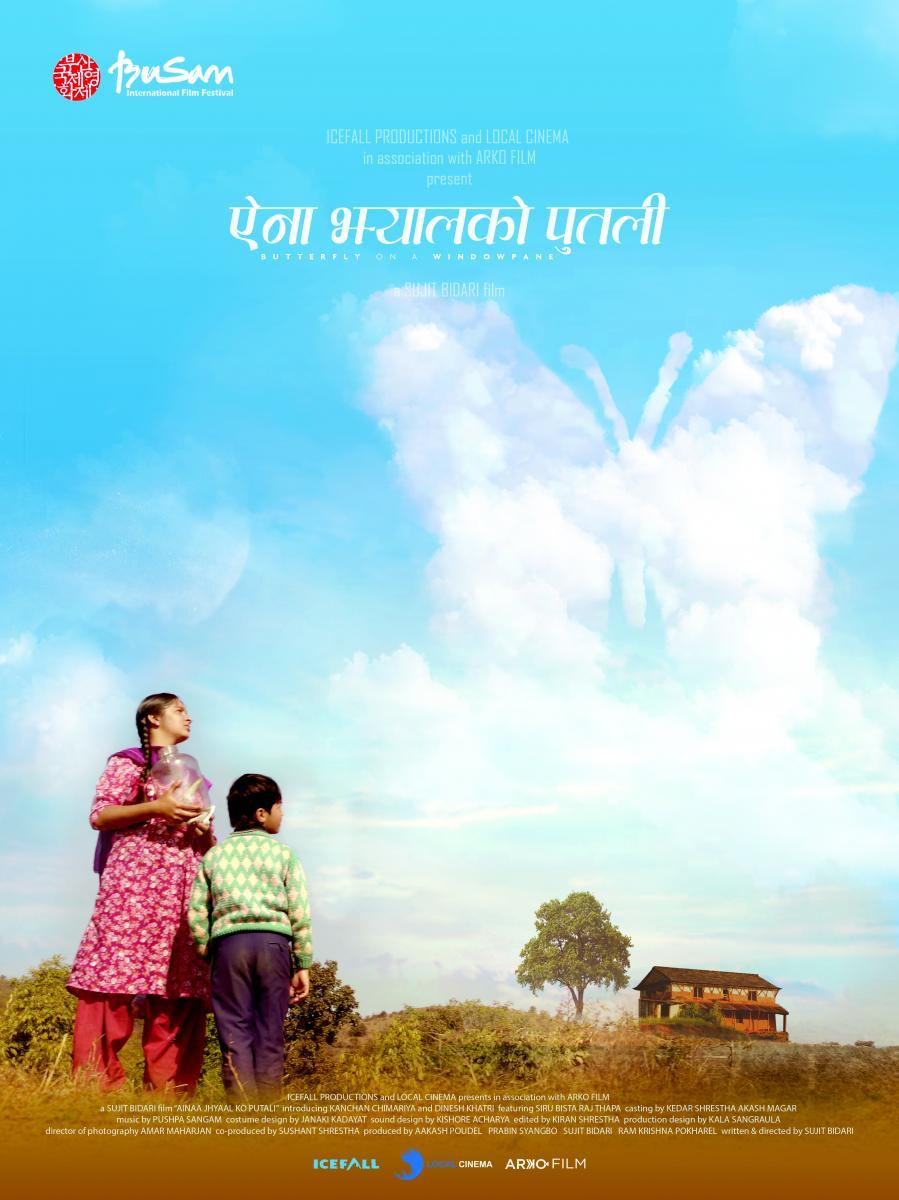
15.  NEPAL- “Butterfly on the Windowpane” (Letterboxd: 3.9)

These five films will bring much-needed attention to their small local-language film industries, and I’m so glad that they all submitted films. However, their chances of advancing are slim.

“Hawa” is the first film from Bangladesh to gross over $200,000 in North America and reviews for this exciting thriller set on a fishing boat have been great in South Asia and mostly (but less) positive in North America. Tech credits are said to be a major step up for Bangladeshi cinema. Kyrgyzstan and Nepal have sent small films that will surely get lost in the mix. “Home for Sale”, about a Kyrgyz family threatened by loan sharks, quietly premiered at Busan 2022. The film has no buzz and is said to be a grim, “realism” drama that will make it difficult to stand out. “Butterfly on a Windowpane”, from Nepal, is an earnest family drama focused on the lives of a 13-year old girl and her mischievous little brother living in an impoverished village. This is a sincere but quiet and mostly forgettable film until the final minutes, which admittedly pack an emotional wallop, though I’m not certain Oscar voters will have the patience.

New Zealand’s “Muru”, about 2007 police raids on the country’s indigenous Maori communities, has gotten mostly good reviews but I’ve heard some say that the film is less impactful without the cultural context (though I would expect that American audiences will understand only too well police raids in minority neighborhoods), and that it punctuates the quiet drama with unnecessary action sequences. It comes out on DVD at the end of the month and I’ll try to see it then to judge for myself.

Alongside these four grim stories, we have Singapore-Korea co-production “Ajoomma”, which is a much lighter film about a shy Singaporean widow obsessed with Korean pop culture who travels to Seoul alone after her son says he is too busy to take her. This “late-in-life” adventure may resound with older voters and it sounds like a lot of fun, but reviews have been more “What a nice film!” rather than critical raves.


BETTER LUCK NEXT YEAR:


16. 
 INDONESIA- “Missing Home” (Letterboxd: 4.1)

17.  HONG KONG- “Where the Wind Blows”  (Letterboxd: 3.3)

18.  CHINA- “Nice View”   (Letterboxd: 3.4)

19.  KAZAKHSTAN- “Life"  (Letterboxd: 2.8)

20.  VIETNAM- “Magnum 578"  (Letterboxd: 0.7)

First of all, the films from Kazakhstan and Vietnam just haven’t gotten good reviews so they’re out. Kazakhstan’s “Life” (Toronto) is one of the most interesting films on the list but this 3-hour film about a successful tech entrepreneur who accidentally loses the data, photo and memories of millions of people is said to be overlong and dramatically unsuccessful. Action flick “Magnum 578”, about a man seeking revenge for his kidnapped daughter, not only sounds a cross between Vietnam’s 2019 fun submission “Furie” and Liam Neeson’s “Taken”, but nobody seems to have a good word to say about it. An odd choice.

The other three are handicapped by their genres. “Missing Home” from Indonesia is a crowdpleasing comedy (with the highest score on Letterboxd; 4.1) about an elderly couple who have alienated all their three of their adult sons (their one daughter still lives at home, but she has her own problems) and who pretend to be getting a divorce to force them to visit. I loved it, and it’s prime for a U.S. remake, but it’s not serious enough to compete here. “Nice View”, a comedy-drama from China about a 20-year old trying to launch a business to pay his sister’s medical fees, is also very entertaining and unsurprisingly was a box-office hit in China. But- despite the serious subject matter- it is structured like an 80s movie from the USA, complete with musical montages and a lovable band of misfits who help the protagonist succeed. It’s a well-made film, but it’s also predictable and derivative.  

“Where the Wind Blows” (aka “Theory of Ambition”) is a big-budget, all-star triad film from Hong Kong. Hong Kong has sent countless crime dramas that look exactly like this and none of them (including “Infernal Affairs”) got shortlisted. The few reviews that are out there indicate a positive but unspectacular reception, and this is not going to advance.


Now the Statistics:

Who’s Missing?: Not many….but BHUTAN and MALAYSIA are noticeably absent. Bhutan was the surprise nominee at this year’s Oscars and I wondered whether that would inspire them to submit films regularly (they’ve got a small but prolific local film industry aimed at domestic audiences). But it seems they’ll only send films aimed at a more international audience. Malaysia has submitted fairly regularly since 2015. They formed a committee this year and announced a call for eligible films, so I’m not sure what happened to them.

AFGHANISTAN- whose government succumbed to brutal Taliban rule again in Summer 2021- is sadly in no condition to send films to the Oscars.

Also absent: FIJI (entered one film in 2005), LAOS (one film in 2017), SRI LANKA (two films 2003-2009), TAJIKISTAN (two films 1999-2005) and UZBEKISTAN (two films 2019-2021).

Genres: Less than half of the Asian countries have sent straightforward “dramas”. We also have three “dramedies” (China, Indonesia and Singapore), 1 horror-drama (Australia), one action movie (Vietnam) and six thrillers (Bangladesh, Hong Kong, Korea, New Zealand, Philippines, and Taiwan).

I’ve Already Seen: Australia, China Indonesia, Japan, Mongolia, Nepal, and Taiwan….and I plan to see Thailand before this list is published.

How Many Did I Get Right?: Only 5- Australia, Bangladesh, Korea, Pakistan, and Thailand 

Film I’m Most Excited To See: Pakistan’s “Joyland”. No contest.

Big Three Festivals:

·         Cannes- Korea (Best Director), Pakistan (UCR Jury Prize), Cambodia, Japan

·         Berlin- None

·         Venice- Philippines (Best Actor)

Women Directors-           Only one! ☹ Chie Hayakawa from Japan….5% …. How embarrassing!

Oldest and Youngest Directors- The senior director from this (very young) group is Korea’s Park Chan-wook, 59. The youngest director of all 92 competing films is 28-year old Tearepa Kahi from New Zealand.

Languages Represented- 20 films in 19 languages! Bengali, Cantonese, Filipino, French, Gujarati, Indonesian, Japanese, Kazakh, Korean, Kyrgyz, Macedonian (Australia), Mandarin, Maori, Mongolian, Nepali, Russian, Thai, Urdu and Vietnamese. The most represented language unsurprisingly is Mandarin Chinese (China, Taiwan plus parts of Singapore and Korea), followed by Korean (Korea, plus parts of Cambodia and Singapore).

How Many Have a Chance at the Shortlist?- From this group? Hmmm….Not that many….Maybe three or four?

Most Likely to Get Shortlisted for the First Time- Pakistan

Buzziest Films: “Decision to Leave”, followed by “Joyland”

Letterboxd Ratings (as of 16 November 2022):   Best: Indonesia (4.1), Worst: Vietnam (0.7)

Controversies and Changes: India was considered as one of the frontrunners to win the Oscar for box-office smash “RRR”. I think those claims were exaggerated but it was still a controversial mistake for India to reject this widely-loved film for a low-budget drama about kids going to the movies.

China’s frontrunner “Return to Dust” passed the Chinese censors and was released in local cinemas where it was a surprise box-office hit….before being mysteriously pulled and subsequently banned without any reason given.

The Philippines was criticized for not sending a film last year and the Director’s Guild criticized the Film Academy of the Philippines for not sending “eligible films” like “On the Job 2”. Most experts felt the film wasn’t eligible this year since it aired on HBO before appearing in Filipino cinemas, but AMPAS appears to have accepted it since it’s world premiere was at the Venice Film Festival.

Pakistan made this year’s most courageous choice, choosing transgender love story “Joyland”, which was perhaps surprising for not being especially controversial….

Oscar History:  Only two of these directors has been here before and neither one is Park Chan-wook (the Korean Academy didn’t submit “Oldboy” or “The Handmaiden”). Philip Yung represented Hong Kong in 2016 for the forgettable noir thriller “Port of Call” while Nattawut Poonpiriya represented Thailand in 2013 for the gonzo horror thriller “Countdown”. 11 of these 20 countries have been nominated in this category at least once (13 if you count nominations in other categories for Mongolia and New Zealand).

Most Notable Omissions: Besides the aforementioned “Return to Dust” (China) and “RRR” (India)?

Sometimes an underdog country has the bad luck to have two great films come out in one year and that certainly happened to Pakistan where “Kamli”, supposedly one of the best films ever to come out of Pakistan, had to compete against “Joyland”, a critical darling and the first Pakistani film ever at Cannes.  I was also sad to see New Zealand comedy “Nude Tuesday”- spoken completely in a made-up gibberish language without subtitles- lose out to “Muru”.

“Karmalink” (Cambodia) and “The Brilliant Darkness” (Vietnam) may have been hurt by the fact that they have American directors.

Also absent: Zhang Yimou’s “Snipers” (China), “Before, Now and Then” (Indonesia), “The Kashmir Files” (India), “Sales Girl” (Mongolia) and “Leonor Will Never Die” (Philippines). Some of these probably didn’t meet Oscar screening requirements.

Most Famous Faces: Internationally, it’s probably Swedish actress Noomi Rapace who co-stars as one of the village women in Australia’s “You Won’t Be Alone”. But we also have Tony Leung and Aaron Kwok (“Where the Wind Blows”), Tang Wei (“Decision to Leave”) and Cliff Curtis (“Muru”). 

Last Year’s Race: I saw 16 of the 18 Asia-Pacific submissions last year. My personal favorite was horror film “The Medium” from Thailand (A-) although I’m sure that AMPAS hated it. I’d put Bhutan’s “Lunana” (A-) in a close second place followed by “White Building” (B+), “When Pomegranates Howl” (B+), “Yellow Cat” (B+), “YunI” (B), “Hail Driver!” (B), “Escape from Mogadishu” (B), “Cliff Walkers” (B), “Bố già” (B), “The Falls” (B), “Rehana” (B-), “Drive My Car” (C; sorry, not sorry), “2000 Songs of Farida” (C), “Pebbles” (C-) and finally the abysmally sappy “Zero to Hero” (D). I couldn’t find the films from Kyrgyzstan and Singapore anywhere.