Showing posts with label Estonian cinema. Show all posts

Friday, December 14, 2018

2019 Oscar Contenders: Eastern Europe and the former USSR (23 Countries)

Here are the 23 submissions from Eastern Europe and the former Soviet Union. 

DISQUALIFIED:
23. KYRGYZSTAN- "Night Accident" Kyrgyzstan announced road movie "Night Accident" as their Oscar submission on September 27th. The film got very good reviews but didn't appear on the final list (though it was on the Golden Globes submission list). My guess is that it didn't arrive in Los Angeles in time, but there's been no confirmation either way. 

BETTER LUCK NEXT YEAR
22. LITHUANIA- "Wonderful Losers"
21. LATVIA- "To Be Continued"
20. CZECH REPUBLIC- "Winter Flies"
19. MONTENEGRO- "Iskra"
18. GEORGIA- "Namme"

For the second year in a row, LITHUANIA is in my bottom two. Their dull 75-minute documentary "Wonderful Losers" is about professional cycling. It focuses on the members of professional cycling teams whose job (apparently) is to support the team captains but it also focuses on the medical teams that follow the racers. There was actually no explanation of how these cycling races are organized and the stories were of very little interest. LATVIA also selected an unheralded documentary, choosing "To Be Continued", following a number of rural children through their first year of school. Even if it's very well-done it won't make an impact here. Both were probably chosen thanks to a new rule that all documentaries submitted for the Foreign Language category will automatically be entered in the Best Documentary competition. 


MONTENEGRO has the most obscure film on the list, namely "micro-budget" political thriller Iskra", the feature debut of 28-year old Gojko Berkuljan. The few reviews online say this is a very engaging film, focused on a series of unsolved murders and disappearances. But with no awards, no buzz, no festival play and no budget, it will have to content itself with the extra publicity it will get from the Oscar race. GEORGIA also chose an obscure film- "Namme"- over some more high-profile entries ("Khibula", "Dede" and a local version of "Hamlet"). "Namme" is about an old man who is the caretaker of a holy spring with healing waters, and a (possibly) magical fish.  His three sons have left home leaving his reluctant youngest daughter to carry on the tradition. "Namme" has a sweet story and showcases Georgia's natural beauty....but it's slow-moving and slightly dull. 

The CZECH REPUBLIC should be embarrassed to be in the bottom tier alongside these four small republics. "Winter Flies" was one of the worst of the 46 submissions I've seen so far. If you want to see a road movie with two unlikable 13-year olds jerking off together in a car, go see "Winter Flies".  


TOO MUCH COMPETITION
17. KOSOVO- "The Marriage"
16. BELARUS- "Crystal Swan"
15. ARMENIA- "Spitak"
14. ROMANIA- "I Do Not Care If We Go Down In History As Barbarians"
13. MACEDONIA- "Secret Ingredient"

After a 22-year absence, BELARUS is back in the Oscar race with "Crystal Swan". I feel terrible ranking it so low because I really loved the film. It's definitely one of my favorites and one of the reasons I try to see all the films- not just the apparent front-runners. Set in the 1990s, "Crystal Swan" is about, Velya, a 20-something Belarusian slacker who dreams of being a DJ and dreads ending up like her mother, a responsible civil servant. Velya is trying to get a visa to leave her conservative country and work illegally in America. When she learns that the US Embassy will call the fake phone number she put on her visa application "sometime this week" to verify her employment as a factory manager, she travels to rural Belarus to find the family that has the number and convince them to let her sit by the phone. "Crystal Swan" is a low-budget feature debut but it's charming, funny and original, while also treading into some very dark places. I loved it. Much the same can be said for the crowd-pleasing marijuana comedy "Secret Ingredient" from MACEDONIA. Vele's conservative father is dying of cancer and in constant pain, and Vele cannot afford the medicine needed to keep him. But instead of a dark Balkan drama, this is a very dark Balkan comedy as Vele discovers a cache of drugs and uses the potent marijuana to make Dad feel better. He tries to keep this a secret to avoid trouble with the police and with the drug dealers who lost their stash, but Dad can't keep a secret and tells the whole neighborhood that his son is a miracle healer. It's also a low-budget effort but it's very entertaining and very well-done. Bravo to both. 

Also from the former Yugoslavia, we have "The Marriage" (available on Amazon). Who would have thought that the only gay-themed film from Europe this year would be from the tiny, conservative breakaway republic of KOSOVO. This is another one of those films that I really enjoyed but will simply be forgotten here. The story follows a seemingly happily engaged Kosovar couple whose relationship is strained by the arrival of the groom's best friend who emigrated to France many years before. The two men were in love but could not make things work in conservative Kosovo. Reviews have been mixed-to-positive but I really liked it. 

More memorable and less enjoyable is ROMANIA's intellectual drama "I Do Not Care If We Go Down in History as Barbarians", a didactic, talky drama exploring Romanian history. This may be the "smartest" movie in competition, as the modern-day characters have intellectual debates about the meaning of history, the actions of Romania's WWII leadership and the ability of the public to process historical revisionism. It's a good film with a great ending...but it's not very accessible and definitely requires some knowledge of Romanian history. Last but not least, ARMENIA has chosen earthquake drama "Spitak", a Russian co-production . Strangely enough, Armenia was disqualified for another Russian co-production about the same earthquake two years ago. "Spitak" is an Armenian man in Moscow who rushes home to find his family after hearing about the disastrous 1988 earthquake that killed roughly 40,000 people. Destined to be an also-ran. 


MIDDLE OF THE ROAD
12. SERBIA- "Offenders"
11. BULGARIA- "Omnipresent"
10. CROATIA- "The Eight Commissioner"
9. SLOVENIA- "Ivan"

Balkan neighbors Bulgaria and Serbia have chosen very different films about the power of surveillance and voyeurism. Dark comedy "Omnipresent" (BULGARIA) is slightly more likely than dark thriller "Offenders" (SERBIA), though neither is likely to make the finals. "Offenders", one of is about a group of graduate students who set up a series of video cameras in a poor neighborhood to prove their professor's theory of anarchy. Bulgaria is a lighter (but still sometimes creepy) film about a man who becomes obsessed with watching the security cameras he has set up in his home and office. The man had set up one camera in his father's apartment to catch a thief but the cameras proceed to reveal family secrets and betrayals that he uses to his own advantage. 

CROATIA's comedy "The Eighth Commissioner" revolves around a fast-rising bureaucrat who is forcibly relocated from the capital to a remote island after an embarrassing political scandal. His new "district" is filled with a few dozen elderly citizens (plus a Bosnian fugitive, a Ukrainian prostitute and a slew of goats) who have no intention of cooperating. They have already driven the first "seven commissioners" away. This is a flawed but definitely charming film. The ribald humor and the overlong running time will make sure this film is likely to rank in the 30s or 40s.  Finally we have SLOVENIA and "Ivan", which is a really hard one to rank. It's a well-made film with an extremely unsympathetic lead character, namely a young woman who has just given birth to the son of her wealthy, married boyfriend. This is a good, twisty drama with a lot of meaty moral dilemmas but isn't likely to stand out enough to make the Top Six or be one of the three that are saved. 


HOPING FOR A MIRACLE
8. RUSSIA- "Sobibor"
7. ESTONIA- "Take It Or Leave It"
6. BOSNIA- "Never Leave Me"

I'll keep my remarks on these three brief. 

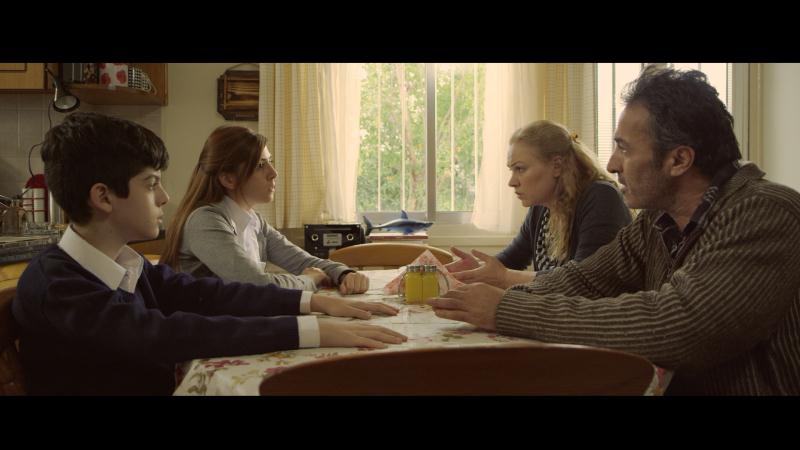
I've only seen "Take It Or Leave It" (ESTONIA), a well-made family drama about a 20-something Estonian laborer who receives a phone call from his ex-girlfriend notifying him that he has become a father and that she is giving the child up for adoption. The man reluctantly decides to raise the child by himself and what results in a very realistic (this is not "Mr. Mom" or "Three Men and a Baby") look at the struggles of single fatherhood. Probably too small to compete here but a strong effort. It will compare favorably with the similarly themed "Ivan" from Slovania. 

BOSNIA-HERZEGOVINA selected refugee drama "Never Leave Me", about Syrian refugees trying to survive in Turkey. Starring real-life child refugees, it's guaranteed to tug at the heartstrings. Reviews have been very positive, but note a tendency for the plot to get off-track. The film will be hurt by comparisons to Lebanon's more prominent "Capernaum" from Lebanon. RUSSIA has selected a more traditional war drama-"Sobibor"- revolving around the real-life uprising of prisoners being held in a Nazi extermination camp. The film itself is said to be an extremely realistic look at WWII history, but lacking in character development

DARK HORSES
5. HUNGARY- "Sunset"
4. KAZAKHSTAN- "Ayka"
3. UKRAINE- "Donbass"

Let's take a look at these three dark horses:

 Hungary-
BLUF: A young woman's life in turn of the century Hungary.
PROS: The film looks beautiful. Director Nemes won the Oscar for "Son of Saul"
CONS: That's about it for Pros....Although reviews haven't been bad, a lot of people are lukewarm on the film. It has the lowest score in Europe on Rotten Tomatoes (52% from critics and 55% from audiences)
BOTTOM LINE: While hoping to emulate "The Notebook", another Hungarian film with mixed reviews that somehow made the shortlist, "Sunset" is probably out of luck.

 Kazakhstan
BLUF: A grim drama about an unemployed, Central Asian woman living in Moscow. She has just had a baby and is desperate to make ends meet.
PROS: Won Best Actress in Cannes.
CONS: Unrelentingly grim and depressing. Most reviews single out the acting more than the film itself.
BOTTOM LINE: Kazakhstan pushed hard for this film to get into the Oscar race as it was originally going to be disqualified for not meeting nationality requirements (director Sergey Dvortsevoy was born and raised in Kazakhstan and has represented them once before....but is now based in Russia and recently gave up his Kazakh citizenship). But it can't make the Top Six and there's too much competition for a save.

 Ukraine
BLUF: A series of vignettes focused on war-torn, eastern Ukraine
PROS: It's an intellectual, arthouse choice focusing on the issue of fake news and propaganda (a hot topic in the U.S.), and it's not required to know about Ukrainian politics......
CONS: ....but it helps. The "coldness" and lack of regular characters will turn off some voters and this definitely won't fly with the large committee.
BOTTOM LINE: I predict that "Donbass" is seriously considered by the elite committee for a "save"....and ultimately loses out.


FRONT-RUNNERS
2. POLAND- "Cold War"
1. SLOVAKIA- "The Interpreter"

As of December 14th, I have both of these films in my Top Nine predictions. "Cold War", from POLAND, has been a favorite all-season and has gotten rapturous reviews for its decidedly unromantic story of star-crossed lovers who meet in post-WWII Communist Poland and who manage to meet again in Yugoslavia, France and finally Poland. Of course it's well-done (I thought it was much better than Oscar-winning "Ida", which I found forgettable) and the Cinematography is likely to be nominated for an Oscar. But the film's characters aren't likable and the film, like the title, is "cold". It failed to get a Golden Globe nomination and is probably less safe than people think. "The Interpreter" from neighboring SLOVAKIA, could be the one that surprises everyone. This is the story of two old men on a road trip through Austria and Slovakia to research long-buried secrets from WWII. 80-year Ali, a Slovakian Jew and German-language interpreter, finds himself paired with 70-year free spirit George, an Austrian whose father was the Gestapo officer who had Ali's parents killed. It's funny, it's sad and it tells a Holocaust story in a completely different way. However, the ending (which I liked) has apparently turned a lot of people off. This film is going to be a strong contender to win over the traditionally older, male Large Committee....unless the influx of new voters this year really changes the demographics. 

Now the statistics:

Number of countries that have participated in the past
: 27

Number of countries participating this year:  23 (including Kyrgyzstan) 

Number of debuts: Zero.

Who's out?:  Albania, Azerbaijan, Moldova and Tajikistan. 

Number I predicted correctly- I did pretty well, predicting 9 correctly (Bosnia, Hungary, Kyrgyzstan, Macedonia, Poland, Romania, Serbia, Slovakia and Slovenia), though most of these were pretty easy. 

Already Seen: I've seen 13 out of 23 so far and they are a likable bunch- Belarus (A-), Bulgaria (B+), Croatia (B+), Czech Republic (D), Estonia (A-), Georgia (C+), Kosovo (B+), Lithuania (D+), Macedonia (B+), Poland (B+), Romania (B), Slovakia (A) and Slovenia (B+). 

Film I'm most looking forward to seeing
: Serbia's "Offenders". 

Number of Female Directors:  4- Aida Begić (Bosnia-Herzegovina), Liina Triškina (Estonia), Blerta Zeqiri (Kosovo) and Darya Zhuk (Belarus)

Oldest and Youngest Directors: 28-year old Montenegrin director Gojko Berkuljan is the second-youngest filmmaker in the 87-film competition. 84-year old Ivars Seleckis of Latvia is by far the oldest. 

Number of Foreign Languages Represented:  It's a big mix this year as films from Bosnia, Estonia, Hungary, Lithuania, Poland, Russia, Slovakia, Slovenia and Ukraine all straddle real or imagined borders, and have dialogue in more than one language. But if we do majority languages, we have 4 in Russian (Belarus, Kazakhstan, Russia and Ukraine), 3 in Serbo-Croatian (Croatia, Montenegro and Serbia) plus one each in Albanian (Kosovo), Arabic (Bosnia), Armenian, Bulgarian, Czech, Estonian, Georgian, German (Slovakia), Hungarian, Italian (Lithuanian), Latvian, Macedonian, Polish, Romanian and Slovene. 

Number of Documentaries: 2- Latvia and Lithuania

Number of countries with a realistic chance at making the shortlist: Hmmm.....3 or 4 at most. 

Highest profile film:  Of course "Cold War" from Poland. 

Oscar History: We have two Oscar winners on the list- Poland's Paweł Pawlikowski's "Ida" won in 2015, and Hungary's László Nemes' "Son of Saul" won in 2016. 

Not sure if this is a record or not, but Slovakia's Martin Šulík is in the race for a seventh time....and he's only 56 years old...... On their third try: Aida Begić of Bosnia ("Snow", "Children of Sarajevo") and Janez Burger of Slovenia ("The Ruins" and "Silent Sonata"). On their second try- Sergey Dvortsevoy of Kazakhstan ("Tulpan"), Radu Jude of Romania ("Aferim") and Arūnas Matelis of Lithuania ("Before Flying Back to Earth"). 

Most Notable Omissions:   A lot of countries had an easy choice, but not Poland. Controversial priest drama "The Clergy"  (Poland) probably gave "Cold War" a last-minute run for its money. And astronaut drama "Salyut-7" never got much buzz but probably would have done extremely well.  Others eliminated early: "Directions" (Bulgaria),  "Dede" (Georgia), "A Gentle Creature" (Lithuania), "The Last Day Before June" (Moldova), Silver Bear winner "Mug" (Poland), "Dovlatov" (Russia), and "Volcano" (Ukraine). 

Familiar Faces: French actor Christopher Lambert stars in "Sobibor" (Russia). German actor Peter Simonischek ("Toni Erdmann") and Czech actor/director Jirí Menzel star in "The Interpreter" (Slovakia). 

Last year's race: I saw 16 of 22 films last year. I wasn't a huge fan of either of the two Oscar nominees ("Of Body and Soul" and "Loveless"). I definitely thought the best film was "Glory" from Bulgaria. I was also a big fan of the characters in "Ice Mother" (Czech Republic) and the creativity and originality of "November" (Estonia). 

Thursday, October 22, 2015

FOREIGN OSCAR 2016- The 21 Candidates from the Eastern Bloc

So this year, 81 films have been accepted into the Foreign Oscar competition, the second-highest number ever! 

As usual, I'll be dividing the candidates into four global regions:

LATE OCTOBER- The Eastern Bloc Countries (21)
EARLY NOVEMBER- The Asia-Pacific Region (inc. Turkey) (20)
LATE NOVEMBER- Canada + Western Europe (inc. Israel) (20)
EARLY DECEMBER- Latin America, Africa and the Arab World (20)

Lots of interesting trends this year…We’ve got a huge number of movies about borders, migration and the immigrant experience (Bulgaria, Greece, Israel, Mexico, Morocco, Netherlands, Serbia, Switzerland) as well as a number of films exploring indigenous and/or traditional cultures (Australia, Colombia, Ethiopia, Guatemala, Kyrgyzstan and Venezuela). Those three Latin countries have films that are mostly in indigenous languages; not Spanish. 

We’re also seeing the debuts of a lot of relatives of famous directors. The helmers from Bosnia, Kyrgyzstan and Mexico are trying to make their names in the shadow of famous relatives. 

So, first…the Eastern Bloc countries (including Central Asia)

Last year, the countries of the Eastern Bloc got an amazing four spots on the Oscar shortlist (up from 2, 1, 1, 0 and 2 in the previous five years). However, they aren’t likely to repeat that feat this year, although the official front-runner (“Son of Saul”) could allow them to win two years in a row. Most of this year’s Eastern Bloc films have little or no chance to be nominated.

NO CHANCE IN HELL:

21. KOSOVO- “Babai”
20. SLOVAKIA- “Koza” (The Goat)
19. GEORGIA- “Moira”
18. SLOVENIA- “Drevo” (The Tree)
17. LATVIA- “Modris”

These five films with one-word-titles from some of Europe’s smaller countries have little chance to advance in this year’s competition. But as I always say, the Oscars provide a platform for these films and their directors to be seen and talked about by international critics.

Among the least likely are the family dramas from the ex-Yugoslav republics of Kosovo and Slovenia, both of which premiered at Karlovy Vary. KOSOVO's second-ever  Oscar submission “Babai” is about a young Kosovar boy who runs away to try and find his father who is working abroad in Germany. It has won some small awards but it is said to be a fairly average film from a country just beginning to develop a domestic film industry. SLOVENIA's “The Tree” has gotten mostly positive reviews but critics frequently use words like “subtle” and “challenging”, i.e. unlikely to appeal to Oscar. It’s a grim story told in three parts, about a family in the aftermath of some sort of accident; each is from a different POV- the mother and her two children.
 
Latvia, Georgia and Slovakia have chosen minimalist character studies of the underclasses. LATVIA's “Modris” is about a disaffected teen barely making an effort to get through life, getting involved with petty delinquency and developing a serious gambling problem. SLOVAKIA has chosen a gritty docudrama (“Koza”, aka “The Goat”) which played at Berlinale; it's about a Roma boxer who once competed in the Olympics but is now living in poverty and attempting a career comeback.  GEORGIA's “Moira” (San Sebastian) is about a man who returns to his family in their seaside home after getting out of prison.  The film is said to be "formulaic" and has failed to get very good reviews. Georgia probably would have done better to choose something else. These grim films can all be counted out. 

ONLY A SLIGHTLY BETTER CHANCE:
16. POLAND- “11 Minutes” 
15. MONTENEGRO- “You Carry Me”
14. RUSSIA- “Sunstroke”
13. MACEDONIA- “Honey Night”

It’s unusual for defending champion POLAND and Oscar superpower RUSSIA to be ranked so low down the list (they were both among the five nominees last year). However, the films they selected are just supposed to be really bad. “11 Minutes”, a fast-paced and visually slick thriller following eleven quirky characters, looks like great fun. Unfortunately, reviews have been terrible and everyone I know who has actually seen it has told me they hated it. It was the one film I was unable to get tickets for at the Busan Film Festival so I'm afraid I'll have to reserve my own opinion. As for Oscar winner Nikita Mikhalkov’s bloated three-hour patriotic drama “Sunstroke”- set in the waning days of the Russian Empire in Crimea- is said to be a mess. Bad reviews will condemn these two to being also-rans. 

The former Yugoslav republics of Macedonia and Montenegro didn’t have much to choose from this year. MACEDONIA had only one film submitted for consideration whereas MONTENEGRO ended up choosing a majority-Croatian film due to a lack of suitable candidates. Neither film has made much of an impact on audiences. “You Carry Me” is a Croatian take on “Crash”, focusing on a number of characters with intersecting lives. While some clearly like the film, most refer to it as an overlong two-and-a-half-hour soap opera. With "Wolf Totem" disqualified for lack of Chinese input, I'm confused how "You Carry Me" is even on the list. As for Macedonia’s “Honey Night”, it could be an amazing film......However, the film has zero buzz, political overtones that may confuse an American audience and there's virtually no information about it anywhere online. It's about a national political scandal coinciding with a couple’s marital problems on their 10th wedding anniversary. 

MIDDLE OF THE PACK:
12. SERBIA- “Enclave”
11. CROATIA- “The High Sun”
10. LITHUANIA- “Summer of Sangaile”
9. BOSNIA- “Our Everyday Story”

Three of these four films examine the aftermath of the Yugoslav Wars from the point of view of each of the three main beligerents. Whereas they are all good films, they lack the “oomph” necessary to get to the next round. Despite the highest IMDB rating of all the Eastern films, SERBIA's “Enclave” may also be too political. It looks at the relationship between Kosovar Albanians and Serbs,  who found themselves de facto living in a foreign country after Kosovo declared independence. The film won the Audience Award in Moscow, but is certain to appeal more to the Serbian audience who feel emotional pain at the idea of losing the province. CROATIA selected “The High Sun” which won the Un Certain Regard award at Cannes and Best Croatian Film in Pula for its story of three interethnic love stories, set in 1991, 2001 and 2011. The three sets of lovers are played by the same set of actors (a very interesting, but also potentially confusing gimmick). The film is good and it has a lot to say about ethnic conflict, but the chapters vary in their quality (I agree the first is the best). The title of BOSNIA's “Our Everyday Story” says it all- it’s a film about a modern-day, middle-class Bosnian family with modern-day, middle-class problems, most notably the cancer diagnosis of the family matriarch. Though it will likely score highest of the seven ex-Yugoslav republics this year, I just have a hard time believing that this quiet, true-to-life family drama can get the scores necessary to advance.


As for LITHUANIA, they’ve selected teen lesbian romance “The Summer of Sangaile”, which won Best Director at the Sundance Film Festival. Critics have loved this sleeper hit about two teenaged girls who fall in love at an air show. However, the Foreign Film committee is rarely kind to LGBT-themed films or youth-oriented films, so I think “Summer” and its lesbian protagonists will also find themselves out of luck.


MIDDLE OF THE PACK:
8. ALBANIA- “Bota”
7. KAZAKHSTAN- “The Stranger”
6. ESTONIA- "1944"

These three films may have their fans but likely will struggle to get noticed. 

ESTONIA has chosen a patriotic war drama (“1941”) that highlights the uniquely complicated situation facing the three Baltic republics during World War II. Other than Hungary (see below), Estonia is the only country that has selected a WWII film, when Estonia was invaded by both the Nazis and the Soviets. Many Estonians were drafted and/or volunteered by sides, resulting in Estonians fighting other Estonians for causes they may not have even agreed with to preserve their nationhood. AMPAS likes war films, but this one is said to be very nationalistic and may suffer from some rather obscure history.

KAZAKHSTAN’s “The Stranger” is the third film by Yermek Tursunov to represent Kazakhstan since 2009. "The Stranger" is about a drama set during Communist times about a man who attempts to resist Sovietization and retain traditional ways. Tursunov was shortlisted for the shortlisted "Kelin" (which certainly deserved an Oscar nod) but response to "The Stranger" has been divided. Many find the film to be confusing and off-putting. 

That brings us to the delightful "Bota" from ALBANIA, about a married man and his two female employees working at a cafe in one of the remotest regions of Albania. Sad, funny and with beautiful music, the film's tagline is "Nothing happens. Everything happens." Events unfold slowly but the film is never boring. And without spoiling the ending, your emotions end up being pulled in two directions. Good storytelling made this (as usual) a great entry from one of Europe'a least-known film industries. Honestly, I know the film is too "small" to make it to the next round, but films like this are one of the reasons I try to see all the film on the list every year. Good luck! 

DARK HORSES
5. KYRGYZSTAN- “Heavenly Nomadic”
4. ROMANIA- "Aferim!"
3. CZECH REPUBLIC- “Home Care”

I'm not predicting that any of these three films will be nominated come January, but one of them could potentially surprise, particularly if the quiet CZECH tragicomedy of “Home Care” resonates with the older voters on the large committee. It’s difficult to make a funny movie about such a sad subject (a wife and mother dying of cancer) but the Czechs have a talent for deftly balancing comedy and tragedy. In the film, a rural Czech nurse who is passionately devoted to both her husband and troublesome patients is stunned to learn that she is ill herself, and embarks on the road to self-discovery and closure. However, I ultimately think this low-key film will be too "small" to ultimately make the finals.

ROMANIA’s road movie “Aferim!” is about a 19th century constable and his son searching for a runaway Gypsy slave in the wilds of a multi-ethnic province of the Ottoman Empire. It’s all very witty and clever with a shocking ending but the puns and witticisms (though very well-translated) may lose something in the translation. The former Soviet republic of KYRGYZSTAN always sends a good film and has likely come closer to an Oscar nomination several times; “Heavenly Nomadic” is said to be a sweet, likable film about a nomadic family living on the steppes. It will score well with the larger committee but it will be almost impossible for this small film to make the Top Six there.

FRONTRUNNERS
2. BULGARIA- “The Judgement”
1. HUNGARY- “Son of Saul”

Everyone is already talking about HUNGARY's Auschwitz-set drama “Son of Saul” as this year’s Oscar front-runner. The glowing reviews from Cannes frequently hailed its “original look” at the Holocaust as seen through the eyes of a Sonderkommando- a little-known group of Jewish prisoners tasked with disposing of the dead. The film left Cannes with Grand Prix. We all know that AMPAS loves any film mentioning the Holocaust (how else to explain the win of the mediocre “The Counterfeiters” a few years back) so “Saul” is as close to a lock as there is.

Conversely, nobody is talking about BULGARIA's “The Judgment”, a morality play about a widower living with his angry teenaged son in Bulgaria's border region, who turns to human trafficking to try and make ends meet. Director Stephan Komandarev was the first and only Bulgarian to make it to the shortlist (for “Salvation is Big and the World Lurks Around the Corner”, which similarly had little-to-no-buzz that year). Perfectly timed to coincide with the current refugee crisis in Europe, “The Judgment” will likely do well with Oscar voters….It just remains to be seen if it can make the Top Nine. It will be on the bubble.  

Now the Statistics:

Number of Eastern Bloc countries that have participated in the past: 27

Number of Eastern Bloc countries participating this year:  21

Number of debuts: None.

Number of countries opting out:  Six. The most notable absence this year is UKRAINE, which had some complicated problems involving their selection committee. I’m not sure of the whole story but apparently half the members quit after last year’s controversial selection of “The Guide” over “The Tribe” and Ukraine was either late getting a new committee approved by AMPAS, or their proposed committee was rejected. In any case, the Ukrainians were rumored to be sending “Brothers: The Final Confession” or “Battle of Sevastopol” and officially asked AMPAS for a deadline extension to settle their internal problems. But ultimately, they didn’t make the list.

The only other surprise was AZERBAIJAN, which has sent films the past three years and who had baity nationalist drama “Black January” eligible. As for MOLDOVA, I don’t think they had any eligible films this year. As usual, Armenia (last submitted in 2012), Belarus (1996) and Tajikistan (2005) are also absent.

Number of countries I predicted correctly: 12 out of 21! Not bad- Albania, Bosnia, Bulgaria, Croatia, Czech Republic, Estonia, Hungary, Kosovo, Kyrgyzstan, Romania, Russia and Serbia. And I would have gotten Macedonia too if I’d known that “Liberation of Skopje” wouldn’t be ready in time.

Already Seen: Albania, Croatia, Czech Republic, Romania

Films I'm most looking forward to seeing: KYRGYZSTAN has a history of sending absolutely wonderful village dramas (“Wedding Chest”, “Tengri”) so I would definitely choose “Heavenly Nomadic”

Feature Debuts:      9. The directors from Albania, Czech Republic, Hungary, Kosovo, Kyrgyzstan, Latvia and Slovenia are also making their feature debuts. The ladies from Bosnia and Montenegro co-directed “Some Other Stories”, but since that film was really a series of five short films from five Yugoslav republics, I think they should be considered to be making their debuts too.

Number of Female Directors:  5 - Iris Elezi (Albania), Ivona Juka (Montenegro) and Sonja Prosenc (Slovenia) are the first-ever female helmers to represent their countries. They’re joined by Alanté Kavaïté (Lithuania) and Ines Tanović (Bosnia-Herzegovina)

Oldest and Youngest Directors:  77-year old Jerzy Skolimowski of Poland is the oldest European director this year. 32-year old Juris Kursietis of Latvia is the youngest from the Eastern Bloc.    

Number of Foreign Languages Represented:  17 primary languages, including four in the Serbo-Croatian dialects and two in Albanian, plus one each in Bulgarian, Czech, Estonian, Georgian, Hungarian, Kazakh, Kyrgyz, Latvian, Lithuanian, Macedonian, Polish, Romanian, Russian, Slovak and Slovene.

Due to a large number of films about historical invasions and occupations (Estonia, Hungary, Romania) as well as borders and migration (Bulgaria, Kosovo, Serbia), there are a lot of multi-lingual films from the region this year, adding a bit of German and Turkish into the mix.

Number of Comedies:  Romania comes closest, but I wouldn’t say any of the films are comedies. 

Number of Animated Films, Documentaries or Horror Films:   Slovakia chose what you’d call a “docudrama”.

Number of countries with a realistic chance at making the shortlist: Not many….maybe four or five.    

Highest profile film:  Definitely Hungary’s “Son of Saul” which won the Jury Grand Prize at Cannes. None of the others come close.  

Oscar History:  Five directors have been in the race before. Nikita Mikhalkov of Russia is certainly the most successful. He won the Oscar for “Burnt by the Sun”, got two more nominations for “Close to Eden” and “12” and was also selected two more times to represent Russia for “Burnt by the Sun 2:Citadel” and “The Barber of Siberia”. Kazakhstan’s Ermek Tursunov is on his third try after “The Old Man” (Shal) and “Kelin”, which made the 9-film shortlist. Bulgaria’s Stephan Komandarev was also shortlisted once, for “The World is Big and Salvation Lies Around the Corner”. Macedonia’s Ivo Trajkov (“The Great Water”, “Wingless”) and Croatia’s Dalibor Matanic (“Fine Dead Girls”) have also been in the race before.  

Of the 21 countries, five have won the Oscar (Bosnia, Czech Republic, Hungary, Poland and Russia), four more have been nominated,  three have been shortlisted and the other nine are waiting for their first official nominations as independent countries.

Best & Worst Decisions: Albania made the best decision by rejoining the race and sending charming drama “Bota”. Last year, a selection committee met and failed to send either of two competing films. Entering the race will help publicize this wonderful hidden gem. After two Georgian directors made the shortlist last year, Georgia probably made the worst decision by sending the untested “Moira”, which has not been well-reviewed.

Controversies and Changes:     No big controversies this year, although some grumbled that the selection of the three-hour “Sunstroke” was due more to Nikita Mikhalkov’s political connections and the film’s emphasis on Russian ownership of Crimea, rather than the quality of the filmmaking. And I’m surprised there was no controversy over the nationality of “You Carry Me”, a Croatian film representing Montenegro.

Omissions:        The most unfortunate omission this year was Hungary’s critically-acclaimed black comedy “Liza, the Fox Fairy”. Hungary is frequently willing to send unconventional films (“Taxidermy”) to the Oscars, but faced with a potentially Oscar-winning Holocaust drama, the quirky “Liza” just couldn’t compete.

Also doomed by heavy internal competition: morality tale “The Lesson” from Bulgaria, biopic “Gods” from Poland and dramedy “The Treasure” from Romania, while the political tone of Russia’s “The Fool” could not have helped. And Kazakhstan’s Ermek Tursunov defeated himself when “The Stranger” defeated the final film in his Kazakhstan trilogy, “Kenzhe”.

Familiar Faces:  There are no superstar actors in this batch, although many actors are famous in their own countries. Two actors of note for followers of this category are Luminita Gheorghiu (“Child’s Pose”, “The Death of Mr. Lazarescu”) who plays a very small role as a village wife in “Aferim!” (Romania), and Bosnian actor Emir Hadzihafizbegovic who, by my count, is making his 14th co-starring role in an Oscar submission with “Our Everyday Story” (Bosnia).

Last year's race:   Last year, the Eastern Bloc got four spots on the 9-film Oscar shortlist, as well as three of the five Oscar nominees. I saw all four plus the nominees from Croatia, Hungary and Lithuania. My favorite was Estonia’s “Tangerines”, though the technical artistry of Hungary’s “White God” was most impressive. Final grades: Croatia (B-), Estonia (B+), Georgia (C-), Hungary (B+), Lithuania (C+), Poland (B-), Russia (B).


Wednesday, July 15, 2015

OSCAR SUBMISSION PREDICTIONS 2015-2016, CHINA-GUATEMALA (Pt. 2 of 5)

Here's my prediction for the next tranche of countries: 

1. CHINA- "Lady of the Dynasty"- Whereas countries like Russia and Iran have shown that they are willing to choose subversive films in order to win an Oscar, China's Academy keeps a closer eye on things. They are perfectly willing to lose a chance at an Oscar nomination if it means choosing films that show China in a positive light. To that end, I'm predicting they send "Lady of the Dynasty", a royal epic, set in the 8th Century A.D., during the Tang Dynasty, starring Leon Lai and Joan Chen. The movie had a lot of behind-the-scenes drama (its original Korean director was fired) but apparently Zhang Yimou is involved somehow as some sort of Senior Adviser to the director. Of course, the two big films from China this year are Cannes drama "Mountains May Depart" and "Blind Massage", the surprise winner at the Golden Horse Festival and the Asian Film Awards. Although they've had trouble with censors in the past, directors Jia Zhangke ("Mountains") and You Le ("Massage") both now work within the People's Republic of China's official filmmaking system....so their films certainly could be selected. But I think it's more likely they'll go with a safer period drama rather than a contemporary one that looks at real modern-day problems in China. For the record, "Mountains May Depart" looks at the past, present and future of a Chinese family in contemporary China, while "Blind Massage" is about the lives of masseurs. No surprise there. Three other dark horses are (1)- auteur Chen Kaige's first-foray into "summer blockbuster" cinema, "Monk Comes Down the Mountain", an action movie starring Aaron Kwok, (2)- "Coffin in the Mountain" (Busan), a black comedy about a village man who accidentally kills a local thug, and (3)- HK director Tsui Hark's "Taking of Tiger Mountain", a period action movie set in the early 20th century as Communist forces were trying to overthrow the ROC Government (also possible for HONG KONG). Somewhat less likely: "Red Amnesia", about a middle-aged woman taking her of her sons and her elderly mother, and which stars some of China's finest elderly actresses. One final possibility is Zhang Ziyi 1920 film noir "Wasted Times", which is set to open October 3rd during China's big National Day long weekend. If China feels like it, they could easily do an Oscar qualifying release and submit the film this year. I don't hold out much hope for the well-reviewed "Wolf Totem" (they won't pick films by non-Chinese directors two years in a row), Berlinale "Gone with the Bullets" (good reviews, but a silly action sequel) or John Woo's "The Crossing", which deals with the politically incorrect story (for China) of people fleeing from China to Taiwan. I predict "Lady", with "Mountains May Depart and "Wasted Times" next in line. 

2. COLOMBIA- "Embrace of the Serpent" (El abrazo de la serpiente) Colombia is likely to be choosing between a trio of films from Cannes, namely “Gente de Bien” (Critics Week, 2014), "Land and Shade" (Critics Week 2015) and “Embrace of the Serpent” (Directors Fortnight Winner, 2015). I see “Serpent” as the clear front-runner. Director Ciro Guerra has represented Colombia before (for the dull “Wind Journeys”) and this B&W film, about the complex relationship between Colombia and its indigenous communities, has gotten the best reviews of any Colombian film this year. In the film, a man who represents the last survivor of his tribe, is pressured to team up with a white man on an expedition to find a rare flower capable of curing the man's illness. Its chief competition is the depressing "Land and Shade", about a man who visits the family he abandoned years before, only to find them barely clinging on to their small parcel of land surrounded by plantations. There's also “Gente de Bien”, a drama about class-conflict which explores what happens when a young boy and his laborer father are invited to spend a holiday with their wealthy employer. I was leaning towards “Gente de Bien”, but it failed to win any awards at the Cartagena Film Festival, which doubles as a sort of annual awards for Colombian film. There, the 2015 winners included “El silencio del rio” (Best Colombian Film), documentary “Carta a una sombra” (Jury Prize) and “Ruido Rosa” (Best Director). Other potential candidates include “La sargento Matacho”, a historical drama set in 1948, “Todos se van” (which I predicted last year), about a politically-charged custody battle in the 1980s and “Alias Maria” (Cannes 2015), about a pregnant guerilla soldier. Less likely: multi-character drama “Shakespeare”, featuring intersecting Shakespearean characters living in the modern world, and “Amazonas” (Maria Gamboa), by the director of last year’s submission. Out of the running: many people are talking about “Dirty Hands”, but it has an American director. Rules on this have loosened up recently, but after AMPAS disqualified Joshua Marston's Colombian "Maria, Full of Grace", the Colombians won't take the risk. Last year, “Gente de Bien” could have gotten this easily. But “Serpent” has gotten such positive reviews that the indigenous drama is near certain to rep los colombianos.
  
3. CONGO-KINSHASA- "The Man Who Mends Women" Congo-Kinshasa (a.k.a. DR Congo or "Big Congo") submitted a single film way back in 1997 and they are unlikely to return this year. Congo’s two big directors reportedly have new projects in the pipeline- Zeka Laplaine (whose “Macadam Tribu” was submitted in ’97) has “The Reptiles”, while Djo Munga (“Viva Riva”, Congo’s one and only international hit) has witchcraft drama “Chandra”. Both seem to be in production hell. For the sake of completion, I’ll predict “The Man Who Mends Women”, a documentary made in Congo by a Belgian filmmaker who has a long history working in the country. "The Man" is a doctor who dedicates his life to helping women who were sexually assaulted and often mutilated during the country’s long civil war. If they wish to go more local, they could send “National Diploma”, following a group of Congolese high-school students. It’s very possible neither film ever screened in the Congo.

4. COSTA RICA- "Presos" Costa Rica has no less than four potential candidates to choose from. That’s a huge number for the small Central American country, and part of a general film renaissance in Central America.  The most popular choice is also the least likely- road comedy “Maikol Yordan”, about a farmer who travels to Europe to raise money to save his farm. It's the biggest local hit (by far) in the country’s history and its got a lot of love behind it. But local humor will mean it will lose out to one of the three more serious choices. Prison drama “Presos” is by the director of the film (“Caribe”) that got Costa Rica to the Oscars in the first place, while minimalist B&W drama “Viaje” was called one of the best films of the Tribeca Film Festival by the New York Times. Then there’s “Two Waters”, the gentle drama about a poor boy whose brother will do anything to make sure his bro can attend a football academy. There’s never really been a competitive Oscar “race” in Costa Rica before. They either sent in a movie or they didn’t…So I’m not sure what their Academy’s tastes are. My instinct is that they will send in Ramirez’s “Presos” which seeks to offer social commentary on the nation’s prison system. Expect “Two Waters” to come second.

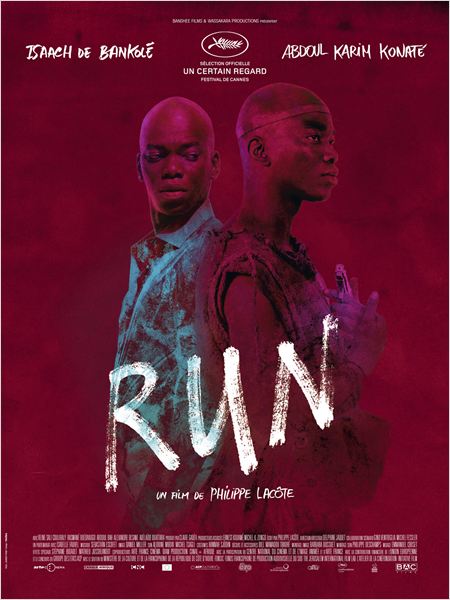
5. COTE D’IVOIRE- "Run" Cote d'Ivoire won the Oscar for Best Foreign Film (before I was born) in 1977. That’s misleading because the film was very much a French production, with very little Ivoirian input. That’s not the case this year. Cote d’Ivoire had a rare film at a major film festival last year with “Run”, a thriller about a young man who has just assassinated an African prime minister. It’s a major step forward for Ivoirian cinema and it finally premiered in Abidjan in December 2014 making it eligible this year. We may see them back after nearly forty years of absence….though that will ruin their 100% winning record.

6. CROATIA- "The High Sun" Croatia has had an artistically successful year for cinema, though the box-office is weaker than last year. This year they won the Un Certain Regard Jury Prize for “The High Sun” (Zvizdan), a drama about a Serb-Croat romance in the waning days of Yugoslavia, when the two ethnic groups began to slaughter each other. Croatia rarely wins awards at major festivals and director Dalibor Matanic has been selected once before (in 2002) so it's a pretty sure thing. “These Are the Rules”, starring acclaimed actor Emir Hadzihafizbegovic, has also quietly established a name for itself at various festivals including Venice (Best Actor), Warsaw (Best Director) and Busan. Director Ognjen Svilicic (selected in 2007) directed this story about middle-class parents whose lives are changed when their son is brutally beaten up. Also in the mix: “Number 55” dominated last year’s Croatian Film Awards, but which was only released in November, making it eligible this year. Last year, they chose a mainstream comedy with local humor over their usual war-centered dramas, so they could opt for “The Enchanting Porkers”. And Branko Schmidt’s “Ungiven” (Moscow), about an elderly couple trying to put together the pieces of their life after the war, could also threaten if it does well at Pula. Less likely: "You Carry Me" (Karlovy Vary), about three adult women and their relationships with their fathers and "The Reaper”, an intriguing dark tale of three stories in an isolated Croatian village. It lost virtually all categories to “Number 55” last year so it can probably be counted out, as can my prediction from last year (“Bridge at the End of the World”). With “The High Sun” scheduled (but not confirmed) to get a local release in September, expect the Croatians to send it to the Oscars. If it does not, this will be a battle between “These Are the Rules” and “Number 55”, with “Rules” having the edge. Since The Croatian Film Awards will be announced on July 25th (with “High Sun”, “Porkers”, “Ungiven”, “Rules” and “Carry Me” competing against each other and six other films), we should have some more clarity then. 

7. CUBA- "The Wall of Words" Cuba sends films to the Oscar race only occasionally and the Cuban Academy tends to be kind of cliquey. Since 1991, they’ve sent only 13 films but four directors were sent multiple times. Three of those directors have new films this year so, assuming they still are in favor with the administration, they have the advantage. “The Wall of Words” by Fernando Perez (sent by Cuba in 1991 and 2003) is about an autistic man and the devastating effect that his handicap has on his family. Arturo Sotto Diaz (1996 and 1997) has “Boccaccerias habaneras”, a surreal comedy based on “The Decameron” about a writer whose characters meet and discuss their respective plotlines with one another. Juan Carlos Cremata (2002 and 2005) has 1950s family comedy “Contigo pan y Cebolla”, based on a popular play. They’ll be competing with Cuba’s first sci-fi film “Omega 3” (about a world in which people war depending on their dietary restrictions) and gender-bending “His Wedding Dress”, about the first sex-change operation in Cuba. “Atraves”, about a woman travelling all around Cuba to decide whether or not to emigrate, could also contend if it is released in time. My prediction: Cuba will go more serious and choose “The Wall of Words”.

8. CZECH REPUBLIC- "Home Care" The once-mighty Czechs haven’t had a particularly good year for film so they’ll probably choose one of their new films from Karlovy Vary. The two Czech films competing there were “Home Care” and “The Snake Brothers”, both by relatively new directors and both of which were received warmly at home. Like most of the world’s favorite Czech films, they are both slice-of-life dramas with a healthy dose of comedy and pathos. Based on stories told to him by his health-care worker mother, “Home Care” is about a nurse for the elderly who spends much of her life either serving her patients or her family. “The Snake Brothers” is about two ne’er do well brothers in a small Czech town. They're both constantly in trouble with the law but the elder brother is desperately trying to start a new chapter of his life. As I mentioned, competition is weak, so it will probably be one of these two. Thematically, I think the more gentle, family-driven “Home Care” is a better fit with what the Czech Republic usually sends. Others in with a chance: “David”, about a mildly intellectually disabled 20-year old who runs away from home to go to Prague, religiously-themed family drama “Dust of the Ground” and indie social drama “Rumbling”. The Czechs have chosen three films since independence that showcase Czech animation (of which the country is very proud) so two films using traditionally made Czech marionettes- “Little Man” and “Little from the Fish Shop” (based on Hans Christian Andersen’s “The Little Mermaid”)- could make for an unlikely choice. Unlikely: Vladimir Michalek’s films were selected twice in the 1990s but his new “Storyteller”, based on a famous novel about a love triangle, was mostly ignored at last year’s Czech Lions; the baity biopic “Photograph” hasn’t gotten warm reviews; “Seven Ravens” has gotten good reviews, but it’s unlikely the Czechs will select a children’s faerie tale. It’s hard to come up with a Top Five, but “Home Care” is likely to be selected, followed very closely by “Snake Brothers” and with “Little from the Fish Shop”, “David” and “Dust of the Ground” lagging far behind.

9. DENMARK- "Silent Heart" Denmark has a competitive race pitting the country’s two living Foreign Oscar winners against each other, namely Bille August (“Pelle the Conqueror”, 1989) and Susanne Bier (“In a Better World”, 2011). Both have new dramas pulled from the headlines. August's “Silent Heart” should be considered the front-runner. August rarely makes films in Danish and he hasn’t represented Denmark since his win for “Pelle” 25 years ago. “Silent Heart” won Best Picture at the Bodil Awards (one of Denmark’s two main film prizes….the English-language “Nymphomania” won Best Pic at the Robert Festival), it stars some of Denmark’s greatest actresses and was well-received at its premiere in San Sebastian. It's a tearjerker about a large family that gathers together when their sick mother decides to end her life. Susanne Bier’s style is more “Hollywood” and she’s definitely in the running for “A Second Chance”, a thriller (starring some of Denmark’s finest actors) about a policeman whose infant son has just died. Shortly after that, he finds an abused infant hidden in a closet during a police raid. The child is the same age as his dead son, and is being raised by a couple high on drugs. He decides to switch the two babies and raise the live one as his own. Clearly a moral dilemma for the liberal Nordic people! The problem is that “Chance” hasn’t gotten the best reviews from critics, though it is said to be a audience crowdpleaser. I think it will lose to “Silent Heart”, but the Danes may pick what they think will play better in America, and that might well be Bier. The Danes always choose a three-film shortlist and take a month to deliberate. Choosing the third film on the list is difficult though I imagine it will be “A War”, directed by Tobias Lindholm who directed “A Hijacking” and wrote “The Hunt”. It’s an upcoming summer release about Danish soldiers accused of war crimes while serving in Afghanistan. Also extremely possible: “People Get Eaten” (Erik Clausen, who repped Denmark in 1986 and 1994) a comedy-drama about an elderly man coming to terms with the onset of Alzheimers, or “April 9th” about the soldiers who fought and died for Denmark against the Nazis mere hours before the Danish were forced to surrender. The Danes sometimes make unusual decisions, which means that box-office hit mystery “The Absent One”, large-scale epic slave trade drama “The Gold Coast” and 1960s “drugs and sex” counterculture biopic “Itsi-Bitsi” could also make the list, though I doubt Denmark will choose anything other than “A Second Chance” or “Silent Heart”.

10. DOMINICAN REPUBLIC- "Sand Dollars" (Dolares de arena) The Dominican Republic has been seeing a revival of local cinema, focusing on comedies with a very local flavor. Sometimes the humor translates. Their rom-com Oscar submission “Who’s the Boss?” has just been picked up for a remake, produced by American actress Zoe Saldana.  This year, the Dominicanos have to choose between four very different choices: The critic’s choice would almost certainly be “Sand Dollars” a lesbian drama about the tense relationship between an older European woman and a young Dominican girl who is only in the relationship for the money. The film co-stars Geraldine Chapin (“Doctor Zhivago”) and is generally agreed to be the best Dominican film of 2014. But the Dominican Academy usually prefers lighter fare, so they may lean towards “Algun Lugar” (On the Road, Somewhere), a comedy-drama about three friends on a road trip around the DR, after their high-school graduation. It’s a more universal story and it has received kudos at home. The Dominican Republic has typically not opted for historical films, but the much-delayed “Color of the Night” marks the return of Agliberto Melendez, who directed the first-ever Dominican feature film. The film, a drama about a politician of Afro-Haitian heritage, looks at Dominican history and race relations. This has been a huge political issue in the DR this year and the film could be selected (or ignored) depending on the political slant of the Dominican Last but not least is unknown quantity “Oro y Polvo” (Dust and Gold), a drug cartel thriller co-starring Ricardo Antonio Chavira (“Desperate Housewives”), which reworks the story to mirror Shakespeare’s Macbeth. Rounding out the top Five is Juan Marichal’s baseball biopic “Juan Marichal” (working title). This was a good year for the Dominicans, and you can’t necessarily count out rural drama “Bestia de Cardo”, documentary “Blanco” or critically  divisive biopic “Maria Montez” either. My prediction: “Sand Dollars” defeats “Color of the Night”, but just barely.

11. ECUADOR- "Medardo" Ecuador has sent films the past two years and film production is up.  This year, I expect the Ecuadorean nominee will be “Medardo” , a period biopic set in the 1910s, about a renowned national poet who died at age 21, even though it looks kind of dull.  Its two main competitors are “Killa (Before Moonrise)” a thriller about a Quechua man faced with a moral dilemma when he discovers his Latina girlfriend’s family is involved with high-level corruption, and “Travesia”, a gentle docudrama about two travelers travelling around Ecuador to promote a national tourism campaign.

12. EGYPT- "Bitter Sugar" Egypt has been under a different government each of the past five years, during which time they sent four films, skipping the year the Muslim Brotherhood was in power. Though their film industry has endured tough times, the revamped Cairo Film Festival returned in 2014, a few films have broken local box-office records and a number of top directors are back with new movies. On paper, the front-runner to represent Egypt is “El-Ott” (The Cat), a gangland thriller about a crime lord with a unique moral code, seeking to bring down a rival gang involved in prostitution and organ trafficking. Director Ibrahim el-Batout was selected in 2013 and “El-Ott” was Egypt's sole representative in Abu Dhabi and one of just a few in Cairo. In 2013, “Cat” was highlighted as a Work-In-Progress in Venice, winning the “post-production” award. Although it got good reviews in Egypt, this sort of melodramatic thriller will likely not do well with the stuffy voters at the Academy. Ditto for “The Island 2”, a sequel to Egypt’s box-office hit 2008 submission (the only time they ever chose an action movie), revisiting the characters in post-Revolution Egypt. It was the top local box-office draw of 2014. Comedy-drama “Cairo Time” (Dubai 2014…not to be confused with the Patricia Clarkson film of the same name) would be a better choice, as an all-star cast plays six characters in three intersecting stories.  Daoud Abdel Sayed (selected twice) has a new film called “Out of the Ordinary” (aka “Extraordinary Abilities”, Dubai 2014) but it has not been very well-reviewed. I also think it’s unlikely Egypt will choose the pretentious claptrap of “Gate of Departure” (the only Egyptian film selected for the Main Competition in Cairo), though the slightly more accessible arthouse of “Décor” (about a career woman who wakes up one day to find she is a housewife) might have a better chance. Unknown quantities include Mohamed Khan’s upcoming drama “Before the Summer Crowds”, Hani Khalifa’s first film in ten years, “Bitter Sugar” and the female-helmed “A Day for Women”. Unlikely but possible: dramas “The Last Days of the City”, which sat on the shelf for seven years, drama “Shaking Downtown”, as well as mockumentary “Balash Tebosni: Story of a Kiss”, about trying to get a smooch past the Egyptian censors. Eligible next year: Marwan Hamed’s new crime drama “Diamond Dust” and “Cairo, Visions of Hope”, a series of short films by some of Egypt’s best modern directors. Final prediction: I’m going out on a limb and saying they choose “Bitter Sugar” (opening July 17), about five men and five women in modern-day Egypt, and how the revolution changed some people’s lives but not others. "El-Ott” (The Cat) should come a very close second. Also in the Top Five: “Décor”, “Before the Summer Crowds” and “Cairo Time”, in that order. For a good overview of Egypt’s 2014 film year, click here.

13. ESTONIA- "1944" Estonia got their first Oscar nomination (on their 12th try) last year for “Tangerines”, the first for any of the three Baltic Republics. The film was directed by a Georgian and set in the autonomous Abkhazia Republic, but it starred some Estonian actors in lead roles. Congratulations! This year, they have seven eligible films, but it certainly seems the early frontrunner is “1944”, the expensive World War II film that broke box-office records this year, and is currently the #2 Estonian film of all time. The film is about Estonia's WWII experience as a nation surrounded by two sides they neither like nor trust- German Nazis to the East and the Soviet Communists to the West.  It’s interesting to note though that the country’s last expensive war epic (“Names in Marble”, the #1 Estonian box-office hit of all time and directed by the same man, stage director Elmo Nüganen) was not sent to the Oscars. That year, they opted not to send anything. If the Estonian Academy has some mysterious grudge against Nüganen, their second choice would be “Roukli”, the latest odd film from Veiko Õunpuu, the only Estonian director so far to be selected for the Oscars twice. Helped by crowdfunding and set to premiere in September, it’s about a man, his wife and her brother who flee to a remote countryside retreat to escape an ongoing war, only to be joined by some strange refugees after the capital city is destroyed. The Festival description calls it a “minimalist, slow-paced, modestly intelligent, niche entertainment product”. Awill hate it. The wild card is “The Fencer”, an Estonian film made by Finnish director Klaus Härö (who repped his native Finland three times), about a Soviet champion fencer who comes to a small Estonian town to teach, in order to escape the secret police. Will last year’s Oscar nomination for a Georgian director make it harder or easier for a foreign director to be selected a second year in a row? Based on the reviews, “The Fencer” is definitely a better film than either “1944” or “Roukli”. Quirky youth dramas “Zero Point” and “Cherry Tobacco” would be surprising choices, while “Landscape with Many Moons”, which warns audiences that some scenes may inspire vomiting, and kiddie film “Secret Society of Souptown” can be counted out entirely.

14. ETHIOPIA- "Lamb" Ethiopia used to have trouble finding even one quality film to send to the Oscars. This year they have two prominent festival contenders to choose from, a good sign that they may become a regular fixture in the competition after two submissions in 2010 and 2014. “Lamb”, the first-ever Ethiopian film to compete at Cannes, is the front-runner. It got excellent reviews after its premiere in the Un Certain Regard Section and it was a recipient of Atelier financing two years ago. It’s the story of a 9-year boy (Oscar loves kids!) surrounded by hauntingly beautiful scenery (Oscar loves scenery!) sent to live with relatives when a drought forces his family to abandon their village. He brings along his beloved pet lamb, but Ethiopian herder culture means he is destined to be slaughtered. It seems like a shoo-in, but it actually faces strong competition from the female-helmed “Price of Love”, which represented the country at FESPACO, winning the Prize of the City. It’s about the travails of a taxi driver, but this urban tale likely won’t be able to match the beautifully filmed countryside. It’s “Lamb”. 

15. FIJI- "Sahara" Fiji only sent a film once in 2005. Although Fiji promotes itself as a filming location (especially for Bollywood productions), their indigenous film industry is quite small. If they choose to rejoin the Oscar race, they will likely choose “Sahara”, about the problems of poor rural Fijian Indians, including land evictions and disastrous marriages with abusive overseas Fijian men. Directed by a Fijian based in Sydney, the film is based on numerous interviews with the Fijian Indian community.

16. FINLAND- "Wildeye" Finland has close to thirty eligible films, but with tons of silly comedies and family films and virtually no presence at international film festivals, it hasn’t been a particularly strong year. I see them as having six possibilities in a wide-open race.  On paper, one of the strongest candidates is "They Have Escaped”, which won Best Picture, Best Director and two other awards at the Jussi Awards last year (also a somewhat weak year). Screened at Venice and Toronto, it’s the story of two teenage runaways who escape detention and go on a trip around Finland. Reviews have been fine, but nothing special. The other is Klaus Härö’s “The Fencer” (see ESTONIA). It’s almost certainly the best-reviewed film of the year from Finland and director Härö has been chosen three times since 2003. But this film may be at a disadvantage since it was made in neighboring Estonia in Estonian with a native Estonian cast. In any case, “Fencer”, about a star Soviet fencer who mysteriously moves to a small town, may end up competing for Estonia. Finland chose a popular documentary once (in 2010) and this year’s “Autolla Nepaliin” (Dream Driven) was a modest critical and box-office success. In the crowd-funded film, a group of Finns travel to Nepal, and the filmmakers have promised all proceeds from the film will go towards helping the country. The film was made and released before this year’s terrible earthquake, meaning the Finnish Academy may want to give their cause a boost (especially since they likely won’t be nominated anyway). Period drama “Tsamo”, about the adoption of an indigenous Alaskan girl from Russian-ruled Alaska to Finland in the 1860s, barely got a release in Finland, but the story is interesting and the co-directors have been selected once before for another story highlighting the struggle of indigenous people ("Seven Songs from the Tundra").  Lastly, two upcoming summer releases are also very possible, namely Mika Kaurismaki’s village drama “Homecoming”, about a Helsinki family who move to a village in the countryside,  and Antti Jokinen’s “Wildeye” (he was selected in 2012), about the forbidden romance between a German soldier and a Finnish girl in 1944, when Finland sided with the Nazis to stave off a Soviet invasion.  Tough call with no front-runner. I predict they send period drama “Wildeye”, followed by “Homecoming”, “Dream Driven”, “The Fencer” and Jussi winner “They Have Escaped”.

17. FRANCE- "Marguerite" Although I wrote the rest of my predictions in July and August, I am writing up France last, today, September 14th. I have changed my mind from week to week. Early on, I was sure they would choose Régis Wargnier's  "The Gate", about a Frenchman revisiting Cambodia years after the Khmer Rouge genocide. This subject has resonated with Oscar before ("The Killing Fields", "The Missing Picture") and Wargnier was the last director to get a win for France (over twenty years ago!). But "The Gate" came and went with little fanfare and didn't make a dent at the Cesar Awards. When Jacques Audiard's "Dheepan" won the Palme d'Or in the spring, that seemed like the likely default choice. Many feel Audiard was robbed of an Oscar for "The Prophet" and unfairly snubbed when the intellectual "Rust and Bone" lost the French nod to the crowdpleasing "Les Intouchables". But the French are very proud of their language and it seems to me unlikely they would choose a film that is mostly in Tamil, the language of the family seeking to lie their way into obtaining asylum in France. But it's definitely a strong possibility. Then I turned to two films about distressed young people. Catherine Deneuve co-stars in "Standing Tall", which follows a young boy through France's juvenile justice system, while "Girlhood" got a Best Director nod at the Cesars for its story of a French girl (daughter of African immigrants) who joins a girl's gang to better her dim prospects. Both of these have gotten strong reviews and would seek to get a nomination like "The Class". But neither one seems "big" enough to represent France. Others are talking about "A Measure of A Man", which won a Jury Prize at Cannes for its portrayal of an unemployed man in times of economic crisis. Now....with the year over and no consensus candidate, I think it's likely France will be desperate to find something new and exciting that everybody can get behind. Enter "Marguerite", a late-breaking comedy from Venice which will open in France in late September. It's the bizarre true story of a wealthy woman who dreams of being a singer despite her terrible singing voice. She bankrolls her career and ends up at Carnegie Hall. Variety calls it "pitch-perfect" and it may well be what the French send this year. 

18. GEORGIA- "Line of Credit" Georgia pulled off the unthinkable last year when Georgian directors took TWO of the nine spots on the 9-film Oscar shortlist. “Corn Island” (which I didn’t like) represented Georgia and was presumably saved by the Elite Committee who enjoyed its tale of a man and his homely daughter growing corn in the rain in wartime Abkhazia. “Tangerines”- representing Estonia but directed by Georgian director Zaza Urushadze (who repped Georgia in 1999)- made the Final Five. Despite that huge publicity boost for Georgia’s beleaguered film industry, that hasn’t translated into a big boost for film production…at least, not yet.  My prediction for Georgia this year is “Line of Credit” (Venice 2014), a tragicomedy about a woman from a successful Communist family who falls on hard times, spiraling deeper and deeper into debt. “Credit” was defeated in the inaugural National Film Competition at the Tbilisi Film Festival by “I Am Beso” (Sarajevo), directed by 28-year old Lasha Tsvitinidze. It’s a slice-of-life village drama about a teenage boy with an eccentric family. Despite Beso’s win in Tbilisi, I think “Credit” has a better chance at appearling to critics overseas. These were the two Georgian films in the Main Competition in Tbilisi (Ukraine’s “The Tribe” won) and they will probably compete for the Oscar nod as well. Dark horse: Iranian director Mohsen Makhmalbaf’s Georgian-language film “The President” has been quite well-received and it opened the Tbilisi Film Festival. It’s a dark comedy about the last days of dictatorship in a small country. The cast is Georgian, but the crew is mostly international.  Two other films that could threaten are “Brides”, about women visiting their boyfriends and husbands in prison, which has toured successfully on the international film circuit (Sarajevo, Tribeca), and “Brother” (Rotterdam) set in the 1990s as the Communist system was falling apart. I’m hoping for “Credit”, so that’s my prediction. Unlikely to qualify: the upcoming “Ursus” and “The Village” about a British woman in Georgia.

19. GERMANY- "Elser" (13 Minutes) Germany has one of the most difficult decisions of any country this year. Most Oscar forecasters are buzzing about three German films that recently faced off at the German Film Awards (the Lolas). Oscar nominee Oliver Hirschbiegel (“Downfall”) revisits the Hitler era with biopic “Elser” (aka “13 Minutes”) about George Elser, the man who tried to assassinate Adolf Hitler in 1939. In its favor, Oscar loves when the Germans revisit WWII, and the film got a prestigious Out-of-Competition berth at Berlinale. The film already has a US distributor (Sony Pictures Classics) and a director with a proven track record at the Oscars. Working against it, Western critical response has been mixed and the film couldn’t even manage a Best Picture nomination in the 6-film field at the Lolas (incidentally, neither could “Downfall” but that was selected). The Lola winner was two-hour "shot-in-one-take" thriller “Victoria”, which also won Best Director, Actor, Actress, Cinematography and Score. “Victoria”, about a Spanish waitress/party girl coerced into a bank robbery during one crazy night in Berlin, easily has better reviews than “Elser”. Unfortunately for "Victoria", it has no Nazis and AMPAS has no taste for German contemporary dramas. “Victoria” is often compared to “Run Lola Run”, notably not nominated in 1999. The third buzzed-about film is “Labyrinth of Lies”. It got a Best Picture nomination at the Lolas for its look at a series of anti-Nazi investigations in 1960s Germany, which were hampered by the German government’s desire to avoid stirring up unpleasant memories. Although it’s been quieter than the other two, its Nazi plotline will make sure it's in with a chance.  I think these three supposed frontrunners have a serious fourth candidate in “Kaminski and Me”, a drama based on a novel about a newspaper reporter (GG nominee Daniel Bruhl) travelling with blind artist Manuel Kaminski. It’s by the same team as “Goodbye Lenin”, one of my favorite German films of all time (also notably submitted but not nominated) and it is scheduled to be released in September. Germany often likes to submit late releases to the Oscars. You might expect more buzz from Fatih Akin’s Armenian Genocide drama “The Cut” (too much English?) or child abuse drama “Jack” which somehow got Lola Best Pic/Director/Screenplay nominations despite poisonous reviews in the West. But nobody really seems to like them. On Germany's longlist (usually announced in early October) you’re likely to see “As We Were Dreaming” (one of two German films that competed in the Main Competition at Berlin, alongside “Victoria”) and Til Schweiger’s family dramedy “Honig im Kopf” (the #1 box-office hit of the year), but they won’t get further than that. With "Elser" and "Labyrinth" splitting the Nazi vote, this is a very tough call. I predict “Elser” gets this because it matches the German movies that have gotten Oscar nominations recently and because Hitler himself is in it. But I’m rooting for “Victoria”, which should come a close second with “Me and Kaminski” and “Labyrinth of Lies” finishing third and fourth.  

20. GREECE- "Xenia" Bankrupt Greece almost always chooses the winner of the Hellenic Film Awards. Since the awards were created in 2010, they’ve done this four out of five times. Unlike when they used to send the “Best Greek Film” at the Thessaloniki Film Festival, this is not automatic. In 2011, they mysteriously sent “Attenberg” (one of the worst films I’ve ever seen) instead of “Knifer” (possibly because the director is from neighboring Cyprus? Not sure).  The big winner at the Film Awards this year was “Xenia”, the colorful, quirky LGBT-friendly story of two young ethnic Albanian brothers  trying to find their biological Greek father. Featuring giant rabbits, drag queens and bright colors, it would be an odd choice for Greece but it’s sweep of the major awards shows it has wide appeal. With only seven new Greek films showing at Thessaloniki (due in large part to Greece’s economic crisis), the big winner was “Norway”, a dark comedy set in 1984 about vampires. So, it seems Greece will be going "Dogtooth" weird again this year.  If they do want something a bit more conventional, they could choose “Tetarti” (Tribeca), a film noir about a man who has a few hours to pay back a loan shark, “Forever” (Cairo), about two lonely people who connect in modern-day Athens or “The Sentimentalists” (Rotterdam), about a criminal living with his daughter by the beach. Unlikely: though it has played at numerous international festivals, nobody seems to like the convoluted “A Blast”, about a woman confronted with her family’s financial problems during the financial crisis. With such weak competition, it would seem that “Xenia” should have an easy road to Hollywood. If the LGBT themes scare them off, the most likely choice will likely be “Forever”. 

21. GREENLAND- "Arfernat (Number Six) Greenland, though enormous in size, is the smallest country to be invited to the Oscars, with a population of only 60,000 people. Their tiny film industry generally produces less than one fiction feature on average per year, though they also have a burgeoning documentary industry. As far as I know, their only fiction film is local horror-thriller “Unnuap Taarnerpaaffiani”, a local twist on the haunted house genre in the Greenlandic language. Slightly more likely is dog sledding documentary “Arfernat (Number Six)”, but I don’t think they’ll send a film this year.


22. GUATEMALA- "Ixcanul" Guatemala hasn’t sent a film to this competition since 1994, the longest absence of any Latin American country. However qualifying two shock slots at this year’s Berlinale, it seems like the guatemaltecos will be back for the first time in over 20 years. The clear candidate is “Ixcanul”, the debut of Jayro Bustamente, referred to as the probable “most-laurelled Latin American debut” of the year by Variety. “Ixcanul” won a Silver Bear at Berlin and Best Picture at Cartagena (almost unheard of for any Central American film) and the film has a savvy French co-producer who will probably guide Guatemala through the paperwork. It’s about a pregnant, teenaged Mayan girl who dreams of going to the big city, and it’s supposed to be pretty great. Guatemala’s other choice is “La casa más grande del mundo” (The World’s Biggest House), which played in the Berlinale section for youth films, while “Te prometo anarquia” is the latest from Julio Hernandez-Cordon, up to now Guatemala’s most visible international director. 

POSSIBLE DEBUTS:
CYPRUS is the only EU country that has never entered the Oscar race. This year at their national "Cyprus Film Days" film festival, they had four domestic features in competition, which is quite a lot for them. Here's hoping that "Family Member" will coax them into joining for the first time. It's about an financially troubled couple with two kids who depend on their grandfather's pension to survive. When Grandpa dies suddenly, they desperately try to hide his death from officialdom. The surreal "Impressions of a Drowned Man" (Rotterdam), about fate and memory, sounds less interesting. EL SALVADOR could follow Panama to become the 5th Central American country in the race, if they choose to enter "Crow's Nest" (Malacrianza), a drama/thriller about a man who receives a notice that his family will be killed if he doesn't pay $500 (a huge sum for the poor fellow) within 24 hours to persons unknown.