Showing posts with label Ixcanul. Show all posts

Monday, November 30, 2015

FOREIGN OSCAR 2016- The 20 Candidates from the Latin America, Africa and the Arab World


Here are the twenty nominees from Africa, Latin America and the Arab World:

NO CHANCE:
20. MOROCCO- "Aida"
19. SOUTH AFRICA- "Thina Sobabili: The Two Of Us"
18. LEBANON- "Void"
17. PARAGUAY- "Cloudy Times" (El tiempo nublado)
16. PALESTINE- "The Wanted 18"


With the Latin American films so strong this year, the bottom tier here includes most of the African and Arab films, plus debutante Paraguay.

For the second year in a row, the biggest long-shot comes from MOROCCO, which has selected an obscure drama out of left field that virtually nobody has seen or heard of. “Aida” is the story of a Jewish-Moroccan emigrée in France who returns to her Moroccan homeland when she learns she has terminal cancer. There, it seems, she reconnects with an old lover. There’s virtually no information on it online, but the one review I read was unkind, citing bizarre tonal shifts (focusing on cancer, then romance) and factual misrepresentations of the Jewish community. It also has the lowest rating on IMDB of this particular group (beating only Australia and Russia worldwide). It’s not a contender.


Lebanon and South Africa have selected films by up-and-coming 20-something directors just starting out their careers. The Zulu-language “The Two of Us” is a heart-wrenching drama about two siblings struggling to survive in modern-day SOUTH AFRICA. The overprotective brother resorts to petty crime; the sister to prostitution. Filmed in seven days as a master’s thesis project, “Two of Us” was made under severe budgetary constraints. A film like this won’t threaten for a nomination. Similarly, “Void” from LEBANON is a collaboration of seven young directors from the country’s Notre Dame University. The film tells six separate stories of Lebanese women suffering from the disappearances of male relatives (sons, husbands, brothers etc.) during Lebanon’s long civil war. Once again, I’m sure it’s a good film but even a Lebanese film expert I spoke to admitted that it’s not an Oscar contender. It should just be proud to represent Lebanon in the race.

Palestine and Paraguay have selected documentaries; never an easy sell in this category. “Cloudy Times” beat out the favored biopic “Mangore” to be the first-ever submission from the South American nation of PARAGUAY. It’s said to be a well-made documentary, but a claustrophobic and difficult watch. It follows director Arami Ullon’s efforts to care for her increasingly ill mother who suffers from Alzheimers. PALESTINE goes a bit lighter with animated documentary “The Wanted 18”, about Israel’s efforts to destroy a Palestinian town’s cattle herd, allegedly because the cows made the town too self-sufficient. I understand it was initially made in English but also dubbed into Arabic and Hebrew versions for theatrical release. Incorporating Claymation cows and real-life interviews, this is a quirky and well-reviewed film, but perhaps a little too “outside the box” to score here. You can see the English-language version on iTunes.  

TOO SMALL TO COMPETE
15. DOMINICAN REPUBLIC- "Sand Dollars" (Dólares de arena)
14. COSTA RICA- "Imprisoned" (Presos)
13. URUGUAY- "A Moonless Night" (Una Noche Sin Luna)
12. VENEZUELA- "Gone With the River" (Dauna, lo que lleva el río)

These four films hail from Latin America’s smaller film-making nations. Despite good reviews, I believe they are all way too "small" to seriously make the next round. As they always do, URUGUAY has submitted a low-key comedy-drama showcasing their droll national sense of humor. “A Moonless Night” follows three lonely people who find themselves in a small town on New Year’s Eve (summertime in Uruguay). Though it won the 2014 Zurich Film Festival, there wasn’t much competition and it won’t stand out here. Lesbian drama “Sand Dollars” from the DOMINICAN REPUBLIC  is also too low-key to score here. Most reviewers (including me) were wowed by the fearless performance of Geraldine Chaplin (Charlie’s daughter) as a Caucasian “sugar-mommy” who falls in love with a (straight?) local Dominican girl in a tourist town. The film is good, but it’s more notable for the lead performance than anything else. COSTA RICA has “Imprisoned” (Presos), a local box-office hit (#2 in the country’s history) about a young woman who falls in love with a prison inmate. It was also praised for its strong performances, but with little buzz, it will likely get lost in the mix of 80 foreign films. As for VENEZUELA, they’ve chosen an interesting drama in the indigenous language of Warao, spoken by just 30,000 people along the northeastern coast. It’s about a Warao woman torn between her family and the traditions of her culture on the one hand, and her desire to get a modern education and a job in the city on the other. Using four actresses, it follows the course of her life over several decades. All four: good but not good enough. 

MIDDLE OF THE PACK:

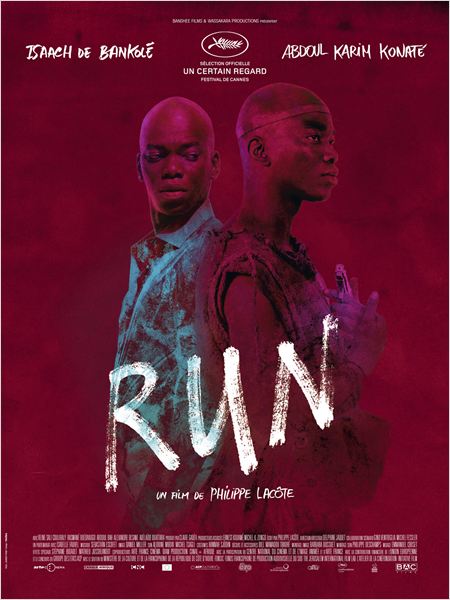
11. COTE D'IVOIRE- "Run"
10. ALGERIA- "Crepuscule des ombres" (Twilight of Shadows)
9. PERU- "NN"
8. MEXICO- "600 Miles" (600 Millas)

The COTE D’IVOIRE rejoins the Oscar race after a 40-year absence with “Run”, an exciting thriller about a young man who has just assassinated an unnamed African country’s Prime Minister-cum-dictator. As he tries to escape, he reflects on the moments in his life that brought him to this moment in time. In terms of remake potential, this film ranks near the top, but even “Run Lola Run” couldn’t score a nomination in this category and while reviews have been positive, most critics note this is definitely the work of a debutante director. It premiered at Cannes 2014 and has had a healthy run internationally since then. Welcome back, to Cote d’Ivoire! I can’t wait to see the film.
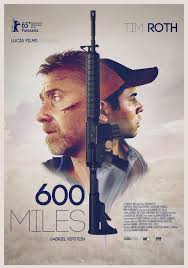
MEXICO has also chosen a thriller, albeit a slightly more cerebral one. Co-starring Tim Roth as an American ATF agent kidnapped by a Mexican gun runner working for a powerful gang, I thought the film would have too much English to qualify. In this unorthodox road movie, the two men strike up an unlikely friendship during the 600 mile-journey to the gang's headquarters. “600 Miles” sounds promising and AMPAS likes movies that espouse liberal causes (gun control) and that feature comforting amounts of English dialogue (a break from subtitles), but none of Mexico’s border dramas (“Miss Bala”, “Backyard”) have been nominated yet. Reviews for "600 Miles" haven’t been quite strong enough to make it to the next round. PERU’s “NN” has no buzz but those that have seen it say it’s quite a powerful film. It’s about forensics experts who exhume a mass grave of bodies that appear to have been killed during Peru’s military dictatorship. It’s a cold, grim film and American audiences may lack the political background to fully understand it. 

The same may prove true for ALGERIA and “Twilight of Shadows”. Director Mohammed Lakhdar-Hamina won the Palme d’Or at Cannes way back in 1975 and he came out of retirement to make this film focusing on three opposing personalities during Algeria’s war of independence: a brutal French commander, an Algerian freedom fighter, and a young French soldier sympathetic to the Algerian cause. The film sounds great, but there is zero buzz and the film has failed to screen at any major film festivals despite Lakhdar-Hamina’s name and reputation. Though the desert filmmaking may impress, the anti-colonial rhetoric and Algerian politics may confuse. 


DARK HORSES:
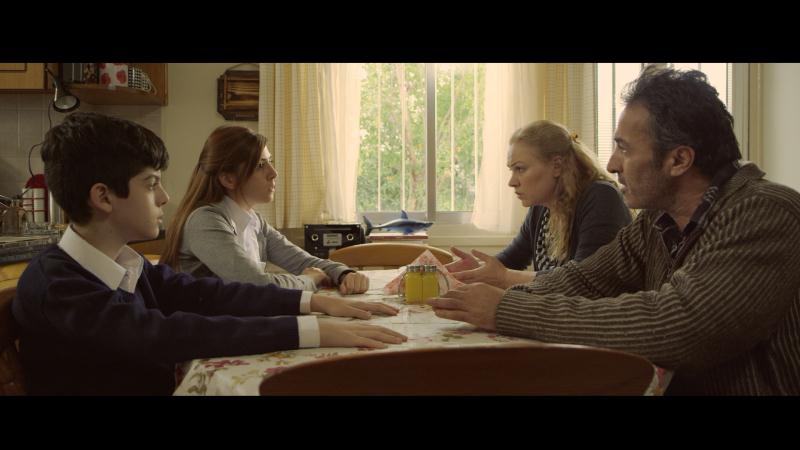
7. GUATEMALA- "Ixcanul"
6. ETHIOPIA- "Lamb"
5. COLOMBIA- "Embrace of the Serpent"


I was lucky enough to see all three of these cultural odysseys at the Busan International Film Festival in October. All three of them are a fascinating window into cultures that we know little about in the West. All three also have a passionate fan base (especially Colombia). Ultimately, I’m not sure any of them can make it to the next round, but they could surprise. Will the elite committee decide to choose "one" or will they all cancel each other out? I’m not sure why, but these sort of cultural films seem to have lost favor in recent years. 

ETHIOPIA’s “Lamb” is easily the most entertaining film of the bunch,- a coming-of-age drama with a likable child protagonist, beautifully filmed vistas and an engaging family of interesting characters. Ephraim’s father is forced to leave his young son with distant relatives after the death of the boy’s mother. The boy brings his beloved pet lamb along, but it soon becomes clear that his pet is set to become part of an upcoming holiday feast.

COLOMBIA's "Embrace of the Serpent" is much more work. Filmed in black and white, primarily in four indigenous languages and telling two separate stories about encounters between Western explorers and indigenous people forty years apart, it poses thought-provoking questions and yet still remains accessible. It’s an impressive piece of filmmaking though I wonder if the B&W photography (which not everyone likes) and the subject matter may be too “challenging” for the Academy. It would certainly be a deserving first nominee for Colombia. I think “Serpent” has the edge over the Kakchikel-language “Ixcanul”, a drama from GUATEMALA about a bored Mayan teenager betrothed to the son of a wealthy landlord who becomes pregnant by another man. Filmed almost documentary-style, it’s a much smaller film than the other two and despite equally strong reviews and an arguably stronger character arc, it has a weaker chance than the other two.  It's Guatemala's first submission in twenty years and will likely place just outside the shortlist. 

STRONG POSSIBILITIES:
4. BRAZIL- "The Second Mother"
3. JORDAN- "Theeb"
2. CHILE- "El club"


These three films are definitely threats for the shortlist. Let’s look at the Pros and Cons:

CRITICS CHOICE: “Theeb” (JORDAN)
Summary: A 10-year old Bedouin boy is forced to fend for himself against bandits in the deserts of 1915 Arabia. Second-ever submission from the Kingdom of Jordan.
Pros: Beautifully filmed desert scenery. Was a critical success during its limited US release. Oscar loves movies about kids, and this is definitely an original take on that genre. Survival drama accessible to all. Best Director, Venice Horizons.
Cons: As a filmmaking nation, Jordan is relatively unknown. The film's ending raises questions.

AUDIENCE FAVORITE: “The Second Mother” (BRAZIL)
Summary: A hard-working Brazilian maid has a reasonably comfortable life living with a wealthy family and their 17-year old son, but things turn chaotic when her estranged daughter moves herself in. 
Pros: Audiences seem to adore the film and the performance by the lead actress. Accessible family drama. Already released in the US. Two awards at Berlinale 2015.
Cons: Though Americans can certainly understand the “class differences”, many brasileiros fear much of the nuance will be lost outside of Brazil. Some complain that the film is “good” but by no means “great”. The committee almost never chooses female-driven pics in this category.

AUTEUR CHOICE: “El club” (CHILE)
Summary: A counselor visits a group of disgraced priests and nuns sequestered in a remote location until their crimes are investigated by the church. 
Pros: Silver Bear in Berlin 2015. Director Pablo Larrain has already found favor with the Academy for “No”. Juicy subject matter, critically acclaimed.

Cons:  Some critics say the dark drama is “smart” but “not mainstream”. Catholic child abuse already covered this year with “Spotlight”

Bottom Line: Everybody's in with a chance, with CHILE an especially strong contender to get "saved", JORDAN staying strong and BRAZIL losing buzz to COLOMBIA

FRONT-RUNNER:
1. ARGENTINA- "El clan"

Once again, the clear front-runner from this region is ARGENTINA, the only Latin American country ever to win the Foreign Film Oscar (twice). “El clan” is a crime-thriller (the last time Argentina sent one of these, they won) based on a horrific true story that shocked the nation. In the early 1980s, the wealthy, upper-class Puccio family kidnapped, ransomed and murdered several of their wealthy neighbors. The film has won awards at arthouse festivals (Best Director, Venice), and yet is mainstream enough to be a box-office hit in Argentina, and though it is chilling and violent, I’ve heard it is not too much so that it will scare off conservative Oscar voters. This one is probably in. 

Now the Statistics:

Number of countries from these regions who have participated in the past: 36

Number of countries participating this year:  20, not including Panama which announced a film (Caja 25) that ultimately failed to appear on the list. 

Number of debuts: 1- Paraguay

Number of countries opting out:  Technically 16, but PUERTO RICO is no longer invited and ten (mostly African) other countries have only ever sent films once or twice.

The surprise absentees were BOLIVIA, CUBA, ECUADOR and EGYPT (who all sent films last year) plus NICARAGUA. Official selection committees from Bolivia and Cuba DID MEET but both announced that they had formally decided not to send any of the eligible films being considered. Apparently in Bolivia, the National Film Board emphasized the importance of sending a film, but the selection committee still said no. (why?!) Even more surprising was the absence of Egypt which has sent films fairly regularly as of late and which had also announced the formation of a selection committee that would choose a film after Eid....but then made no further announcement. No idea what happened there. 

Number of countries I predicted correctly:  13 out of 20! Very successful! Out of Latin America, I missed only Mexico (thinking "600 Miles" had too much English), Peru and the documentary from Paraguay. 

Already Seen: 5- Colombia, Dominican Republic, Ethiopia, Guatemala and Jordan

Film I'm most looking forward to seeing: "El club" from CHILE

Feature Debuts: Lots. In addition to the seven Lebanese student directors, ten others are making their feature film debuts- Jayro Bustamante, Mario Crespo (I think), Philippe Lacôte, Ernest Nkosie, Naji Abu Nowar, Gabriel Ripstein, Amer Shomali, Germán Tejeira, Arami Ullon and Yared Zeleke.

Number of Female Directors: Four of the films are directed or co-directed by women, including three from Latin America: Anna Muylaert (Brazil), Laura Amelia Guzman (Dominican Republic) and Arami Ullón (Paraguay). The Lebanese submission, "Void" is an omnibus co-directed by three women (Christelle Ighniades, Maria Abdl Karim and Zeina Makki) and four men. The disqualified Panamian film was also co-directed by two women.

Oldest and Youngest Directors:  85-year old Mohammed Lakhdar Hamina of ALGERIA came out of retirement to make "Crespuscule des ombres". The youngest directors are the seven co-directors of LEBANON's "Void", who range in age from 23 to 28. 

Number of Foreign Languages Represented:  Obviously, eight of the films are mostly in Spanish but what's interesting is that three of the Spanish-speaking countries chose films that are mostly in indigenous languages- Kaqchikel (Guatemala), Warao (Venezuela) and Cuveo (alongside a number of indigenous Amazon languages, in the Colombian film). This is great news for indigenous communities.

We also have two films made in Arabic (Lebanon and Jordan), plus one each in Amharic, French, Portuguese and Zulu. The Algerian and Moroccan films seem to be roughly 50-50 Arabic/French. The animated Palestinian film seems to have been made in English but dubbed into several world languages, including an Arabic version screened by AMPAS and Hebrew.

Number of Comedies:  The closest thing to a comedy is Uruguay's dramedy "A Moonless Night"

Number of Animated Films and Documentaries:  One animated documentary (Palestine) plus two standard documentaries from Panama (disqualified) and Paraguay. 

Number of countries with a realistic chance at making the shortlist: Quite a few. Definitely seven.

Highest profile film: Probably Brazil's "The Second Mother", though Argentina might disagree. 

Oscar History:  Five of the directors have been here before, including Pablo Larrain (Chile) who got an Oscar nomination for "No" and also competed with "Tony Manero". The others are Mohammed Lakhdar-Hamina (Algeria) who competed in 1975, 1982 and 1987, Ciro Guerra (Colombia), who competed in 2005 and 2009 ("Wandering Shadows" and "The Wind Journeys"), Esteban Ramírez (Costa Rica) in 2005 ("Caribe") and Pablo Trapero (Argentina) in 2008 and 2010 ("Leonera" and "Carancho"),

Four countries (Algeria, Argentina, South Africa and, bizarrely, Cote d'Ivoire) have won the Oscar, while five more (Brazil, Chile, Mexico, Palestine and Peru) have racked up nominations. 

Best & Worst Decisions: All the Latin Americans chose well, except for the aforementioned Bolivians and Cubans who snubbed all their submitted films. MOROCCO and SOUTH AFRICA probably made the worst choices. 

Controversies and Changes:  Documentary "Caja 25" was announced as the official selection of PANAMA, beating out one other film (a surfing documentary). However, the film was mysteriously absent from the final list, and (unlike "Wolf Totem" and "Utopia") I haven't been able to find any official explanation online.

Omissions:   It's a bad year for black comedies. Like with Hungary's "Liza the Fox Fairy", I was really hoping we'd see the uproarious, violent beauty pageant satire "3 Beauties" in the race, especially after it won Best Venezuelan Film at their national film festival. But it lost to more serious fare. Also omitted: "Paulina" (La patota) from Argentina, "Land and Shade" from Colombia, "The Vanished Elephant" from Peru, "Treurgrond" from South Africa and "The Thin Yellow Line" (Mexico). 


Familiar Faces:  Clearly the biggest name is Oscar nominee Tim Roth, who co-stars in “600 Miles” as an American DEA agent, though 71-year old Geraldine Chaplin (“Dr. Zhivago”) is arguably equally accomplished. I’m also a fan of Belgium’s Jan Bijvoet (“Borgman”) who co-stars in Colombia’s “Embrace of the Serpent”. Other than these three gringos, the stars of the Argentine (Guillermo Francella, “The Secret in Their Eyes”) and Chilean films (Alfredo Castro, “Tony Manero”) may be familiar to fans of Latin American cinema.

Last year's race:  Last year, these countries sent a total of 21 films. I saw the two Oscar nominees, which were definitely deserving- ARGENTINA's "Wild Tales" (A) and MAURITANIA's "Timbuktu" (A)- as well as the much maligned "Cantinflas" (B+) from MEXICO which I thought was quite good. Less interesting were BRAZIL's "The Way He Looks" (B) and URUGUAY's disappointing "Mr. Kaplan" (B-).


Wednesday, July 15, 2015

OSCAR SUBMISSION PREDICTIONS 2015-2016, CHINA-GUATEMALA (Pt. 2 of 5)

Here's my prediction for the next tranche of countries: 

1. CHINA- "Lady of the Dynasty"- Whereas countries like Russia and Iran have shown that they are willing to choose subversive films in order to win an Oscar, China's Academy keeps a closer eye on things. They are perfectly willing to lose a chance at an Oscar nomination if it means choosing films that show China in a positive light. To that end, I'm predicting they send "Lady of the Dynasty", a royal epic, set in the 8th Century A.D., during the Tang Dynasty, starring Leon Lai and Joan Chen. The movie had a lot of behind-the-scenes drama (its original Korean director was fired) but apparently Zhang Yimou is involved somehow as some sort of Senior Adviser to the director. Of course, the two big films from China this year are Cannes drama "Mountains May Depart" and "Blind Massage", the surprise winner at the Golden Horse Festival and the Asian Film Awards. Although they've had trouble with censors in the past, directors Jia Zhangke ("Mountains") and You Le ("Massage") both now work within the People's Republic of China's official filmmaking system....so their films certainly could be selected. But I think it's more likely they'll go with a safer period drama rather than a contemporary one that looks at real modern-day problems in China. For the record, "Mountains May Depart" looks at the past, present and future of a Chinese family in contemporary China, while "Blind Massage" is about the lives of masseurs. No surprise there. Three other dark horses are (1)- auteur Chen Kaige's first-foray into "summer blockbuster" cinema, "Monk Comes Down the Mountain", an action movie starring Aaron Kwok, (2)- "Coffin in the Mountain" (Busan), a black comedy about a village man who accidentally kills a local thug, and (3)- HK director Tsui Hark's "Taking of Tiger Mountain", a period action movie set in the early 20th century as Communist forces were trying to overthrow the ROC Government (also possible for HONG KONG). Somewhat less likely: "Red Amnesia", about a middle-aged woman taking her of her sons and her elderly mother, and which stars some of China's finest elderly actresses. One final possibility is Zhang Ziyi 1920 film noir "Wasted Times", which is set to open October 3rd during China's big National Day long weekend. If China feels like it, they could easily do an Oscar qualifying release and submit the film this year. I don't hold out much hope for the well-reviewed "Wolf Totem" (they won't pick films by non-Chinese directors two years in a row), Berlinale "Gone with the Bullets" (good reviews, but a silly action sequel) or John Woo's "The Crossing", which deals with the politically incorrect story (for China) of people fleeing from China to Taiwan. I predict "Lady", with "Mountains May Depart and "Wasted Times" next in line. 

2. COLOMBIA- "Embrace of the Serpent" (El abrazo de la serpiente) Colombia is likely to be choosing between a trio of films from Cannes, namely “Gente de Bien” (Critics Week, 2014), "Land and Shade" (Critics Week 2015) and “Embrace of the Serpent” (Directors Fortnight Winner, 2015). I see “Serpent” as the clear front-runner. Director Ciro Guerra has represented Colombia before (for the dull “Wind Journeys”) and this B&W film, about the complex relationship between Colombia and its indigenous communities, has gotten the best reviews of any Colombian film this year. In the film, a man who represents the last survivor of his tribe, is pressured to team up with a white man on an expedition to find a rare flower capable of curing the man's illness. Its chief competition is the depressing "Land and Shade", about a man who visits the family he abandoned years before, only to find them barely clinging on to their small parcel of land surrounded by plantations. There's also “Gente de Bien”, a drama about class-conflict which explores what happens when a young boy and his laborer father are invited to spend a holiday with their wealthy employer. I was leaning towards “Gente de Bien”, but it failed to win any awards at the Cartagena Film Festival, which doubles as a sort of annual awards for Colombian film. There, the 2015 winners included “El silencio del rio” (Best Colombian Film), documentary “Carta a una sombra” (Jury Prize) and “Ruido Rosa” (Best Director). Other potential candidates include “La sargento Matacho”, a historical drama set in 1948, “Todos se van” (which I predicted last year), about a politically-charged custody battle in the 1980s and “Alias Maria” (Cannes 2015), about a pregnant guerilla soldier. Less likely: multi-character drama “Shakespeare”, featuring intersecting Shakespearean characters living in the modern world, and “Amazonas” (Maria Gamboa), by the director of last year’s submission. Out of the running: many people are talking about “Dirty Hands”, but it has an American director. Rules on this have loosened up recently, but after AMPAS disqualified Joshua Marston's Colombian "Maria, Full of Grace", the Colombians won't take the risk. Last year, “Gente de Bien” could have gotten this easily. But “Serpent” has gotten such positive reviews that the indigenous drama is near certain to rep los colombianos.
  
3. CONGO-KINSHASA- "The Man Who Mends Women" Congo-Kinshasa (a.k.a. DR Congo or "Big Congo") submitted a single film way back in 1997 and they are unlikely to return this year. Congo’s two big directors reportedly have new projects in the pipeline- Zeka Laplaine (whose “Macadam Tribu” was submitted in ’97) has “The Reptiles”, while Djo Munga (“Viva Riva”, Congo’s one and only international hit) has witchcraft drama “Chandra”. Both seem to be in production hell. For the sake of completion, I’ll predict “The Man Who Mends Women”, a documentary made in Congo by a Belgian filmmaker who has a long history working in the country. "The Man" is a doctor who dedicates his life to helping women who were sexually assaulted and often mutilated during the country’s long civil war. If they wish to go more local, they could send “National Diploma”, following a group of Congolese high-school students. It’s very possible neither film ever screened in the Congo.

4. COSTA RICA- "Presos" Costa Rica has no less than four potential candidates to choose from. That’s a huge number for the small Central American country, and part of a general film renaissance in Central America.  The most popular choice is also the least likely- road comedy “Maikol Yordan”, about a farmer who travels to Europe to raise money to save his farm. It's the biggest local hit (by far) in the country’s history and its got a lot of love behind it. But local humor will mean it will lose out to one of the three more serious choices. Prison drama “Presos” is by the director of the film (“Caribe”) that got Costa Rica to the Oscars in the first place, while minimalist B&W drama “Viaje” was called one of the best films of the Tribeca Film Festival by the New York Times. Then there’s “Two Waters”, the gentle drama about a poor boy whose brother will do anything to make sure his bro can attend a football academy. There’s never really been a competitive Oscar “race” in Costa Rica before. They either sent in a movie or they didn’t…So I’m not sure what their Academy’s tastes are. My instinct is that they will send in Ramirez’s “Presos” which seeks to offer social commentary on the nation’s prison system. Expect “Two Waters” to come second.

5. COTE D’IVOIRE- "Run" Cote d'Ivoire won the Oscar for Best Foreign Film (before I was born) in 1977. That’s misleading because the film was very much a French production, with very little Ivoirian input. That’s not the case this year. Cote d’Ivoire had a rare film at a major film festival last year with “Run”, a thriller about a young man who has just assassinated an African prime minister. It’s a major step forward for Ivoirian cinema and it finally premiered in Abidjan in December 2014 making it eligible this year. We may see them back after nearly forty years of absence….though that will ruin their 100% winning record.

6. CROATIA- "The High Sun" Croatia has had an artistically successful year for cinema, though the box-office is weaker than last year. This year they won the Un Certain Regard Jury Prize for “The High Sun” (Zvizdan), a drama about a Serb-Croat romance in the waning days of Yugoslavia, when the two ethnic groups began to slaughter each other. Croatia rarely wins awards at major festivals and director Dalibor Matanic has been selected once before (in 2002) so it's a pretty sure thing. “These Are the Rules”, starring acclaimed actor Emir Hadzihafizbegovic, has also quietly established a name for itself at various festivals including Venice (Best Actor), Warsaw (Best Director) and Busan. Director Ognjen Svilicic (selected in 2007) directed this story about middle-class parents whose lives are changed when their son is brutally beaten up. Also in the mix: “Number 55” dominated last year’s Croatian Film Awards, but which was only released in November, making it eligible this year. Last year, they chose a mainstream comedy with local humor over their usual war-centered dramas, so they could opt for “The Enchanting Porkers”. And Branko Schmidt’s “Ungiven” (Moscow), about an elderly couple trying to put together the pieces of their life after the war, could also threaten if it does well at Pula. Less likely: "You Carry Me" (Karlovy Vary), about three adult women and their relationships with their fathers and "The Reaper”, an intriguing dark tale of three stories in an isolated Croatian village. It lost virtually all categories to “Number 55” last year so it can probably be counted out, as can my prediction from last year (“Bridge at the End of the World”). With “The High Sun” scheduled (but not confirmed) to get a local release in September, expect the Croatians to send it to the Oscars. If it does not, this will be a battle between “These Are the Rules” and “Number 55”, with “Rules” having the edge. Since The Croatian Film Awards will be announced on July 25th (with “High Sun”, “Porkers”, “Ungiven”, “Rules” and “Carry Me” competing against each other and six other films), we should have some more clarity then. 

7. CUBA- "The Wall of Words" Cuba sends films to the Oscar race only occasionally and the Cuban Academy tends to be kind of cliquey. Since 1991, they’ve sent only 13 films but four directors were sent multiple times. Three of those directors have new films this year so, assuming they still are in favor with the administration, they have the advantage. “The Wall of Words” by Fernando Perez (sent by Cuba in 1991 and 2003) is about an autistic man and the devastating effect that his handicap has on his family. Arturo Sotto Diaz (1996 and 1997) has “Boccaccerias habaneras”, a surreal comedy based on “The Decameron” about a writer whose characters meet and discuss their respective plotlines with one another. Juan Carlos Cremata (2002 and 2005) has 1950s family comedy “Contigo pan y Cebolla”, based on a popular play. They’ll be competing with Cuba’s first sci-fi film “Omega 3” (about a world in which people war depending on their dietary restrictions) and gender-bending “His Wedding Dress”, about the first sex-change operation in Cuba. “Atraves”, about a woman travelling all around Cuba to decide whether or not to emigrate, could also contend if it is released in time. My prediction: Cuba will go more serious and choose “The Wall of Words”.

8. CZECH REPUBLIC- "Home Care" The once-mighty Czechs haven’t had a particularly good year for film so they’ll probably choose one of their new films from Karlovy Vary. The two Czech films competing there were “Home Care” and “The Snake Brothers”, both by relatively new directors and both of which were received warmly at home. Like most of the world’s favorite Czech films, they are both slice-of-life dramas with a healthy dose of comedy and pathos. Based on stories told to him by his health-care worker mother, “Home Care” is about a nurse for the elderly who spends much of her life either serving her patients or her family. “The Snake Brothers” is about two ne’er do well brothers in a small Czech town. They're both constantly in trouble with the law but the elder brother is desperately trying to start a new chapter of his life. As I mentioned, competition is weak, so it will probably be one of these two. Thematically, I think the more gentle, family-driven “Home Care” is a better fit with what the Czech Republic usually sends. Others in with a chance: “David”, about a mildly intellectually disabled 20-year old who runs away from home to go to Prague, religiously-themed family drama “Dust of the Ground” and indie social drama “Rumbling”. The Czechs have chosen three films since independence that showcase Czech animation (of which the country is very proud) so two films using traditionally made Czech marionettes- “Little Man” and “Little from the Fish Shop” (based on Hans Christian Andersen’s “The Little Mermaid”)- could make for an unlikely choice. Unlikely: Vladimir Michalek’s films were selected twice in the 1990s but his new “Storyteller”, based on a famous novel about a love triangle, was mostly ignored at last year’s Czech Lions; the baity biopic “Photograph” hasn’t gotten warm reviews; “Seven Ravens” has gotten good reviews, but it’s unlikely the Czechs will select a children’s faerie tale. It’s hard to come up with a Top Five, but “Home Care” is likely to be selected, followed very closely by “Snake Brothers” and with “Little from the Fish Shop”, “David” and “Dust of the Ground” lagging far behind.

9. DENMARK- "Silent Heart" Denmark has a competitive race pitting the country’s two living Foreign Oscar winners against each other, namely Bille August (“Pelle the Conqueror”, 1989) and Susanne Bier (“In a Better World”, 2011). Both have new dramas pulled from the headlines. August's “Silent Heart” should be considered the front-runner. August rarely makes films in Danish and he hasn’t represented Denmark since his win for “Pelle” 25 years ago. “Silent Heart” won Best Picture at the Bodil Awards (one of Denmark’s two main film prizes….the English-language “Nymphomania” won Best Pic at the Robert Festival), it stars some of Denmark’s greatest actresses and was well-received at its premiere in San Sebastian. It's a tearjerker about a large family that gathers together when their sick mother decides to end her life. Susanne Bier’s style is more “Hollywood” and she’s definitely in the running for “A Second Chance”, a thriller (starring some of Denmark’s finest actors) about a policeman whose infant son has just died. Shortly after that, he finds an abused infant hidden in a closet during a police raid. The child is the same age as his dead son, and is being raised by a couple high on drugs. He decides to switch the two babies and raise the live one as his own. Clearly a moral dilemma for the liberal Nordic people! The problem is that “Chance” hasn’t gotten the best reviews from critics, though it is said to be a audience crowdpleaser. I think it will lose to “Silent Heart”, but the Danes may pick what they think will play better in America, and that might well be Bier. The Danes always choose a three-film shortlist and take a month to deliberate. Choosing the third film on the list is difficult though I imagine it will be “A War”, directed by Tobias Lindholm who directed “A Hijacking” and wrote “The Hunt”. It’s an upcoming summer release about Danish soldiers accused of war crimes while serving in Afghanistan. Also extremely possible: “People Get Eaten” (Erik Clausen, who repped Denmark in 1986 and 1994) a comedy-drama about an elderly man coming to terms with the onset of Alzheimers, or “April 9th” about the soldiers who fought and died for Denmark against the Nazis mere hours before the Danish were forced to surrender. The Danes sometimes make unusual decisions, which means that box-office hit mystery “The Absent One”, large-scale epic slave trade drama “The Gold Coast” and 1960s “drugs and sex” counterculture biopic “Itsi-Bitsi” could also make the list, though I doubt Denmark will choose anything other than “A Second Chance” or “Silent Heart”.

10. DOMINICAN REPUBLIC- "Sand Dollars" (Dolares de arena) The Dominican Republic has been seeing a revival of local cinema, focusing on comedies with a very local flavor. Sometimes the humor translates. Their rom-com Oscar submission “Who’s the Boss?” has just been picked up for a remake, produced by American actress Zoe Saldana.  This year, the Dominicanos have to choose between four very different choices: The critic’s choice would almost certainly be “Sand Dollars” a lesbian drama about the tense relationship between an older European woman and a young Dominican girl who is only in the relationship for the money. The film co-stars Geraldine Chapin (“Doctor Zhivago”) and is generally agreed to be the best Dominican film of 2014. But the Dominican Academy usually prefers lighter fare, so they may lean towards “Algun Lugar” (On the Road, Somewhere), a comedy-drama about three friends on a road trip around the DR, after their high-school graduation. It’s a more universal story and it has received kudos at home. The Dominican Republic has typically not opted for historical films, but the much-delayed “Color of the Night” marks the return of Agliberto Melendez, who directed the first-ever Dominican feature film. The film, a drama about a politician of Afro-Haitian heritage, looks at Dominican history and race relations. This has been a huge political issue in the DR this year and the film could be selected (or ignored) depending on the political slant of the Dominican Last but not least is unknown quantity “Oro y Polvo” (Dust and Gold), a drug cartel thriller co-starring Ricardo Antonio Chavira (“Desperate Housewives”), which reworks the story to mirror Shakespeare’s Macbeth. Rounding out the top Five is Juan Marichal’s baseball biopic “Juan Marichal” (working title). This was a good year for the Dominicans, and you can’t necessarily count out rural drama “Bestia de Cardo”, documentary “Blanco” or critically  divisive biopic “Maria Montez” either. My prediction: “Sand Dollars” defeats “Color of the Night”, but just barely.

11. ECUADOR- "Medardo" Ecuador has sent films the past two years and film production is up.  This year, I expect the Ecuadorean nominee will be “Medardo” , a period biopic set in the 1910s, about a renowned national poet who died at age 21, even though it looks kind of dull.  Its two main competitors are “Killa (Before Moonrise)” a thriller about a Quechua man faced with a moral dilemma when he discovers his Latina girlfriend’s family is involved with high-level corruption, and “Travesia”, a gentle docudrama about two travelers travelling around Ecuador to promote a national tourism campaign.

12. EGYPT- "Bitter Sugar" Egypt has been under a different government each of the past five years, during which time they sent four films, skipping the year the Muslim Brotherhood was in power. Though their film industry has endured tough times, the revamped Cairo Film Festival returned in 2014, a few films have broken local box-office records and a number of top directors are back with new movies. On paper, the front-runner to represent Egypt is “El-Ott” (The Cat), a gangland thriller about a crime lord with a unique moral code, seeking to bring down a rival gang involved in prostitution and organ trafficking. Director Ibrahim el-Batout was selected in 2013 and “El-Ott” was Egypt's sole representative in Abu Dhabi and one of just a few in Cairo. In 2013, “Cat” was highlighted as a Work-In-Progress in Venice, winning the “post-production” award. Although it got good reviews in Egypt, this sort of melodramatic thriller will likely not do well with the stuffy voters at the Academy. Ditto for “The Island 2”, a sequel to Egypt’s box-office hit 2008 submission (the only time they ever chose an action movie), revisiting the characters in post-Revolution Egypt. It was the top local box-office draw of 2014. Comedy-drama “Cairo Time” (Dubai 2014…not to be confused with the Patricia Clarkson film of the same name) would be a better choice, as an all-star cast plays six characters in three intersecting stories.  Daoud Abdel Sayed (selected twice) has a new film called “Out of the Ordinary” (aka “Extraordinary Abilities”, Dubai 2014) but it has not been very well-reviewed. I also think it’s unlikely Egypt will choose the pretentious claptrap of “Gate of Departure” (the only Egyptian film selected for the Main Competition in Cairo), though the slightly more accessible arthouse of “Décor” (about a career woman who wakes up one day to find she is a housewife) might have a better chance. Unknown quantities include Mohamed Khan’s upcoming drama “Before the Summer Crowds”, Hani Khalifa’s first film in ten years, “Bitter Sugar” and the female-helmed “A Day for Women”. Unlikely but possible: dramas “The Last Days of the City”, which sat on the shelf for seven years, drama “Shaking Downtown”, as well as mockumentary “Balash Tebosni: Story of a Kiss”, about trying to get a smooch past the Egyptian censors. Eligible next year: Marwan Hamed’s new crime drama “Diamond Dust” and “Cairo, Visions of Hope”, a series of short films by some of Egypt’s best modern directors. Final prediction: I’m going out on a limb and saying they choose “Bitter Sugar” (opening July 17), about five men and five women in modern-day Egypt, and how the revolution changed some people’s lives but not others. "El-Ott” (The Cat) should come a very close second. Also in the Top Five: “Décor”, “Before the Summer Crowds” and “Cairo Time”, in that order. For a good overview of Egypt’s 2014 film year, click here.

13. ESTONIA- "1944" Estonia got their first Oscar nomination (on their 12th try) last year for “Tangerines”, the first for any of the three Baltic Republics. The film was directed by a Georgian and set in the autonomous Abkhazia Republic, but it starred some Estonian actors in lead roles. Congratulations! This year, they have seven eligible films, but it certainly seems the early frontrunner is “1944”, the expensive World War II film that broke box-office records this year, and is currently the #2 Estonian film of all time. The film is about Estonia's WWII experience as a nation surrounded by two sides they neither like nor trust- German Nazis to the East and the Soviet Communists to the West.  It’s interesting to note though that the country’s last expensive war epic (“Names in Marble”, the #1 Estonian box-office hit of all time and directed by the same man, stage director Elmo Nüganen) was not sent to the Oscars. That year, they opted not to send anything. If the Estonian Academy has some mysterious grudge against Nüganen, their second choice would be “Roukli”, the latest odd film from Veiko Õunpuu, the only Estonian director so far to be selected for the Oscars twice. Helped by crowdfunding and set to premiere in September, it’s about a man, his wife and her brother who flee to a remote countryside retreat to escape an ongoing war, only to be joined by some strange refugees after the capital city is destroyed. The Festival description calls it a “minimalist, slow-paced, modestly intelligent, niche entertainment product”. Awill hate it. The wild card is “The Fencer”, an Estonian film made by Finnish director Klaus Härö (who repped his native Finland three times), about a Soviet champion fencer who comes to a small Estonian town to teach, in order to escape the secret police. Will last year’s Oscar nomination for a Georgian director make it harder or easier for a foreign director to be selected a second year in a row? Based on the reviews, “The Fencer” is definitely a better film than either “1944” or “Roukli”. Quirky youth dramas “Zero Point” and “Cherry Tobacco” would be surprising choices, while “Landscape with Many Moons”, which warns audiences that some scenes may inspire vomiting, and kiddie film “Secret Society of Souptown” can be counted out entirely.

14. ETHIOPIA- "Lamb" Ethiopia used to have trouble finding even one quality film to send to the Oscars. This year they have two prominent festival contenders to choose from, a good sign that they may become a regular fixture in the competition after two submissions in 2010 and 2014. “Lamb”, the first-ever Ethiopian film to compete at Cannes, is the front-runner. It got excellent reviews after its premiere in the Un Certain Regard Section and it was a recipient of Atelier financing two years ago. It’s the story of a 9-year boy (Oscar loves kids!) surrounded by hauntingly beautiful scenery (Oscar loves scenery!) sent to live with relatives when a drought forces his family to abandon their village. He brings along his beloved pet lamb, but Ethiopian herder culture means he is destined to be slaughtered. It seems like a shoo-in, but it actually faces strong competition from the female-helmed “Price of Love”, which represented the country at FESPACO, winning the Prize of the City. It’s about the travails of a taxi driver, but this urban tale likely won’t be able to match the beautifully filmed countryside. It’s “Lamb”. 

15. FIJI- "Sahara" Fiji only sent a film once in 2005. Although Fiji promotes itself as a filming location (especially for Bollywood productions), their indigenous film industry is quite small. If they choose to rejoin the Oscar race, they will likely choose “Sahara”, about the problems of poor rural Fijian Indians, including land evictions and disastrous marriages with abusive overseas Fijian men. Directed by a Fijian based in Sydney, the film is based on numerous interviews with the Fijian Indian community.

16. FINLAND- "Wildeye" Finland has close to thirty eligible films, but with tons of silly comedies and family films and virtually no presence at international film festivals, it hasn’t been a particularly strong year. I see them as having six possibilities in a wide-open race.  On paper, one of the strongest candidates is "They Have Escaped”, which won Best Picture, Best Director and two other awards at the Jussi Awards last year (also a somewhat weak year). Screened at Venice and Toronto, it’s the story of two teenage runaways who escape detention and go on a trip around Finland. Reviews have been fine, but nothing special. The other is Klaus Härö’s “The Fencer” (see ESTONIA). It’s almost certainly the best-reviewed film of the year from Finland and director Härö has been chosen three times since 2003. But this film may be at a disadvantage since it was made in neighboring Estonia in Estonian with a native Estonian cast. In any case, “Fencer”, about a star Soviet fencer who mysteriously moves to a small town, may end up competing for Estonia. Finland chose a popular documentary once (in 2010) and this year’s “Autolla Nepaliin” (Dream Driven) was a modest critical and box-office success. In the crowd-funded film, a group of Finns travel to Nepal, and the filmmakers have promised all proceeds from the film will go towards helping the country. The film was made and released before this year’s terrible earthquake, meaning the Finnish Academy may want to give their cause a boost (especially since they likely won’t be nominated anyway). Period drama “Tsamo”, about the adoption of an indigenous Alaskan girl from Russian-ruled Alaska to Finland in the 1860s, barely got a release in Finland, but the story is interesting and the co-directors have been selected once before for another story highlighting the struggle of indigenous people ("Seven Songs from the Tundra").  Lastly, two upcoming summer releases are also very possible, namely Mika Kaurismaki’s village drama “Homecoming”, about a Helsinki family who move to a village in the countryside,  and Antti Jokinen’s “Wildeye” (he was selected in 2012), about the forbidden romance between a German soldier and a Finnish girl in 1944, when Finland sided with the Nazis to stave off a Soviet invasion.  Tough call with no front-runner. I predict they send period drama “Wildeye”, followed by “Homecoming”, “Dream Driven”, “The Fencer” and Jussi winner “They Have Escaped”.

17. FRANCE- "Marguerite" Although I wrote the rest of my predictions in July and August, I am writing up France last, today, September 14th. I have changed my mind from week to week. Early on, I was sure they would choose Régis Wargnier's  "The Gate", about a Frenchman revisiting Cambodia years after the Khmer Rouge genocide. This subject has resonated with Oscar before ("The Killing Fields", "The Missing Picture") and Wargnier was the last director to get a win for France (over twenty years ago!). But "The Gate" came and went with little fanfare and didn't make a dent at the Cesar Awards. When Jacques Audiard's "Dheepan" won the Palme d'Or in the spring, that seemed like the likely default choice. Many feel Audiard was robbed of an Oscar for "The Prophet" and unfairly snubbed when the intellectual "Rust and Bone" lost the French nod to the crowdpleasing "Les Intouchables". But the French are very proud of their language and it seems to me unlikely they would choose a film that is mostly in Tamil, the language of the family seeking to lie their way into obtaining asylum in France. But it's definitely a strong possibility. Then I turned to two films about distressed young people. Catherine Deneuve co-stars in "Standing Tall", which follows a young boy through France's juvenile justice system, while "Girlhood" got a Best Director nod at the Cesars for its story of a French girl (daughter of African immigrants) who joins a girl's gang to better her dim prospects. Both of these have gotten strong reviews and would seek to get a nomination like "The Class". But neither one seems "big" enough to represent France. Others are talking about "A Measure of A Man", which won a Jury Prize at Cannes for its portrayal of an unemployed man in times of economic crisis. Now....with the year over and no consensus candidate, I think it's likely France will be desperate to find something new and exciting that everybody can get behind. Enter "Marguerite", a late-breaking comedy from Venice which will open in France in late September. It's the bizarre true story of a wealthy woman who dreams of being a singer despite her terrible singing voice. She bankrolls her career and ends up at Carnegie Hall. Variety calls it "pitch-perfect" and it may well be what the French send this year. 

18. GEORGIA- "Line of Credit" Georgia pulled off the unthinkable last year when Georgian directors took TWO of the nine spots on the 9-film Oscar shortlist. “Corn Island” (which I didn’t like) represented Georgia and was presumably saved by the Elite Committee who enjoyed its tale of a man and his homely daughter growing corn in the rain in wartime Abkhazia. “Tangerines”- representing Estonia but directed by Georgian director Zaza Urushadze (who repped Georgia in 1999)- made the Final Five. Despite that huge publicity boost for Georgia’s beleaguered film industry, that hasn’t translated into a big boost for film production…at least, not yet.  My prediction for Georgia this year is “Line of Credit” (Venice 2014), a tragicomedy about a woman from a successful Communist family who falls on hard times, spiraling deeper and deeper into debt. “Credit” was defeated in the inaugural National Film Competition at the Tbilisi Film Festival by “I Am Beso” (Sarajevo), directed by 28-year old Lasha Tsvitinidze. It’s a slice-of-life village drama about a teenage boy with an eccentric family. Despite Beso’s win in Tbilisi, I think “Credit” has a better chance at appearling to critics overseas. These were the two Georgian films in the Main Competition in Tbilisi (Ukraine’s “The Tribe” won) and they will probably compete for the Oscar nod as well. Dark horse: Iranian director Mohsen Makhmalbaf’s Georgian-language film “The President” has been quite well-received and it opened the Tbilisi Film Festival. It’s a dark comedy about the last days of dictatorship in a small country. The cast is Georgian, but the crew is mostly international.  Two other films that could threaten are “Brides”, about women visiting their boyfriends and husbands in prison, which has toured successfully on the international film circuit (Sarajevo, Tribeca), and “Brother” (Rotterdam) set in the 1990s as the Communist system was falling apart. I’m hoping for “Credit”, so that’s my prediction. Unlikely to qualify: the upcoming “Ursus” and “The Village” about a British woman in Georgia.

19. GERMANY- "Elser" (13 Minutes) Germany has one of the most difficult decisions of any country this year. Most Oscar forecasters are buzzing about three German films that recently faced off at the German Film Awards (the Lolas). Oscar nominee Oliver Hirschbiegel (“Downfall”) revisits the Hitler era with biopic “Elser” (aka “13 Minutes”) about George Elser, the man who tried to assassinate Adolf Hitler in 1939. In its favor, Oscar loves when the Germans revisit WWII, and the film got a prestigious Out-of-Competition berth at Berlinale. The film already has a US distributor (Sony Pictures Classics) and a director with a proven track record at the Oscars. Working against it, Western critical response has been mixed and the film couldn’t even manage a Best Picture nomination in the 6-film field at the Lolas (incidentally, neither could “Downfall” but that was selected). The Lola winner was two-hour "shot-in-one-take" thriller “Victoria”, which also won Best Director, Actor, Actress, Cinematography and Score. “Victoria”, about a Spanish waitress/party girl coerced into a bank robbery during one crazy night in Berlin, easily has better reviews than “Elser”. Unfortunately for "Victoria", it has no Nazis and AMPAS has no taste for German contemporary dramas. “Victoria” is often compared to “Run Lola Run”, notably not nominated in 1999. The third buzzed-about film is “Labyrinth of Lies”. It got a Best Picture nomination at the Lolas for its look at a series of anti-Nazi investigations in 1960s Germany, which were hampered by the German government’s desire to avoid stirring up unpleasant memories. Although it’s been quieter than the other two, its Nazi plotline will make sure it's in with a chance.  I think these three supposed frontrunners have a serious fourth candidate in “Kaminski and Me”, a drama based on a novel about a newspaper reporter (GG nominee Daniel Bruhl) travelling with blind artist Manuel Kaminski. It’s by the same team as “Goodbye Lenin”, one of my favorite German films of all time (also notably submitted but not nominated) and it is scheduled to be released in September. Germany often likes to submit late releases to the Oscars. You might expect more buzz from Fatih Akin’s Armenian Genocide drama “The Cut” (too much English?) or child abuse drama “Jack” which somehow got Lola Best Pic/Director/Screenplay nominations despite poisonous reviews in the West. But nobody really seems to like them. On Germany's longlist (usually announced in early October) you’re likely to see “As We Were Dreaming” (one of two German films that competed in the Main Competition at Berlin, alongside “Victoria”) and Til Schweiger’s family dramedy “Honig im Kopf” (the #1 box-office hit of the year), but they won’t get further than that. With "Elser" and "Labyrinth" splitting the Nazi vote, this is a very tough call. I predict “Elser” gets this because it matches the German movies that have gotten Oscar nominations recently and because Hitler himself is in it. But I’m rooting for “Victoria”, which should come a close second with “Me and Kaminski” and “Labyrinth of Lies” finishing third and fourth.  

20. GREECE- "Xenia" Bankrupt Greece almost always chooses the winner of the Hellenic Film Awards. Since the awards were created in 2010, they’ve done this four out of five times. Unlike when they used to send the “Best Greek Film” at the Thessaloniki Film Festival, this is not automatic. In 2011, they mysteriously sent “Attenberg” (one of the worst films I’ve ever seen) instead of “Knifer” (possibly because the director is from neighboring Cyprus? Not sure).  The big winner at the Film Awards this year was “Xenia”, the colorful, quirky LGBT-friendly story of two young ethnic Albanian brothers  trying to find their biological Greek father. Featuring giant rabbits, drag queens and bright colors, it would be an odd choice for Greece but it’s sweep of the major awards shows it has wide appeal. With only seven new Greek films showing at Thessaloniki (due in large part to Greece’s economic crisis), the big winner was “Norway”, a dark comedy set in 1984 about vampires. So, it seems Greece will be going "Dogtooth" weird again this year.  If they do want something a bit more conventional, they could choose “Tetarti” (Tribeca), a film noir about a man who has a few hours to pay back a loan shark, “Forever” (Cairo), about two lonely people who connect in modern-day Athens or “The Sentimentalists” (Rotterdam), about a criminal living with his daughter by the beach. Unlikely: though it has played at numerous international festivals, nobody seems to like the convoluted “A Blast”, about a woman confronted with her family’s financial problems during the financial crisis. With such weak competition, it would seem that “Xenia” should have an easy road to Hollywood. If the LGBT themes scare them off, the most likely choice will likely be “Forever”. 

21. GREENLAND- "Arfernat (Number Six) Greenland, though enormous in size, is the smallest country to be invited to the Oscars, with a population of only 60,000 people. Their tiny film industry generally produces less than one fiction feature on average per year, though they also have a burgeoning documentary industry. As far as I know, their only fiction film is local horror-thriller “Unnuap Taarnerpaaffiani”, a local twist on the haunted house genre in the Greenlandic language. Slightly more likely is dog sledding documentary “Arfernat (Number Six)”, but I don’t think they’ll send a film this year.


22. GUATEMALA- "Ixcanul" Guatemala hasn’t sent a film to this competition since 1994, the longest absence of any Latin American country. However qualifying two shock slots at this year’s Berlinale, it seems like the guatemaltecos will be back for the first time in over 20 years. The clear candidate is “Ixcanul”, the debut of Jayro Bustamente, referred to as the probable “most-laurelled Latin American debut” of the year by Variety. “Ixcanul” won a Silver Bear at Berlin and Best Picture at Cartagena (almost unheard of for any Central American film) and the film has a savvy French co-producer who will probably guide Guatemala through the paperwork. It’s about a pregnant, teenaged Mayan girl who dreams of going to the big city, and it’s supposed to be pretty great. Guatemala’s other choice is “La casa más grande del mundo” (The World’s Biggest House), which played in the Berlinale section for youth films, while “Te prometo anarquia” is the latest from Julio Hernandez-Cordon, up to now Guatemala’s most visible international director. 

POSSIBLE DEBUTS:
CYPRUS is the only EU country that has never entered the Oscar race. This year at their national "Cyprus Film Days" film festival, they had four domestic features in competition, which is quite a lot for them. Here's hoping that "Family Member" will coax them into joining for the first time. It's about an financially troubled couple with two kids who depend on their grandfather's pension to survive. When Grandpa dies suddenly, they desperately try to hide his death from officialdom. The surreal "Impressions of a Drowned Man" (Rotterdam), about fate and memory, sounds less interesting. EL SALVADOR could follow Panama to become the 5th Central American country in the race, if they choose to enter "Crow's Nest" (Malacrianza), a drama/thriller about a man who receives a notice that his family will be killed if he doesn't pay $500 (a huge sum for the poor fellow) within 24 hours to persons unknown.